In the modern digital economy, email marketing remains one of the most powerful direct-to-consumer channels available to brands, entrepreneurs, and enterprises. Yet, marketing teams frequently invest countless hours crafting campaigns—meticulously writing subject lines, refining copywriting, and designing striking visual layouts—only to watch those messages vanish into the abyss of a crowded inbox. The resulting metrics are all too familiar: steady open rates followed by flatlined click-through rates (CTRs), zero spikes in web traffic, and an absence of meaningful engagement.
While industry observers frequently point to "email fatigue," decreasing attention spans, and sensory overload as the primary culprits behind dwindling digital performance, data-driven marketing analysts suggest a different reality. The issue is rarely consumer burnout alone; rather, it stems from systemic tactical errors in how campaigns are structured, targeted, and delivered. By understanding the underlying psychology of digital consumer behavior and implementing rigorous, data-backed adjustments, organizations can dramatically reverse these trends and transform passive subscribers into active, loyal customers.
The Anatomy of Low Click-Through Rates: Identifying the Core Drivers
To successfully diagnose why an email campaign fails to generate clicks, marketers must first deconstruct the subscriber journey. Historically, industry benchmarks have shown that even well-crafted campaigns struggle to maintain high CTRs if foundational communication principles are ignored. Research from digital marketing associations indicates that the average email click-through rate across industries hovers between 2% and 3%, leaving a vast margin for improvement.
The breakdown typically begins at the point of entry: the subject line. In an era where professionals and consumers alike receive dozens, if not hundreds, of promotional and operational emails daily, a subject line is granted a fraction of a second to make an impression. Vague, overly predictable, or aggressively commercial phrasing causes readers to instantly categorize the message as noise.
Beyond the subject line, a pervasive issue in contemporary email marketing is the failure to connect with the reader’s current mindset. Many brands launch directly into a product pitch or service announcement without establishing context or emotional resonance. Modern audiences expect personalization that reflects their individual buyer journey, past purchasing behavior, and immediate preferences. When organizations rely on mass-produced, blanket messaging sent indiscriminately to an entire database, subscribers quickly recognize the lack of individual attention and disengage.
Furthermore, structural friction plays a critical role in depressing engagement. In an era where mobile devices account for over half of all digital content consumption, cluttered layouts, dense paragraphs of text, and poorly positioned calls to action (CTAs) create immediate barriers to comprehension. If a reader cannot effortlessly scan an email on a smartphone screen and instantly grasp the value proposition, they will abandon the message without hesitation.
Strategic Chronology of Email Optimization: A Historical Perspective
The evolution of email marketing provides valuable context for understanding modern engagement challenges. In the early days of commercial electronic mail during the late 1990s and early 2000s, simply reaching a recipient’s inbox was often sufficient to drive high conversion rates. Audiences were captivated by the novelty of digital communication, and basic broadcast messaging yielded impressive returns.
As inbox providers grew more sophisticated around 2010, introducing algorithmic filtering and tabbed inboxes like Gmail’s Primary, Social, and Promotions tabs, the landscape shifted dramatically. Brands could no longer rely on brute-force volume. The introduction of the General Data Protection Regulation (GDPR) in 2018 and subsequent privacy regulations further accelerated the need for permission-based, highly targeted communication.
By the early 2020s, the widespread adoption of machine learning and consumer behavioral tracking tools revolutionized what was possible in email personalization. Today, successful email marketing is no longer defined by batch-and-blast campaigns, but by sophisticated, automated lifecycle marketing. Organizations that fail to adapt to this chronological shift—continuing to utilize outdated strategies from a decade ago—find themselves facing severe engagement decay.
Methodologies for Reversing Engagement Decline
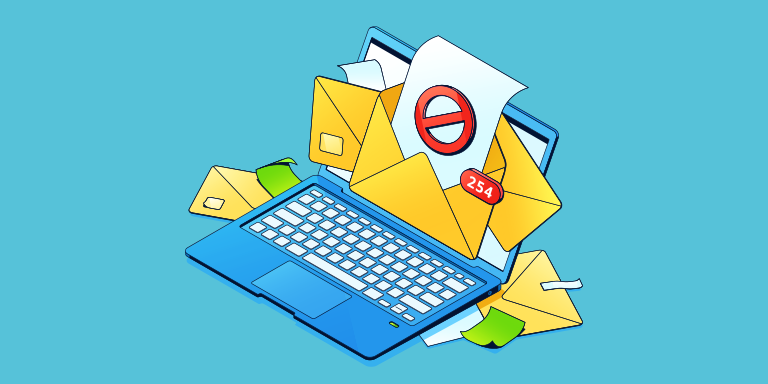
Rebuilding a failing email program does not require an organization to discard its entire marketing infrastructure. Instead, industry experts recommend a disciplined, step-by-step refinement of key campaign elements to enhance clarity, relevance, and psychological pull.
-
Precision in Subject Line Engineering
High-performing subject lines achieve results by balancing curiosity with clear, tangible value. Rather than resorting to clickbait or tired marketing cliches, effective subject lines address the recipient’s specific desires or pain points. By shifting the focus from what the company is sending to what the reader stands to gain, open rates and subsequent engagement naturally rise. -
Audience Segmentation and Behavioral Targeting
Segmentation is widely recognized by digital strategists as the single most effective lever for increasing email engagement. By dividing a mailing list into smaller, highly defined cohorts based on user behavior, engagement history, past purchases, or demographic attributes, brands can deliver messages that feel custom-tailored. Statistical analyses consistently show that segmented campaigns achieve significantly higher open and click-through rates compared to non-segmented broadcasts. -
Advanced Contextual Personalization
True personalization extends far beyond inserting a subscriber’s first name into the greeting line. Modern consumers expect brands to leverage contextual data—such as recent website browsing history, abandoned cart items, or previous interaction milestones—to shape the content of the email. When an automated campaign reflects a user’s recent actions in real-time, the communication shifts from an intrusive advertisement to a helpful, timely resource. -
Psychological Priming and CTA Optimization
Calls to action must be treated as strategic focal points rather than afterthought hyperlinks. Utilizing principles of behavioral psychology, such as urgency, scarcity, clarity of benefit, and social proof, helps guide the reader intuitively toward the desired outcome. Vague prompts like "Click Here" or "Learn More" should be replaced with explicit, value-driven phrasing that outlines the exact reward for taking action. -
Iterative Testing and Analytics
Sophisticated marketing teams treat every campaign deployment as an empirical experiment. Through continuous A/B testing of subject lines, layout designs, send times, and CTA placements, organizations can eliminate guesswork and allow empirical data to dictate future strategy. What resonates with one demographic segment may underperform with another, making ongoing measurement essential for sustained success.
Industry Perspectives and Expert Analysis
Leading voices in digital commerce and email infrastructure emphasize that consumer expectations regarding brand communication have reached an all-time high. According to insights from prominent marketing software ecosystems, such as Omnisend, the brands achieving the highest return on investment are those that successfully merge behavioral psychology with seamless technical execution.
Industry analysts note that automated, trigger-based workflows—such as welcome series, browse-abandonment reminders, and post-purchase follow-ups—consistently outperform standard promotional newsletters because they meet the consumer at the precise moment of intent. By respecting the customer’s time and attention through concise copywriting and mobile-optimized design, companies build long-term brand equity while driving immediate conversion metrics.
Broader Business Implications and Future Outlook
The financial implications of optimizing email engagement extend far beyond short-term sales spikes. Email marketing remains one of the highest-yielding channels in terms of return on investment, frequently outperforming social media advertising and paid search in customer lifetime value retention.
As privacy regulations continue to tighten and third-party data tracking faces increasing restrictions across major operating systems, first-party data collected through email subscription lists is becoming an irreplaceable corporate asset. Companies that fail to master email engagement risk forfeiting a direct, unmediated communication channel with their customer base, leaving their revenue streams vulnerable to shifting algorithms on third-party social and search platforms.
Ultimately, the revitalization of a low-performing email strategy requires a disciplined commitment to user-centric design, rigorous testing, and empathetic communication. By respecting the intelligence of the recipient and delivering targeted, frictionless value with every send, organizations can transform their email channels from overlooked background noise into powerhouse drivers of sustainable business growth.