Gridcare Emerges From Stealth With 13.5 Million Dollars To Solve The Data Center Power Crisis By Unlocking Hidden Grid Capacity

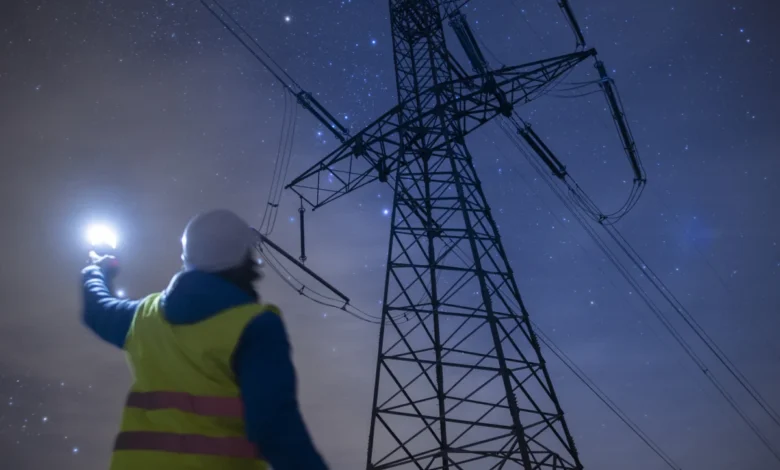
The rapid acceleration of generative AI and the massive expansion of cloud computing have placed unprecedented strain on global electrical grids. Hyperscalers—the massive entities operating cloud infrastructure—are currently locked in a race to build data centers at a pace that often outstrips the physical capabilities of regional utility providers. With data center power demand projected to double over the next five years, developers frequently face multi-year queues for grid interconnection, forcing many to consider extreme measures, such as building independent, "behind the meter" power plants to bypass traditional infrastructure bottlenecks.
Amidst this gridlock, a new player has emerged from stealth with a high-stakes proposition. Gridcare, a startup founded by veteran power grid researcher Amit Narayan, has closed an oversubscribed $13.5 million seed round to serve as a digital matchmaker between data center developers and utility providers. By leveraging generative AI to identify "hidden" capacity within existing electrical infrastructure, the company aims to bypass the need for massive new transmission builds and instead optimize the utilization of the lines already in the ground.
The Anatomy of the Power Bottleneck
To understand the severity of the crisis, one must look at the historical nature of grid planning. For decades, utilities planned for incremental load growth. The sudden, massive, and concentrated demand from hyperscale AI clusters—which can require hundreds of megawatts at a single site—was not factored into long-term infrastructure forecasting. Consequently, the interconnection queue has become the single largest barrier to digital expansion in the United States and Europe.
Utility companies are inherently risk-averse, often citing aging infrastructure and potential instability as reasons for denying or delaying new, high-density connections. When a developer is told they must wait five to seven years for a substation upgrade, the economic feasibility of their project often evaporates. This has led to the current trend of "behind the meter" generation, where data centers construct dedicated natural gas, hydrogen, or even nuclear small modular reactors (SMRs) on-site. While these solutions solve the immediate power hunger, they are capital-intensive, environmentally complex, and move the industry further away from the goal of a unified, renewable-integrated grid.
Gridcare’s Technological Approach
Gridcare’s solution is rooted in the belief that the current grid is not as "full" as utility managers believe. Narayan, who brings 15 years of experience from his tenure as a Stanford researcher and his work in previous grid-tech ventures, argues that existing utilities lack the granular, real-time data modeling necessary to see the "slack" in their own systems.
The startup’s methodology is multifaceted, utilizing generative AI to synthesize massive datasets. The company maps existing transmission and distribution lines and layers them with critical contextual information:
- Logistical Data: Availability of high-speed fiber optic connectivity, natural gas pipelines, and industrial water access.
- Environmental Factors: Predictive modeling for extreme weather patterns, which could affect grid stability.
- Social License: Analysis of community sentiment and regulatory permitting environments for new development.
- Regulatory Compliance: Cross-referencing findings against Federal Energy Regulatory Commission (FERC) guidelines and regional independent system operator (ISO) protocols.
By processing over 200,000 distinct scenarios for every study, Gridcare claims it can pinpoint locations where the grid is underutilized but currently marked as "constrained" by outdated legacy software. The company then verifies these findings with the utility provider, acting as a bridge to facilitate a connection agreement that both parties can trust.
The Seed Funding and Investor Confidence
The $13.5 million seed round highlights the intense investor interest in energy-infrastructure technology. The round was led by Xora, the deep tech venture arm of Temasek, signaling institutional confidence in the scalability of Gridcare’s software-first approach to a physical infrastructure problem.
The investment group also includes a roster of prominent climate and tech-focused firms, including Acclimate Ventures, Aina Climate AI Ventures, Breakthrough Energy Discovery, Clearvision, Clocktower Ventures, Overture Ventures, Sherpalo Ventures, and WovenEarth. The involvement of Breakthrough Energy Discovery—the investment fund founded by Bill Gates—is particularly telling, as it suggests the technology is viewed as a critical lever for decarbonization by enabling faster integration of renewable energy sources that are currently stuck in interconnection queues.
The Economics of Unlocking Capacity
The business model for Gridcare is as straightforward as it is lucrative. The company charges developers a performance-based fee tied directly to the number of megawatts of grid capacity they successfully unlock. For a hyperscaler, where the lost revenue from a delayed data center launch can amount to tens of millions of dollars per month, paying a premium to shave years off a connection timeline is a highly efficient capital expenditure.
Narayan suggests that the strategy is not always about adding new load, but rather about "demand flexibility." In some cases, Gridcare works with developers to agree to load shedding—where the data center temporarily reduces its power consumption during peak grid stress in exchange for a larger overall capacity allotment. In other instances, the developer may provide the capital to accelerate the installation of grid-scale batteries, which provides a buffer for both the utility and the data center.
Implications for the Future of the Grid
If Gridcare’s projection that it can unlock more than 100 gigawatts of capacity holds true, the implications for the global energy transition would be profound. This would effectively remove the primary justification for building redundant, behind-the-meter fossil fuel generation, allowing hyperscalers to remain plugged into a grid that is increasingly fed by large-scale wind and solar farms.
However, challenges remain. Utilities are notoriously slow to adopt third-party software, and the regulatory environment is heavily fragmented. Each state, and often each utility jurisdiction, has its own specific rules governing grid access. Furthermore, the sheer volume of data required to maintain an accurate "digital twin" of the grid is staggering, and any error in the model could lead to localized grid failure or dangerous instability.
Industry analysts suggest that while Gridcare offers a promising path, it is not a panacea. The physical reality of transmission line capacity remains a hard limit. Even if the software finds a way to squeeze more power through existing lines, the physical degradation of aging transformers and power lines remains a concern.
Nevertheless, the emergence of Gridcare reflects a broader paradigm shift: the recognition that we cannot simply build our way out of the energy crisis through physical construction alone. In an era of AI-driven demand, the efficiency of our existing infrastructure is just as important as the generation capacity itself. By treating the grid as a data problem, Gridcare is betting that the path to a high-compute future is already beneath our feet, waiting to be managed with greater intelligence.
As the company moves from its stealth phase into active operations, all eyes will be on its ability to execute. If successful, it may well set a new standard for how the intersection of AI, big data, and utility regulation can solve the most pressing infrastructure bottlenecks of the 21st century.