The upcoming conference hosted by the Children’s Health Defense (CHD), an organization long synonymous with vaccine skepticism, has sparked renewed national debate as it prepares to convene on September 17. Billed under the aspirational banner of a "pursuit of a more perfect future," the gathering aims to solidify the ideological framework of what proponents call the "health freedom movement." While the event promises to explore current risks and opportunities within the public health landscape, its agenda and high-profile speaker list have drawn intense scrutiny from the scientific and medical communities.
The conference, which will be preceded by an opening reception on September 16, features a roster of speakers deeply entrenched in the skeptical discourse surrounding immunization. Notable attendees include Senator Ron Johnson (R-Wisc.), a vocal critic of federal vaccine mandates, and Senator Rand Paul (R-Ky.). The involvement of these federal lawmakers underscores the extent to which anti-vaccine rhetoric has transitioned from the fringes of political discourse into the halls of Congress. Joining them are figures such as Mark Gorton, president of the MAHA Institute—an organization with close ties to Robert F. Kennedy Jr.—and Jan Jekielek, a senior editor at the Epoch Times. CHD staff, including CEO Mary Holland, are slated to anchor the day’s proceedings, reinforcing the organizational intent to influence the national health agenda.
Logistics and Market Demand
The demand for access to this discourse remains high despite widespread condemnation from major health institutions. According to the organization’s official event portal, in-person tickets priced at $250 sold out well in advance of the September date. To meet demand, the organizers have released limited "overflow" seating passes for the main conference room at $125, alongside digital livestream access for $100. The monetization of these sessions highlights a robust and dedicated financial ecosystem that supports the dissemination of alternative health views, even as public health officials continue to report declining vaccination rates for preventable diseases like measles and pertussis.
A Complicated Political Trajectory
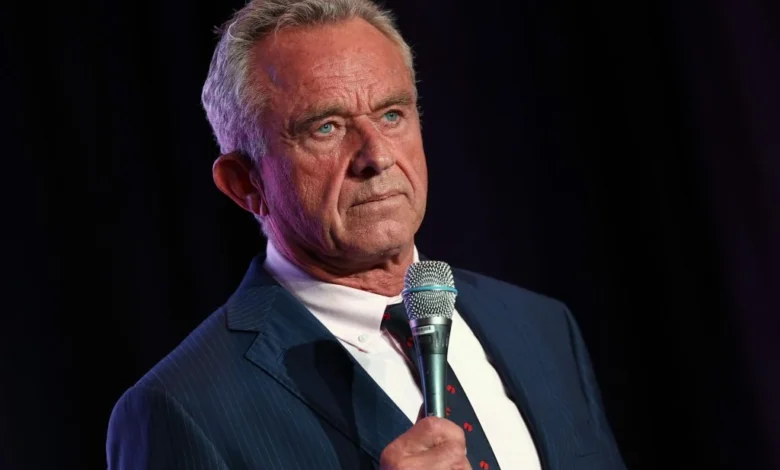
The centerpiece of the conference’s controversy is the involvement of Robert F. Kennedy Jr. Since his appointment as health secretary in early 2025, Kennedy has navigated a difficult political path regarding his long-standing history as an anti-vaccine activist. Upon assuming his cabinet role, Kennedy formally severed his professional ties with the Children’s Health Defense, an entity he founded and long championed. During his confirmation hearings, he repeatedly asserted that he is "pro-vaccine," a stance that stood in stark contrast to his decades-long career of questioning the safety and efficacy of immunizations.
This pivot was framed by political analysts as an attempt to harmonize his personal convictions with the requirements of federal executive office. However, his decision to headline the upcoming CHD event suggests a reversion to his ideological roots. Observers note that this shift coincides with reports that President Donald Trump has expressed frustration regarding the pace of vaccine-related policy changes. Recent reporting suggests that the administration has pressured Kennedy to more aggressively investigate debunked claims, most notably the long-disproven hypothesis that vaccines are a primary driver of autism spectrum disorder.
Historical Context and Public Health Implications
To understand the weight of this conference, one must look at the historical trajectory of the anti-vaccine movement in the United States. For much of the 20th century, immunization was treated as a settled matter of public health policy, credited with the near-eradication of diseases such as polio and smallpox. However, the early 2000s saw a surge in organized skepticism, largely fueled by the now-retracted 1998 Lancet study by Andrew Wakefield, which falsely suggested a link between the MMR vaccine and autism.
Despite the fact that the study was debunked and retracted by The Lancet in 2010—and that Wakefield lost his medical license—the narrative persisted. Children’s Health Defense became a central clearinghouse for this skepticism, expanding its reach through social media and grassroots organizing. The impact of this movement is measurable; data from the Centers for Disease Control and Prevention (CDC) indicate that vaccine exemption rates for kindergarteners have been steadily rising over the last decade, reaching historic highs in the 2023-2024 school year.
Analysis: The Intersection of Policy and Populism
The upcoming conference serves as a focal point for the tension between institutional science and populist skepticism. Analysts suggest that by providing a platform for lawmakers alongside activist organizations, the CHD is attempting to mainstream arguments that were previously relegated to the internet’s periphery.
"The danger here is not just the content of the speeches, but the institutionalization of doubt," said a public health policy researcher who spoke on the condition of anonymity. "When high-ranking government officials participate in forums that challenge the foundational consensus of immunology, it erodes public trust in the regulatory bodies that ensure our safety. This creates a feedback loop where policy is no longer driven by data, but by the prevailing sentiment of a movement that prioritizes individual autonomy over herd immunity."
The implications for public health are significant. If government officials tasked with protecting the nation’s health are actively collaborating with groups dedicated to dismantling the immunization schedule, the infrastructure for disease prevention may face unprecedented disruption. The potential for a resurgence of vaccine-preventable diseases is a concern shared by the American Academy of Pediatrics and the American Medical Association, both of which have recently reiterated the scientific consensus that vaccines are safe and effective.
Official Responses and Future Outlook
While no formal statement has been issued by the Department of Health and Human Services regarding Kennedy’s attendance at the conference, critics have pointed out the potential for a conflict of interest. The Hatch Act and various federal ethics guidelines generally discourage public officials from participating in events that promote specific private agendas that may contradict the mission of their agencies.
Meanwhile, supporters of the event argue that the conference is a necessary venue for open debate. They contend that the public health establishment has become too rigid and that dissenting voices—even those that contradict established science—are essential for a "transparent" healthcare system.
As the September 17 date approaches, the event is expected to draw a combination of activists, concerned citizens, and political observers. Whether the conference serves as a platform for a shift in federal health policy or remains an outlier in the landscape of American political discourse remains to be seen. What is clear, however, is that the debate over vaccines has moved from the doctor’s office into the center of national governance, where it will likely remain a defining issue of the current political cycle.
The confluence of political pressure from the executive branch, the ongoing mobilization of the CHD, and the legislative support from figures like Senators Johnson and Paul suggests that the "health freedom" narrative is far from dissipating. Instead, it is evolving, moving toward a phase where the boundary between public policy and ideological activism is increasingly porous. The long-term impact of this shift—on vaccination rates, public trust, and the integrity of scientific inquiry—will likely be a subject of study and contention for years to come.
Related posts: