DXL Men’s Apparel Faces Second Quarter Sales Declines as Leadership Outlines Strategic Pivot to Reverse Performance Trends

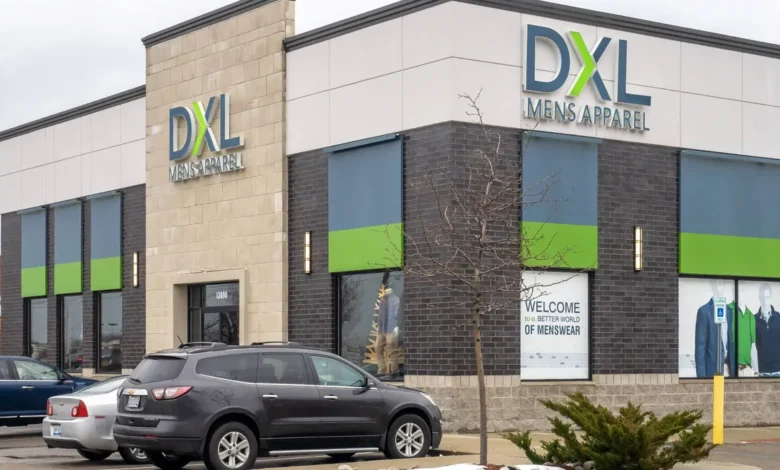
Destination XL Group, the leading retailer specializing in big and tall men’s apparel, continues to navigate a challenging retail landscape as it reported further sales declines during the second quarter. The company, which has been working to stabilize its financial trajectory, remains optimistic about a potential recovery, with interim leadership emphasizing that a shift toward growth is on the horizon. Despite these assurances, the reality of the current retail climate—characterized by evolving consumer health trends, shifting economic priorities, and a necessary recalibration of the store footprint—presents a complex path forward for the brand.
The recent financial disclosures highlight a period of transition for Destination XL (DXL). While the company has seen some volatility in its year-over-year performance, management is pivoting toward a four-pillar growth strategy designed to modernize the brand, optimize its physical assets, and address the specific behavioral shifts of its core demographic.
Chronology of Recent Financial Performance
The trajectory of DXL’s sales has been a subject of significant scrutiny among retail analysts throughout the current fiscal year. The company’s performance has been erratic, reflecting broader macroeconomic headwinds and specific challenges within the apparel sector.
In the fourth quarter of the previous fiscal year, DXL reported a 6% year-over-year sales decline, a figure that signaled significant friction in consumer spending. This was followed by a 2.1% year-over-year decrease in the first quarter of this year, which initially suggested that the rate of decline was stabilizing. However, the second quarter results showed a slight deepening of that decline, outpacing the first quarter’s figures. This fluctuation has prompted leadership to look beyond mere macro-economic factors and examine the structural shifts occurring within their customer base.
The leadership transition has also been a defining feature of this period. Following recent executive changes, Board Chair Lionel Conacher stepped into the role of interim CEO. Conacher has been tasked with steadying the ship and overseeing the integration of new talent, most notably the appointment of Jimmy Olsson as the company’s first-ever chief growth officer on September 2.
The Impact of GLP-1 Medications on Retail Apparel
One of the most nuanced challenges currently facing DXL is the rising popularity of GLP-1 weight-loss medications. This phenomenon, which has impacted the broader healthcare and consumer goods sectors, has created a unique "wait-and-see" period for DXL’s core demographic.
According to internal customer surveys conducted by DXL, a meaningful portion of their base is actively using these medications. The behavioral pattern observed is consistent: customers undergoing weight-loss journeys frequently pause their apparel purchasing entirely. They are effectively opting out of the market until their body size stabilizes.
This creates a temporary, yet significant, vacuum in sales for a retailer whose entire value proposition is based on size-specific apparel. However, the data also provides a silver lining. A majority of these customers have indicated to the company that they intend to return to DXL once they reach a stable weight, suggesting that the current dip in traffic may be cyclical rather than a permanent loss of customer loyalty. The challenge for DXL, therefore, is to bridge the gap during this period of consumer inactivity and ensure that the brand remains top-of-mind when these customers are ready to rebuild their wardrobes.
Strategic Store Portfolio Optimization
A key component of the company’s turnaround plan is a more aggressive approach to its physical real estate. DXL is currently moving away from a "growth at all costs" mentality toward a "productivity-first" model.
Interim CEO Conacher and his executive team have identified that the company’s return on assets needs immediate improvement. To achieve this, the company has begun a targeted reduction of its store footprint. For the current fiscal year, DXL has announced the closure of three underperforming locations. This is merely the beginning of a broader audit.
Looking toward the next fiscal year, the company faces a wave of lease renewals, with a few dozen locations reaching the end of their contract terms. Management has stated that these will be evaluated on a case-by-case basis. The strategy is to close locations where there is a high probability of capturing the existing customer volume at a nearby store. By consolidating its footprint, DXL aims to enhance the profitability of its remaining fleet and reduce the overhead costs associated with maintaining underperforming retail spaces in a digital-first shopping environment.
The Four-Pillar Growth Strategy
With the arrival of Chief Growth Officer Jimmy Olsson, DXL has formalized a four-pillar growth strategy aimed at reversing the current sales slide. Olsson, who brings a wealth of experience from major retail players including Walmart, Gap Inc., and Coach, is focusing on revitalizing the brand’s engagement with its customers.
The first pillar involves "sharpening product storytelling." DXL recognizes that its historical reliance on utility—simply providing clothes that fit—is no longer sufficient in a competitive market. The brand is now focusing on creating a more compelling narrative around its products, emphasizing style, quality, and the specific needs of the big and tall consumer.

The second pillar centers on the company’s proprietary FitMap body scanning technology. This tool has been a success, with more than 150,000 customers scanned to date. The data confirms a positive correlation between engagement with the technology and increased spending, as the scan provides a level of personalization that traditional off-the-rack shopping cannot match. By leveraging this data, DXL hopes to deepen customer relationships and increase the lifetime value of every shopper.
The third and fourth pillars focus on expanding private label brands and driving new customer acquisition. Olsson has been candid about the urgency of the latter, admitting that the recent traffic miss has exposed a gap in the company’s ability to attract new, younger, or different segments of the big and tall market. Building brand awareness is now a top-tier priority to ensure that the customer funnel remains healthy despite the temporary loss of existing, weight-conscious shoppers.
Analysis: Implications for the Retail Apparel Sector
The situation at DXL serves as a microcosm for the broader retail apparel industry, which is currently undergoing a period of intense transformation. Several factors are converging to create a difficult environment for traditional retailers:
- Consumer Discretionary Spending: High interest rates and lingering inflation continue to pressure the discretionary income of the middle-class consumer, causing many to delay "non-essential" purchases like new clothing.
- Structural Shifts in Demand: As seen with the impact of GLP-1s, consumer health trends are changing the fundamental demand curves for apparel. Retailers that lack the agility to adapt to these shifts—whether through better fit technology or more flexible product offerings—risk being left behind.
- Real Estate Productivity: The shift toward e-commerce has made physical retail spaces expensive liabilities rather than growth engines. Retailers are increasingly forced to move away from legacy expansion plans and toward high-efficiency, localized models.
For DXL, the path to recovery relies heavily on whether the company can successfully pivot from being a functional utility to a lifestyle destination. The ability to retain its customer base throughout their health journeys while simultaneously acquiring new shoppers through improved digital marketing and store efficiency will be the true test of the current leadership’s strategy.
Looking Ahead
While the recent quarterly results were underwhelming, the management team at DXL maintains a sense of guarded optimism. The combination of a new, experienced growth executive and a more disciplined approach to asset management suggests a company in the process of a serious, structural rebuild.
The market will be watching the next few quarters closely to see if the "clear signs" of an imminent sales recovery translate into tangible growth. As the company moves through its lease renewal cycle and refines its product storytelling, the focus will remain on whether these tactical changes can offset the macro-level pressures facing the apparel industry at large. For now, Destination XL stands at a crossroads, balancing the legacy of a trusted brand with the urgent need to evolve for a changing consumer.
Related posts: