Madrid Deep Space Communications Complex Goes Dark Amidst Raging Wildfires, Crippling NASA’s Deep Space Network

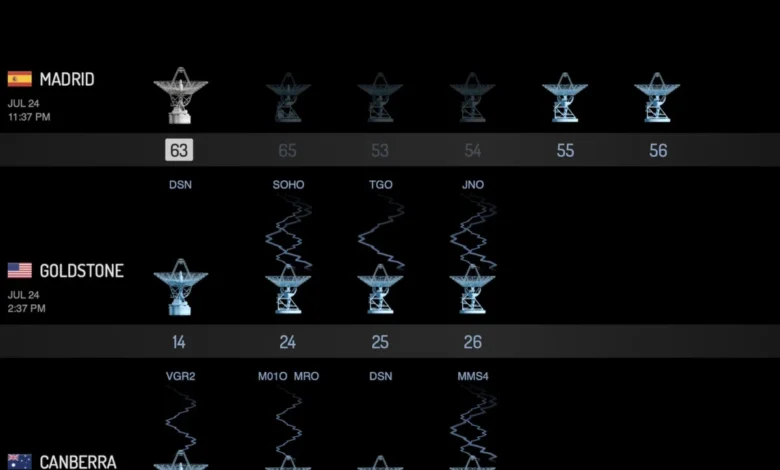
The Madrid Deep Space Communications Complex, a critical node in NASA’s global network for communicating with its most distant spacecraft, ceased operations Friday afternoon as encroaching wildfires forced its evacuation. The unexpected shutdown leaves NASA’s Deep Space Network (DSN) severely hampered, relying on significantly reduced capacity at a time of increasing demand for interplanetary and lunar missions.
On Friday afternoon, a review of NASA’s DSN status website revealed a stark absence of activity emanating from the Madrid facility. In contrast, antennas at the network’s California and Australian sites continued their vital work, maintaining contact with a suite of NASA spacecraft. Among these were the iconic Voyager 2, venturing into the vastness of interstellar space, and Juno, diligently exploring the colossal planet Jupiter. The silence from Madrid, however, marked a significant disruption to NASA’s ability to monitor and control its most ambitious scientific endeavors.
The immediate cause for the Madrid complex’s operational halt was the escalating threat of wildfires that have engulfed the mountainous regions west of the Spanish capital. These fires, fanned by a relentless summer heatwave and exacerbated by prolonged drought conditions plaguing Spain and much of Europe, have forced the evacuation of over 19,000 residents from numerous towns and villages. The scale of the firefighting effort is immense, with more than 2,000 personnel and 10 aircraft battling the infernos.
NASA, in a statement acknowledging the situation, underscored the paramount importance of its personnel’s safety. "The safety and well-being of our personnel is our highest priority and our thoughts are with the families and neighbors who are also experiencing the impact of the wildfires in the surrounding communities," a NASA spokesperson stated. "We will provide updates as conditions evolve." This measured response highlights the agency’s commitment to its staff while navigating a challenging operational environment.
Adding to the DSN’s predicament, a separate, crucial deep space tracking station, jointly owned and operated by the Spanish government and the European Space Agency (ESA), also experienced an evacuation due to the same wildfire threat. The Cebreros tracking station, an integral part of ESA’s Estrack network, is situated a mere few miles from NASA’s DSN facility in Robledo de Chavela. Its temporary incapacitation further compounds the strain on global deep space communication capabilities. This proximity underscores the shared vulnerability of these critical scientific infrastructure assets to environmental hazards.
The implications of the Madrid complex’s shutdown are far-reaching, particularly given the already precarious state of the DSN. With the Madrid site offline, the network is now effectively operating with only one fully functional 70-meter radio antenna located in Australia. This single colossal dish, capable of transmitting and receiving signals across vast interplanetary distances, now shoulders an immense burden.
Adding to the network’s challenges, the 70-meter antenna in California has been out of commission since last year. This extended downtime resulted from an unfortunate accident during the Artemis II mission preparations. In a critical failure, the antenna "over-rotated," causing significant damage to internal cables and water lines. The mishap led to a substantial flood at the antenna’s base, inundating the structure with approximately 200,000 gallons of water contaminated with glycol, a hazardous substance that necessitated extensive environmental cleanup.
The financial and temporal toll of the California antenna’s repairs is substantial. NASA officials estimate the cleanup and restoration costs to range between $4.1 million and $4.6 million. These repairs are being strategically combined with already planned upgrades to the antenna, a pragmatic approach to maximize efficiency. However, this ambitious undertaking means the California antenna is not expected to return to full operational status until sometime in 2028.
The combined operational limitations of the Madrid and California sites place an unprecedented reliance on the Goldstone, California, DSN complex and the Canberra, Australia, facility. The latter, with its 70-meter antenna, becomes the sole primary dish capable of communicating with the most distant probes. This scenario significantly restricts the DSN’s ability to simultaneously track multiple spacecraft, conduct complex maneuvers, or respond to urgent operational needs.
DSN: The Unsung Backbone of Space Exploration
The Deep Space Network (DSN) is a global network of large radio antennas operated by NASA that supports interplanetary scientific missions and radio astronomy observations. It is the primary means by which NASA communicates with its spacecraft beyond the orbit of the Moon. The DSN consists of three main complexes located strategically around the globe to ensure continuous coverage: one in Goldstone, California; another in Canberra, Australia; and the now-offline complex in Madrid, Spain.
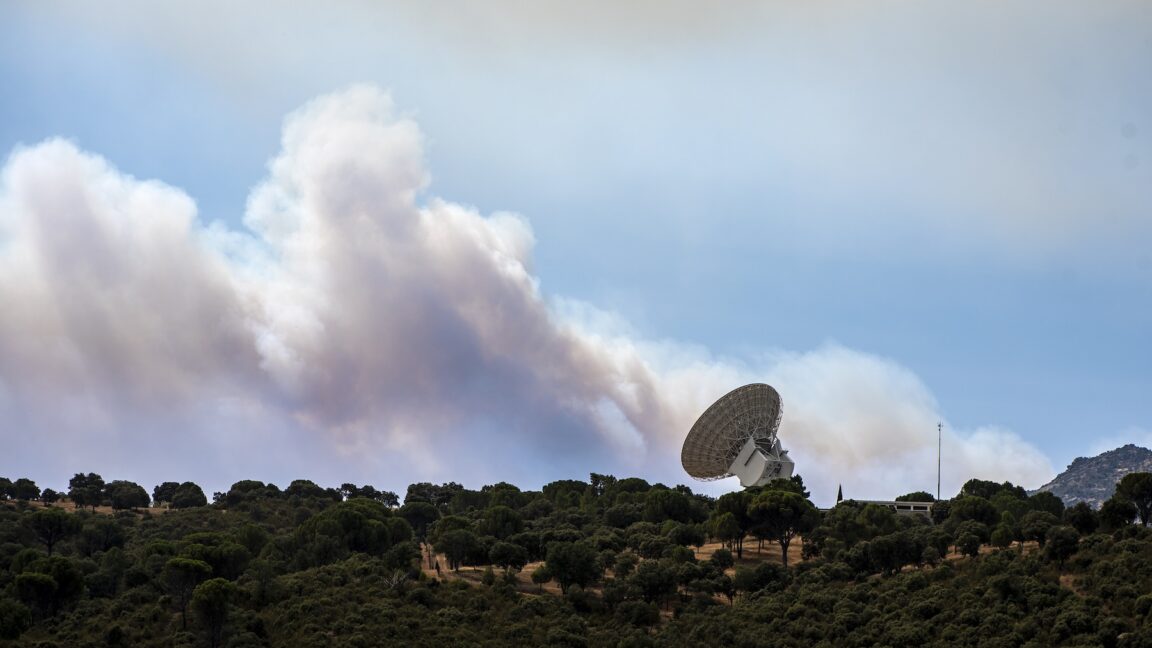
Each complex is equipped with large parabolic antennas, including the powerful 70-meter (230-foot) dishes, which are essential for detecting the faint signals transmitted by spacecraft millions or even billions of miles away. These antennas are also used to send commands to the spacecraft, enabling mission controllers to steer them, activate instruments, and download scientific data. The precise alignment and immense power of these dishes are crucial for the success of missions that push the boundaries of human knowledge, from exploring distant planets to searching for signs of life beyond Earth.
The DSN’s operational status is a constant concern for mission planners. Redundancy is key, and the loss of any single major facility, especially one as critical as the Madrid complex, creates significant challenges. The network is designed to accommodate the orbital mechanics of Earth and the trajectories of spacecraft, ensuring that at least one antenna is always within line of sight of a particular spacecraft. When a site goes offline, this intricate scheduling becomes far more complex, requiring careful prioritization of communication windows.
The Impact on Current and Future Missions
The current disruption to the DSN comes at a time when NASA’s deep space exploration portfolio is expanding rapidly. The Voyager 2 probe, launched in 1977, continues its historic journey beyond the heliosphere, transmitting invaluable data about the interstellar medium. Juno has been meticulously studying Jupiter’s atmosphere, magnetic field, and internal structure since its arrival in 2016. Both missions, and many others, rely on the DSN for their continued operation and scientific output.
The reduced capacity of the DSN raises questions about the agency’s ability to manage its existing fleet of spacecraft efficiently. With fewer antennas available, the time allocated for communication with each mission will likely be reduced, potentially impacting the pace of data acquisition and command execution. This could have minor delays for ongoing science operations.
However, the good news for the DSN is that the next major human spaceflight initiative, the Artemis program, is still some years away from its most demanding phases. Artemis missions, particularly those involving lunar landings and extended human presence on the Moon, place exceptionally high demands on the DSN. These missions require significant bandwidth for telemetry data, high-resolution imagery, and voice communication to support human spaceflight operations.
The Artemis III mission, the program’s first planned lunar landing with astronauts, has been rescheduled and will now commence with a flight in low-Earth orbit. This initial mission will focus on testing the Orion capsule in conjunction with commercial lunar landers developed by SpaceX and Blue Origin. While this does not diminish the DSN’s importance, it slightly alters the immediate pressure for full network capacity for a lunar landing.
The subsequent Artemis IV mission, which is slated as the program’s first astronaut expedition to the lunar surface, is now targeted for no earlier than 2028. This timeline offers a crucial window for NASA to address the ongoing repairs to the California antenna and potentially re-establish full operational capacity at the Madrid site before the full demands of sustained lunar exploration are placed on the network. This extended period provides a critical opportunity to implement robust solutions and ensure the DSN’s readiness for the ambitious future of space exploration.
Broader Context: Wildfires and Climate Change
The wildfires raging near Madrid are symptomatic of a broader environmental crisis. Spain, in particular, has been grappling with increasingly severe and frequent wildfire seasons in recent years. This trend is directly linked to the escalating impacts of climate change, which manifests as prolonged periods of extreme heat and persistent drought. These conditions create a highly flammable landscape, making it easier for fires to ignite and spread with devastating speed and intensity.
The European Union has also experienced a significant increase in wildfire activity across the continent. Data from the European Forest Fire Information System (EFFIS) has consistently shown a worrying upward trend in the number of hectares burned annually. In 2022, for instance, the EU experienced one of its worst wildfire seasons on record, with over 700,000 hectares of forest and other natural land consumed by flames, a figure significantly higher than the previous decade’s average.
This environmental backdrop underscores the vulnerability of critical infrastructure, including scientific facilities, to the consequences of a changing climate. The DSN’s reliance on geographically dispersed ground stations means that these facilities are exposed to a range of environmental risks, from extreme weather events to seismic activity. The current situation in Madrid serves as a stark reminder of the need for resilience planning and adaptation strategies for vital scientific networks.
The long-term implications for space exploration are significant. As NASA and other space agencies embark on increasingly ambitious missions, the reliability of their communication infrastructure becomes paramount. The temporary incapacitation of the Madrid DSN site, coupled with the extended outage of the California antenna, highlights the need for ongoing investment in maintaining and upgrading the DSN, as well as exploring innovative solutions for redundancy and operational flexibility. This could include the development of more agile ground station networks, enhanced on-board communication capabilities for spacecraft, or even the strategic placement of future DSN facilities in regions less susceptible to extreme environmental threats. The current crisis, while disruptive, may ultimately serve as a catalyst for strengthening the vital arteries of space communication for generations to come.