How a Sixth-Grade Teacher and a Door-to-Door Job Built a Billion-Dollar Pest Control Empire


The Formative Influence of Mentorship and Neurodiversity
The foundation of Royce’s empire was not laid in a boardroom, but in a sixth-grade classroom. Throughout his early education, Royce struggled with a lack of focus that he, and those around him, initially interpreted as a lack of intellectual capability. This internal narrative is common among children with undiagnosed Attention Deficit Hyperactivity Disorder (ADHD). It was not until he encountered Mrs. Luft, a teacher who recognized his potential and provided the validation he lacked, that Royce began to apply himself. This early experience highlighted a core tenet of Royce’s later leadership philosophy: the importance of belief and external validation in unlocking human potential.
As an adult, Royce’s diagnosis of ADHD shifted from a perceived liability to a strategic "superpower." In the high-stakes, fast-paced environments of sales and entrepreneurship, the hyper-focus and high energy associated with ADHD allowed him to outpace peers who were more suited for traditional, sedentary corporate roles. This psychological framework became a critical component of his business model, particularly in how he structured high-intensity sales training and gamified corporate environments to keep employees engaged.
From McDonald’s to Door-to-Door Mastery: A Chronology of Grit
Royce’s professional development began at age fifteen at a McDonald’s, a job he initially found embarrassing but later credited with teaching him the essential value of "best practices" and standardized systems. This lesson in operational efficiency would later become the backbone of Aptive’s scalability.
However, the pivotal shift occurred during his college years. While his peers pursued internships at prestigious financial institutions, Royce spent four summers in Sacramento, California, selling pest control services door-to-door. His start was infamously poor; he earned zero commissions during his first week, performing what he termed "free cardio" while teammates secured multiple daily contracts. Rather than retreating, Royce engaged in a rigorous self-study program, consuming sales literature and practicing for 90 minutes daily.

By the end of his first summer, Royce was the top rookie out of 200 representatives. This period established the "persistence is genius in disguise" mantra that would define his career. By the time he graduated with a finance degree, he had saved $300,000—a sum that most of his peers wouldn’t see for years into their professional careers.
The Strategic Pivot: Rejecting the "Skyline" for the Suburbs
Upon graduation, Royce faced a choice between a traditional career in investment banking and the "unsexy" world of pest control. Despite the social prestige of M&A and a high-rise office, Royce’s former boss challenged him to consider the scalability of the service sector. His boss had recently exited a startup for $10 million after only four years. Royce realized that "success doesn’t have to wear a suit."
Choosing opportunity over image, Royce invested his $300,000 in start-up capital. He utilized his finance background to analyze the industry’s pain points, identifying 30 specific areas for improvement that his competitors were neglecting. This analytical approach, rare in the fragmented pest control industry, allowed him to build a business that was as much a financial engine as it was a service provider.
Financial Volatility and the "Cash Flow Reality"
The early years of Royce’s entrepreneurial journey were marked by a near-catastrophic success. In his first year operating in Los Angeles, the company grew at a rate that exceeded all projections, securing 7,500 new customers compared to an expected 4,000. While the revenue figures were impressive, the business model required upfront commission payments to sales representatives before the recurring revenue from customers could materialize.
This timing gap created a severe liquidity crisis. Royce was forced to negotiate with his sales leaders, offering a 10% interest rate to delay their bonus payments by several months. This experience solidified a core financial axiom for Royce: "Revenues are vanity, profits are sanity, but cash flow is reality." This lesson prompted a structural shift in how he funded future growth, ensuring that capital reserves were always sufficient to weather the "success-induced" cash crunches common in high-growth service firms.

The Asset Deal Model: Three Exits and a "Golden Goose"
One of the most sophisticated aspects of Royce’s career is his series of three exits to the same strategic buyer. Unlike many founders who sell their entire company and move on, Royce utilized an "asset deal" structure. Strategic buyers in the pest control industry, such as Terminix or Rollins, often prioritize the acquisition of customer contracts and the technicians who service them. They frequently have their own established brands and back-office infrastructures.
Recognizing this, Royce sold the customer portfolios and technician teams while retaining his leadership, operations managers, and sales force. This allowed him to maintain the core intellectual and human capital of his organization—the "golden goose"—and use the proceeds from the sales to launch the next venture with a seasoned team in new geographic markets. This cycle allowed him to scale without equity dilution or the need for external venture capital.
Aptive Environmental: Scaling to a Billion-Dollar Empire
Aptive Environmental, Royce’s fourth and most ambitious venture, grew into the third-largest residential pest control service in North America. The company’s growth, which was seven to ten times faster than the industry average, was driven by three primary factors:
- The Sales Machine: Royce built a sales organization of over 3,000 people. By implementing a standardized training program focused on "option closes," "RAC" (Resolve, Ace, Close) techniques, and non-verbal communication, Aptive’s reps produced significantly more than those at competing firms.
- Service Innovation: Having personally knocked on 60,000 doors, Royce had a "PhD in homeowner complaints." He tailored Aptive’s service features to address specific customer pain points that larger, legacy firms ignored.
- Technological Integration: Aptive invested heavily in proprietary software to gamify sales and optimize route efficiency. At a time when many blue-collar companies were still using paper logs, Aptive used real-time data and nationwide sales tournaments to boost productivity by up to 30%.
The "Stealthy Wealthy" and the Blue-Collar Renaissance
Royce’s success coincides with a broader economic trend. Data suggests that approximately 43% of the top 0.1% of income earners in the United States—those earning upwards of $2.3 million annually—are owners of "boring" blue-collar businesses. These industries often offer high margins and are "recession-resistant," as biological pests do not react to fluctuations in the stock market.
Furthermore, the "Great Wealth Transfer" is currently underway, as millions of Baby Boomers who own essential service businesses reach retirement age. Many of these owners lack a succession plan, creating a massive opportunity for a new generation of entrepreneurs to acquire and modernize these firms. Royce also notes that while Artificial Intelligence (AI) is disrupting white-collar professions like coding and legal analysis, it cannot physically perform the manual tasks required in home services, making these industries a "safe haven" for human-led enterprise.

Culture as Design: Equity and Radical Retention
In building Aptive’s culture, Royce looked to the late Tony Hsieh of Zappos. He realized that culture must be intentional rather than incidental. While Aptive’s headquarters featured high-end amenities like an NCAA-regulation basketball court and golf simulators, Royce maintained that these were "perks" rather than the core culture.
The "protein" of Aptive’s culture was its commitment to employee wealth. Royce famously gave away 25% of the company to his employees. When Aptive reached over $500 million in annual revenue and pursued exit strategies, this equity translated into nine-figure payouts for the team. Numerous employees received six- and seven-figure checks, allowing them to pay off mortgages and support their families. Royce argues that ownership is the ultimate retention tool, far outweighing the benefits of traditional corporate perks.
Leadership Evolution: From Hero to Architect
A critical turning point in Royce’s career was his decision to step down as CEO and transition to the role of Chairman. He replaced himself with a protégé who had risen through the ranks of his sales organization. Royce observed that a true leader must determine whether they have built a "company or a dependency." Transitioning from the "hero" who solves every problem to the "architect" who designs the system requires a high degree of ego management.
However, this transition was not without its failures. Royce recounts a "billion-dollar lesson" involving the hire of a CFO from a major tech company. Despite an impressive resume, the executive struggled with the granular financial realities of a service business. The resulting missed forecasts led to the collapse of a deal that would have valued Aptive at up to $1.6 billion. This failure taught Royce the importance of "trust but verify" and the necessity of maintaining operational discipline during a sale process.
Legacy and the Philosophy of the Climb
Reflecting on twenty years in the industry, David Royce views success not as a destination or a specific financial figure, but as a process of character development. He emphasizes that the "summit" of a big exit is often disappointing if the entrepreneur did not find value in the "climb."
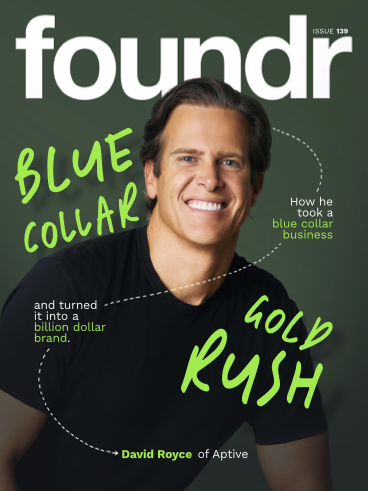
His legacy, he believes, lies not in the billion-dollar valuation of Aptive, but in the number of leaders he helped create. By taking a "kid who thought he wasn’t smart" and giving him the tools to build an empire, Royce has demonstrated that the most lucrative opportunities often lie in the places where others refuse to look. In an era of high-tech obsession, the story of David Royce serves as a potent reminder that persistence, specialized training, and a willingness to do the "unsexy" work remain the most reliable paths to extraordinary wealth.
Related posts: