Strategic Divergence in the Artificial Intelligence Sector OpenAI Expansionism Versus Anthropic Specialized Focus

The global artificial intelligence landscape has reached a critical inflection point in mid-2026, characterized by two diametrically opposed corporate strategies represented by the industry’s leading entities, OpenAI and Anthropic. As the initial novelty of generative AI transitions into a phase of deep integration and market maturation, OpenAI has opted for a strategy of aggressive diversification, launching a sprawling ecosystem of hardware, specialized software tools, and consumer lifestyle products. Conversely, Anthropic has maintained a disciplined, "slower" trajectory, focusing on the refinement of its core large language models (LLMs) and a streamlined user experience. This divergence mirrors historical tech industry shifts, most notably the late-1990s competition between the multi-faceted portal model of Yahoo and the minimalist search interface of Google, raising fundamental questions about the long-term viability of feature-rich ecosystems versus specialized utility.
The OpenAI Conglomerate Model
By July 2026, OpenAI has leveraged its virtually unlimited capital reserves and technical infrastructure to move beyond its origins as a chat-based interface provider. The organization’s current product portfolio reflects a "shotgun" approach to innovation, attempting to capture market share across multiple verticals simultaneously. Among the most notable additions to the OpenAI ecosystem are "Operator," an agentic AI system capable of executing complex multi-step tasks across various software environments, and "Deep Research," a high-compute reasoning engine designed for academic and industrial intelligence.
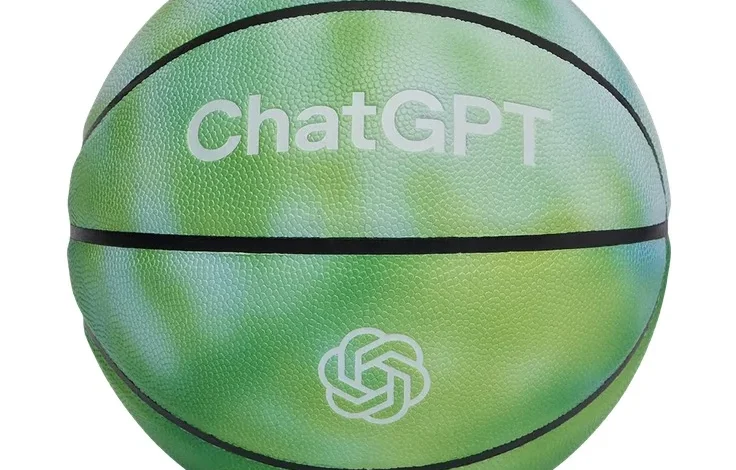
The company has also ventured into the physical goods market, a move that has drawn significant scrutiny from industry analysts. The release of the "ChatGPT Basketball" and the development of an upcoming autonomous household speaker that navigates domestic spaces represent a pivot toward "ambient AI"—the integration of intelligence into everyday physical objects. While a previously announced meme video generator was canceled prior to wide release, the remaining suite of tools is extensive. This includes "Scheduled Tasks" for automated workflow management, "Projects" for collaborative enterprise coordination, "Canvas" for integrated writing and coding environments, and "Connectors," which allow for seamless data integration with third-party enterprise software. Furthermore, the introduction of "Record Mode" and a library of "famous voices" for its vocal interface indicates an attempt to dominate the consumer entertainment and personal productivity sectors.
Anthropic’s Philosophy of Restraint
In stark contrast to OpenAI’s rapid-fire release cycle, Anthropic has pursued what many industry observers describe as a "boring" but highly focused path. Since its inception, Anthropic has prioritized "Constitutional AI" and safety-first development, but in 2026, this philosophy has manifested as a refusal to engage in the "feature creep" that often plagues maturing software companies. Anthropic’s primary offering, the Claude series, remains centered on high-fidelity reasoning, nuanced language understanding, and a clean, distraction-free user interface.
Data from the second quarter of 2026 suggests that while OpenAI maintains a larger total user base due to its diverse product range, Anthropic has seen significant growth in the enterprise sector among firms that value stability and a lack of "platform noise." For these organizations, the "slower" pace of Anthropic’s updates is viewed not as a lack of innovation, but as a commitment to reliability and professional utility. The company has largely avoided the consumer hardware space, focusing instead on API performance and the precision of its core models.
Historical Precedent: The Yahoo vs. Google Paradigm
The current competitive landscape bears a striking resemblance to the "Portal Wars" of the late 1990s. At its zenith, Yahoo was the dominant gateway to the internet, featuring nearly 200 links on its homepage, ranging from news and weather to shopping, horoscopes, and games. Yahoo sought to be an "everything store" for the digital age, much like OpenAI’s current trajectory toward an all-encompassing AI ecosystem.
However, Yahoo was eventually surpassed by Google, which launched with a radically minimalist interface consisting essentially of a single search bar and two buttons. Google’s success was predicated on the idea that users do not want a cluttered portal; they want a tool that does one thing exceptionally well. The 2026 AI market is currently testing whether this historical lesson applies to artificial intelligence. While OpenAI provides a "basketball" and "famous voices," the risk remains that the core utility of the AI may become buried under the weight of secondary features.
Chronology of Product Expansion (2024–2026)
To understand the current state of the market, it is necessary to examine the timeline of OpenAI’s diversification:

- Late 2024: OpenAI begins the transition from a research-focused organization to a product-first entity with the introduction of "Canvas," signaling a move into collaborative workspace software.
- Early 2025: The launch of "Connectors" allows ChatGPT to interface directly with corporate databases, moving the company deeper into the enterprise resource planning (ERP) space.
- Mid-2025: OpenAI announces its foray into hardware with a "moving speaker" prototype, utilizing advanced spatial mapping and voice synthesis.
- Late 2025: The "Operator" agent is released in beta, marking the shift from generative AI to agentic AI.
- Early 2026: In a move that puzzles some analysts, the "ChatGPT Basketball" is released as part of a lifestyle branding initiative.
- July 2026: OpenAI’s product list reaches a record high, while Anthropic maintains a single-digit product count, focusing exclusively on the Claude 4.5 and 5.0 model iterations.
Supporting Data and Market Sentiment
Market analysis from mid-2026 indicates a growing divide in user sentiment. According to a survey of 5,000 Chief Information Officers (CIOs) conducted in June:
- 62% of respondents expressed concern over "platform bloat" in AI tools, citing the difficulty of training employees on multi-functional systems.
- 45% of enterprise users reported a preference for Anthropic’s Claude for long-form technical writing and complex coding, citing fewer distractions and a more consistent output.
- OpenAI remains the leader in consumer engagement, with its "Record Mode" and "Famous Voices" driving a 30% increase in mobile app usage among users aged 18–24.
- Developer retention shows a split; those building niche applications favor OpenAI’s "Connectors" and "Operator" APIs, while those building high-stakes financial or medical tools show a 15% higher retention rate with Anthropic’s more stable API environment.
Official Responses and Strategic Rationales
In a recent internal memo leaked to the press, OpenAI leadership defended the company’s diversification strategy, stating, "To achieve General Artificial Intelligence (AGI), the system must be integrated into every facet of human life—from the way we work in ‘Canvas’ to the way we play with physical objects. We are not just building a chatbot; we are building the operating system for the future." This "OS-first" mentality explains the push into hardware and varied software utilities.
Conversely, Anthropic’s leadership has remained steadfast in its "frontier model" approach. During a May 2026 earnings call, company representatives stated, "Our goal is not to be everywhere, but to be the most trusted and capable intelligence where it matters most. We believe that focus is a competitive advantage, particularly as AI models become more complex and the margin for error narrows."
Implications for Solo Freelancers and Small Businesses
The divergence between these two giants presents a strategic dilemma for small businesses and solo practitioners. The "can vs. should" problem is particularly acute for this demographic. While OpenAI’s vast array of tools offers the ability to automate almost every aspect of a business—from social media management via "Scheduled Tasks" to deep market analysis via "Deep Research"—the complexity of managing such a large stack can lead to diminished returns.
For the freelancer, the "Anthropic path" offers a more streamlined workflow but may lack the specific niche tools (like "Record Mode") that can provide a competitive edge in creative fields. Small businesses are increasingly finding themselves forced to choose between a "Swiss Army Knife" (OpenAI) and a "Scalpel" (Anthropic). The cost of "can" is often the dilution of focus, a trap that many small businesses are wary of falling into, even as they observe OpenAI’s "unlimited resource" approach.
Future Outlook and Broader Impact
The next 18 months will likely determine which strategy prevails. If OpenAI successfully integrates its various tools into a cohesive ecosystem, it could become the "Apple of AI," where hardware and software work in a seamless, proprietary loop. However, if the various products—like the "ChatGPT Basketball" or the "moving speaker"—fail to gain traction, the company risks becoming a fragmented entity that has lost sight of its core mission.
For Anthropic, the risk is obsolescence through hyper-specialization. If the market demands an all-in-one AI partner, a "boring" focus on text and reasoning may not be enough to sustain growth in a world of agentic, multi-modal, and physical AI.
As of July 2026, the industry remains divided. The "Yahoo vs. Google" analogy serves as a reminder that in technology, the winner is rarely the company that does the most, but rather the company that does what the user needs most effectively. Whether the "should" of focus will triumph over the "can" of diversification remains the defining question of the current technological era. The sheer scale of OpenAI’s resources allows it to make mistakes that would bankrupt smaller firms, but even with unlimited capital, the most finite resource in the AI economy remains user attention and trust. In the coming years, the market will decide if it wants an AI that can play basketball, or an AI that simply does its job.