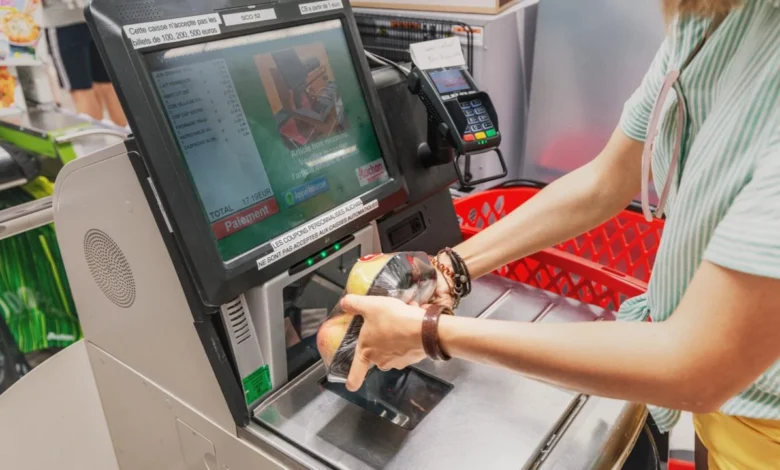
Rhode Island has fundamentally altered the landscape for retail operations by enacting the Restrictions on Self-Service Checkout Stations Act, making it the first state to impose statewide regulatory requirements on grocery store self-checkout systems. This pivotal legislation, effective January 1, 2027, transcends mere operational adjustments, transforming self-checkout from an internal business decision into a matter of state law, thereby setting a significant precedent for how retailers deploy automation. The move reflects a growing legislative scrutiny nationwide over the implementation and management of self-service technologies, signaling a potential paradigm shift in retail strategy from unbridled technological adoption to carefully managed integration under statutory compliance.
The Rhode Island Precedent: Detailed Provisions and Enforcement
The newly enacted Rhode Island law introduces stringent minimum staffing standards and explicitly defines the responsibilities of employees assigned to monitor self-service stations. Specifically, the statute mandates that grocery stores maintain "a minimum of one manual checkout station in operation for every three (3) self-service checkout stations in operation." This provision ensures that traditional, cashier-led checkout options remain readily available to consumers, addressing a common complaint about the scarcity of human-assisted lanes, especially during peak hours. Furthermore, the law requires at least one staffed checkout lane to be compliant with the Americans with Disabilities Act (ADA), reinforcing accessibility for all shoppers.
Perhaps one of the most impactful clauses states that "an employee shall be relieved of all other duties when monitoring any self-service checkout station." This directly contradicts the common retail practice of assigning a single employee to juggle multiple responsibilities—such as stocking shelves, assisting customers, or managing returns—while also overseeing a bank of self-checkout kiosks. This mandate necessitates a dedicated staff presence, ensuring that help is immediately available for transactional issues, age verification for restricted items, or security concerns, thereby enhancing both customer service and loss prevention efforts. These provisions collectively compel retailers to re-evaluate their staffing schedules and operational models, acknowledging that front-end automation now carries explicit operating obligations that cannot be simply offset by reallocating existing labor.
The Act also establishes a robust enforcement mechanism. Employees and consumers are empowered to file complaints with the Department of Labor and Training, initiating a formal review process. Repeated violations of the law can result in financial penalties, adding a tangible cost to non-compliance. Persistent non-adherence could even be deemed an unlawful act under Rhode Island law, indicating the state’s serious commitment to upholding these new standards. This structured enforcement framework underscores the shift from voluntary operational guidelines to legally binding requirements.
A Shifting Legislative Landscape: The Broader Trend
Rhode Island’s initiative is not an isolated event but rather a leading indicator of a broader legislative trend sweeping across the United States. Numerous other state legislatures, including those in Massachusetts, Connecticut, California, Ohio, Tennessee, Oklahoma, and Washington, have actively considered or are currently considering proposals aimed at regulating various aspects of self-checkout technology. While the specifics of these bills vary, they collectively point towards a nationwide re-evaluation of how automation is deployed in retail environments.
Some proposed bills echo Rhode Island’s approach by establishing minimum numbers of staffed checkout lanes, ensuring that a human-assisted option is always available. Others focus on limiting the number of self-checkout stations that a single employee may supervise, aiming to improve customer support and reduce opportunities for theft or error. Further proposals seek to restrict the types of merchandise eligible for self-checkout—for instance, excluding high-value items, age-restricted products, or large quantities—to mitigate shrink and ensure proper handling. Transaction limits, such as a 15-item cap, are also being explored in certain jurisdictions to streamline the process and prevent self-checkout lanes from becoming bottlenecked with full shopping carts.
Beyond state-level actions, localized efforts are also gaining traction. A proposed law in New York City, for example, mirrors some of Rhode Island’s provisions by requiring one employee for every three self-checkout kiosks and imposing a 15-item limit in food stores and pharmacies. These diverse legislative efforts demonstrate a concerted movement away from viewing self-checkout as a purely technological convenience and towards recognizing its significant impact on labor practices, consumer experience, and store security. The overarching discussion is no longer merely about whether to adopt self-checkout technology, but how to manage it responsibly and effectively within a regulated framework.
The Genesis of Self-Checkout: Historical Context and Initial Rationale
Self-checkout technology first emerged in the late 1980s and early 1990s, initially championed as a revolutionary solution to several persistent challenges in retail. Its primary appeal to retailers was the promise of significant labor cost reductions by shifting the scanning and bagging responsibilities from paid employees to customers. This was particularly attractive in an industry characterized by tight margins and increasing wage pressures. Beyond cost savings, self-checkout was touted as a means to improve operational efficiency, reduce customer wait times, and provide a sense of autonomy and control for shoppers who preferred a quick, independent transaction.
Early iterations of self-checkout systems were often clunky, prone to errors, and required frequent staff intervention. However, advancements in barcode scanning, touch-screen interfaces, and payment processing technologies gradually improved their reliability and user-friendliness. By the 2000s and 2010s, self-checkout kiosks became a ubiquitous feature in supermarkets, big-box stores, and even smaller convenience stores, driven by the belief that they offered a win-win: cost savings for retailers and convenience for time-pressed consumers. The rapid expansion of self-checkout was also fueled by periods of tight labor markets, where finding and retaining sufficient staff for traditional checkout lanes proved challenging. Retailers increasingly viewed these systems as essential tools for managing labor fluctuations and optimizing store throughput.
Retailers’ Evolving Calculus: Impact on Operational Strategy and Technology Investment
For decades, retailers have approached self-checkout as a strategic operational decision, balancing factors such as labor costs, perceived consumer preferences, and technological capabilities. The Rhode Island law, however, introduces a new, critical variable into this equation: statutory compliance. If operating a bank of self-checkout terminals now necessitates additional staffed lanes or requires dedicated employees whose responsibilities cannot overlap, the fundamental financial and staffing calculations for retailers undergo a profound change.
This legislative intervention compels retailers to critically re-evaluate their investment strategies. Instead of automatically expanding the number of self-checkout terminals, merchants may redirect a larger share of their technology budgets towards solutions that address the inherent challenges of self-service. These challenges include reducing inventory shrink (the loss of inventory due to theft, damage, or error), improving exception handling (managing situations like incorrect scans or product look-ups), and equipping store associates with better tools to resolve problems quickly and efficiently.
The shift in focus could lead to increased investment in technologies such as computer vision and artificial intelligence (AI) to monitor transactions for suspicious activity or incorrect scanning. Electronic article surveillance (EAS) systems, smart carts that automatically track items, and shelf-monitoring systems that detect misplaced or stolen goods could become more prevalent. These technologies offer a multi-faceted approach to addressing operational challenges that persist regardless of whether a customer checks out with a cashier or scans merchandise independently. The goal would be to make the existing self-checkout infrastructure more secure and efficient, rather than simply adding more machines.
Addressing the ‘Shrink’ Challenge: How Self-Checkout Contributes to Loss
One of the most significant, albeit often understated, challenges associated with self-checkout is its contribution to inventory shrink. While self-checkout aims to reduce labor costs, it can inadvertently increase losses through various mechanisms, including accidental errors, intentional theft ("sweethearting" or deliberately mis-scanning items), and product misidentification. According to the National Retail Federation (NRF), retail shrink cost the industry an estimated $112.1 billion in 2022, representing 1.6% of sales, with external theft (including organized retail crime) and internal theft being major contributors. Anecdotal evidence and some studies suggest that self-checkout lanes, due to reduced supervision, can be more susceptible to certain forms of theft or error, potentially offsetting some of the labor cost savings.
The new regulations, by mandating dedicated staff, directly aim to mitigate this "shrink" problem. A dedicated employee can more effectively monitor multiple self-checkout stations, intervene when errors occur, provide assistance, and deter theft. This human oversight, combined with advanced technological solutions, could form a more robust defense against inventory losses. Retailers might also explore integrating AI-powered surveillance systems that can flag suspicious behaviors in real-time, allowing staff to intervene proactively. The imperative to address shrink becomes even more pressing when considering the added operational costs imposed by new regulations.
The Human Element: Labor Implications and Workforce Re-evaluation
The Rhode Island law directly impacts the human element in retail, specifically addressing labor practices and workforce deployment. The requirement for a "dedicated employee" at self-checkout stations fundamentally alters the job description for these roles. No longer can a single individual be stretched thin across multiple unrelated tasks; their focus must solely be on supporting and supervising the self-service experience. This could lead to a net increase in front-end staffing needs for some retailers, especially those who had previously optimized their labor schedules by having one employee cover a large bank of self-checkout terminals alongside other duties.
From a labor perspective, this is a significant win for worker advocacy groups and unions, who have long argued that self-checkout reduces job opportunities and places undue stress on existing staff. The new law could be seen as protecting jobs and ensuring a reasonable workload for employees. It also highlights the growing recognition of the value of human interaction in retail, even in an increasingly automated environment. While self-checkout might handle routine transactions, complex issues, customer complaints, or security incidents still require human intervention and judgment.
Legislative scrutiny could also place renewed value on advanced workforce scheduling tools, queue management systems, and associate mobility solutions. Better forecasting tools could help retailers accurately predict staffing needs based on expected customer traffic, ensuring compliance with the new regulations without overstaffing. Mobile devices that allow employees to assist customers throughout the store, rather than being tethered to a single station, could become as important as adding another row of self-checkout terminals. This could lead to a more dynamic and responsive front-end workforce, where employees are empowered to provide service wherever it’s needed most, while still maintaining dedicated oversight of self-checkout areas.
Consumer Sentiment: A Nuanced View of Self-Service Preferences
While the legislative focus is on operational compliance and labor, consumer demand remains a critical factor. PYMNTS Intelligence research indicates that consumer sentiment towards self-service is complex and nuanced. A substantial 84% of consumers report liking the use of self-service kiosks, and 66% even prefer them over traditional staffed checkout lanes. This preference often stems from the desire for speed, convenience, and a sense of control over their shopping experience. For quick transactions with a few items, self-checkout can indeed be faster and more efficient.
However, the same research also found that satisfaction with existing self-service experiences remains uneven. Common complaints include technical glitches, the need for frequent staff intervention (especially for age-restricted items or errors), confusing interfaces, and the perception of doing "unpaid labor." The Rhode Island law, by mandating dedicated staff and ensuring traditional options, aims to address these pain points directly. Improved assistance at self-checkout could enhance the experience for those who prefer it, while the guarantee of staffed lanes caters to those who either struggle with the technology or simply prefer human interaction. This balanced approach acknowledges that while automation has its place, it should not come at the expense of accessibility, service quality, or customer satisfaction.
Industry Reactions and Future Outlook
While specific official statements from national retail associations regarding the Rhode Island law were not immediately available, it can be logically inferred that such legislation would elicit mixed reactions. Retail associations would likely express concerns about the potential for increased operational costs, the complexities of compliance, and the perceived governmental overreach into business operations. They might argue that such mandates could stifle innovation or make it more challenging for smaller businesses to operate profitably.
Conversely, labor unions and consumer advocacy groups would likely welcome the new regulations. Unions would view them as a victory for worker protection, job security, and fair labor practices. Consumer groups would likely praise the emphasis on improving customer service, ensuring accessibility, and providing more reliable checkout options. The law could be framed as a step towards balancing technological advancement with human needs and responsible business practices.
Looking ahead, the question of whether additional states will ultimately enact similar laws remains uncertain, but Rhode Island has undeniably set a significant precedent. The obligations retailers assume once they deploy self-checkout technology are now crystallizing, state by state, moving away from a purely discretionary operational choice to a regulated practice. This shift suggests a future where retail automation, while continuing to evolve, will increasingly be shaped by legislative frameworks designed to ensure fair labor practices, enhance consumer experience, and mitigate operational risks like shrink. Retailers across the nation are now keenly observing how these regulations unfold, preparing to adapt their strategies in a retail environment where technology and compliance are inextricably linked.
Related posts: