The Evolving Role of Meta Descriptions in Search Engine Optimization: Navigating Google’s Nuanced Stance

For many years, meta descriptions held an almost sacrosanct position in the realm of search engine optimization (SEO), serving as the primary text Google displayed in organic search snippets. Their meticulous optimization was a cornerstone strategy, aimed squarely at enticing searchers to click through to a website. However, the landscape of search has evolved dramatically, leading to a complex and often debated role for these brief textual summaries. Google now frequently bypasses custom-written meta descriptions, opting instead to dynamically generate snippets directly from a page’s content, tailored specifically to the user’s query. This shift has prompted a re-evaluation of their necessity and utility within modern SEO practices.
The Historical Dominance of Meta Descriptions
In the early days of search engines, roughly from the late 1990s through the mid-2000s, meta descriptions were a direct and powerful signal. Webmasters meticulously crafted these 150-160 character summaries, embedding relevant keywords to improve visibility and employing compelling language to boost click-through rates (CTR). During this period, search algorithms were less sophisticated, relying heavily on explicit on-page signals provided by webmasters. A well-written meta description could significantly influence a page’s perceived relevance and attractiveness in search results, directly impacting organic traffic. SEO professionals often viewed the meta description as an advertisement for the page, a critical element in the user’s decision-making process even before visiting the site. The strategy was straightforward: identify core keywords, integrate them naturally, and present a clear value proposition.
The Paradigm Shift: Google’s Dynamic Snippet Generation
The era of meta description supremacy began to wane as Google’s algorithms grew increasingly sophisticated. A pivotal shift occurred as Google moved beyond simple keyword matching to a deeper understanding of user intent and content relevance. Algorithms like Hummingbird (2013), which focused on natural language processing to better understand the meaning behind queries, and RankBrain (2015), Google’s machine-learning AI component, marked a significant departure. These advancements allowed Google to interpret queries more contextually and match them with the most relevant parts of a webpage, even if those parts weren’t explicitly summarized in the meta description.
Further enhancements with BERT (Bidirectional Encoder Representations from Transformers) in 2019 and the Multitask Unified Model (MUM) in 2021 solidified Google’s capability to process complex queries and generate highly tailored snippets. The rationale behind Google’s decision to dynamically generate snippets is rooted in user experience. A static, pre-written meta description, while useful for a general overview, might not be the most relevant summary for every conceivable user query. By pulling text directly from the page that best answers or relates to a specific search term, Google aims to provide more precise and immediately helpful information in the search results, thereby enhancing the user’s journey and increasing the likelihood of a satisfactory click. This dynamic approach means that a single page might have dozens of different snippets generated over time, each optimized for a unique query.
Google’s Current Stance: A Nuanced Recommendation
Despite this operational shift, Google has not entirely discarded meta descriptions. Its official Search Central blog provides a nuanced perspective, stating, "Google primarily uses the content on the page to automatically determine the appropriate snippet. We may also use descriptive information in the meta description element when it describes the page better than other parts of the content." This statement underscores a critical point: while dynamic generation is the default, a well-crafted meta description can still serve as a preferred snippet if it offers a superior summary compared to what the algorithm might extract from the page’s body.
The blog post further advises, "…at the very least, create a description for the critical URLs like your home page and popular pages." This recommendation highlights the strategic importance of meta descriptions for high-value pages. Complementing this, John Mueller, a prominent Google Search Advocate, recently reiterated the enduring value of meta descriptions. In a Reddit discussion last month, he remarked, "…sometimes it [a meta description] helps you to figure out a clear focus for a page. Overall, I think it’s still worthwhile to do so for individual pages that you care about, but it’s definitely not a requirement." Mueller’s statement provides a pragmatic outlook: while not mandatory for indexing or ranking, a meta description can serve as a valuable internal tool for content strategy, ensuring clarity and focus for a page’s primary purpose, beyond its external display in search results. The implication is clear: there is no inherent penalty or downside to including a meta description; rather, it offers potential benefits without being an absolute prerequisite for search engine visibility.
The Practical Imperative: Where Meta Descriptions Still Shine
Given Google’s evolving stance, the practical question for SEO professionals and content creators is not whether to abandon meta descriptions entirely, but rather where and how to strategically deploy them. Experience shows that for certain types of pages, particularly those with high user intent or complex information, a carefully written meta description remains highly beneficial. These often include:

- Home Pages: As the digital storefront of a brand, the homepage’s meta description provides the first impression, summarizing the entire entity’s purpose, offerings, and unique value proposition.
- Key Landing Pages: These pages are designed for specific campaigns or conversions. A tailored meta description can reinforce the landing page’s message, incorporate a clear call to action, and guide users who arrive via organic search.
- Category Pages: For e-commerce sites, category pages often house a diverse range of products. A meta description can effectively summarize the types of items available, appealing to broad search queries.
- Product Detail Pages: These pages typically contain a wealth of specific information—product descriptions, specifications, pricing, customer reviews, and testimonials. Condensing this detailed content into a concise, compelling snippet can be challenging for automated systems. A human-crafted meta description can highlight key features, benefits, and price points, making the page more attractive to prospective buyers.
The challenge for search engines and generative AI crawlers in summarizing these types of pages lies in their dense, often transactional nature. For instance, a product page for a high-tech gadget might include dozens of specifications, but a user searching for "best noise-cancelling headphones" needs a succinct summary that highlights the primary benefit. A well-written meta description can bridge this gap.
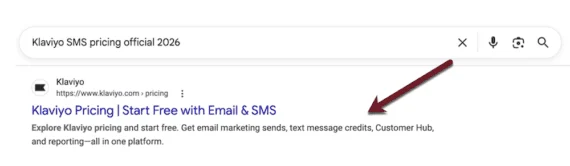
Consider the example of Klaviyo’s SMS pricing page. Its meta description reads: "Explore Klaviyo pricing and start free. Get email marketing sends, text message credits, Customer Hub, and reporting — all in one platform." When a query like "Klaviyo SMS pricing official 2026" is entered, both Google and generative AI platforms like ChatGPT frequently utilize this exact description. This demonstrates that when a meta description perfectly encapsulates the page’s core offering and aligns with user intent, Google is likely to prioritize it over dynamically generated content. This precision is especially crucial for pages where immediate understanding and relevance are paramount to driving conversions.
Crafting Effective Meta Descriptions in the Modern Era
The approach to writing meta descriptions has matured beyond simple keyword stuffing. While relevant keywords are still important, especially for high-intent pages, the focus has shifted to creating compelling, user-centric summaries that accurately reflect the page’s content and encourage engagement. Key considerations for modern meta description crafting include:
- Conciseness and Clarity: Aim for approximately 150-160 characters, though Google’s display can vary. The description should be easy to read and understand at a glance.
- Accuracy and Truthfulness: The meta description must precisely reflect the content of the page. Misleading descriptions can lead to high bounce rates and negatively impact user trust and perceived site quality.
- Unique Value Proposition (UVP): Highlight what makes the page’s content or product unique. What problem does it solve? What benefit does it offer?
- Call to Action (CTA): For transactional or conversion-focused pages, incorporating a soft CTA (e.g., "Learn more," "Shop now," "Get a quote") can subtly guide the user.
- Targeted Keywords (Judiciously): While not the sole focus, integrating primary keywords naturally can signal relevance to both users and search engines.
- Human Readability First: Always write for the user. A description that sounds natural and appealing will always outperform one that is merely optimized for algorithms.
- Avoid Duplication: Each critical page should ideally have a unique meta description to prevent dilution of messaging and potential issues with search engine interpretation.
The Role of AI in Meta Description Generation
For large, database-driven websites, such as e-commerce platforms with thousands of products, manually crafting unique meta descriptions for every page is often impractical. In such scenarios, Google has long recommended programmatic generation. The advent of generative AI platforms like ChatGPT, Claude, and integrated AI tools in content management systems (CMS) has revolutionized this process. These tools can generate meta descriptions at scale, often with impressive quality, provided they receive careful and precise prompting.
However, the use of AI for meta description generation is not without its caveats. While AI can efficiently produce descriptions, it may lack the nuanced understanding of brand voice, strategic marketing objectives, or specific human-centric appeals that a human writer can imbue. Therefore, a hybrid approach is often recommended:
- Scalable Generation: Utilize AI for the vast majority of pages, especially those with lower traffic or less critical conversion paths.
- Human Review and Optimization: Crucially, always have human experts manually review and refine meta descriptions for important pages—those with higher traffic volumes, popular products, or top conversion rates. This ensures accuracy, brand alignment, and strategic impact. Human oversight can catch "hallucinations" or bland, generic outputs that might not resonate with the target audience.
Broader Implications for SEO and Content Strategy
The evolving role of meta descriptions underscores a broader trend in SEO: the increasing emphasis on user experience (UX) and content quality. Google’s algorithmic advancements consistently aim to provide the most relevant and satisfying search results, moving away from purely technical signals towards a deeper understanding of user intent.
For content creators, this means that while meta descriptions are still a valuable tool, they are part of a larger ecosystem. The primary focus must remain on creating high-quality, comprehensive, and user-centric content that genuinely addresses user needs. A compelling meta description will only be effective if the underlying page delivers on its promise.
Furthermore, with the rise of generative AI in search, where search engine results pages (SERPs) are increasingly featuring AI-generated answers and summaries directly, the role of meta descriptions might subtly shift again. While AI-powered search experiences might abstract away the direct display of meta descriptions, the underlying principle of a concise, accurate summary of a page’s content remains vital. Well-structured and clearly summarized pages, perhaps informed by internal "meta description thinking," will be easier for AI to digest and present accurately in new formats. This reinforces the idea that crafting a meta description isn’t just for Google’s traditional snippets, but also as a foundational exercise in clarifying a page’s purpose for any intelligent agent—human or artificial—that encounters it.
In conclusion, the debate over the necessity of meta descriptions has settled into a pragmatic understanding. While Google’s algorithms have evolved to dynamically generate snippets, the strategic crafting of meta descriptions for critical pages remains a wise investment. There is no downside to adding them; rather, they offer a tangible opportunity to influence how a page is perceived in search results, enhance click-through rates, and even serve as a valuable internal compass for content development. As part of a comprehensive SEO strategy, well-written meta descriptions continue to play a relevant, albeit more nuanced, role in connecting users with the most valuable content online.
Related posts: