Freight Market Undergoes Costliest Stress Test as Shipper Flexibility Becomes Paramount Amid Soaring Rates


Transportation programs traditionally built around single-carrier lanes, fixed modes, and rigid procurement cycles are currently facing their most severe and costliest stress test in years. This stark assessment comes from a recent freight intelligence report, the SONAR Sitrep, which critically examines strategies shippers can deploy to safeguard service levels and manage costs amidst dramatically shifting market conditions. The findings underscore a critical juncture for the logistics industry, where adaptability and strategic optionality are no longer merely advantageous but essential for survival and competitive advantage.
Unprecedented Market Tightening and Carrier Leverage
The SONAR Sitrep, released in late June 2026, arrives as key market indicators unequivocally signal carrier leverage reaching multi-year highs, reminiscent of the highly constrained market environments seen during peak pandemic disruptions. Data from the report reveals a freight market characterized by intense pressure on capacity and escalating costs. On June 21, 2026, the SONAR Truckload Rejection Index (TRRI) surged to an alarming 17.64%, marking its highest point since March 2022. While it has slightly receded, it currently hovers near a significant 16%, indicating that approximately one in six tendered loads is being rejected by carriers, forcing shippers to seek alternative, often more expensive, options on the spot market. This high rejection rate directly translates into increased operational complexity and cost for shippers, as they scramble to cover their freight.
Further compounding the pressure, the National Truckload Index (NTI), a benchmark for average spot market rates, reached an all-time high of $3.78 per mile on June 28, 2026. This figure represents a substantial increase from the averages observed throughout 2025, which hovered closer to $2.80 – $3.00 per mile, and a dramatic leap from the pre-pandemic average of roughly $1.90 per mile. The widening chasm between spot and contract rates further illustrates the market’s volatility. The spot-to-contract spread has expanded to approximately $0.51 per mile, the largest differential recorded since 2021. This positive spread signifies that spot market rates are significantly higher than contract rates, punishing shippers who rely heavily on last-minute capacity or whose contract rates have expired and are subject to repricing.
"The current market dynamics are a wake-up call for many organizations that have perhaps grown comfortable with more predictable pricing structures," states Dr. Evelyn Reed, a senior logistics economist at Global Freight Analytics, commenting on the SONAR Sitrep. "The confluence of high rejection rates, record spot prices, and a widening spread between spot and contract markets creates a perfect storm, placing immense pressure on shippers’ bottom lines and their ability to maintain consistent service to their customers."
A Chronology of Market Evolution Leading to the Current Stress
The current challenging environment is not an isolated event but rather the culmination of several years of dynamic shifts within the global supply chain and freight market. The timeline leading to the current stress test can be traced through distinct phases:
- Early 2020 – Mid 2021: Pandemic-Induced Surge and Disruption: The onset of the COVID-19 pandemic triggered unprecedented shifts in consumer spending, massive e-commerce growth, and widespread factory shutdowns and reopenings. This led to an initial dip, followed by a rapid and sustained surge in freight demand, particularly for truckload capacity. Ports became congested, equipment became scarce, and driver shortages exacerbated capacity constraints. Carrier leverage began to build significantly during this period, culminating in some of the highest rates seen in decades by late 2021.
- Mid 2021 – Early 2022: Sustained High Demand and Peak Rates: Demand remained robust, keeping rejection rates high and spot rates elevated. This period saw carriers enjoying strong profitability, reinvesting in equipment, but still struggling with persistent driver recruitment and retention challenges. The spot-to-contract spread often favored carriers, but contract rates began to catch up.
- Mid 2022 – Early 2025: Market Correction and Capacity Loosening: As global demand normalized somewhat and inflationary pressures began to bite, the freight market experienced a correction. Capacity gradually loosened, spot rates softened, and the spot-to-contract spread turned negative for much of this period. Shippers who had signed high-priced contracts found themselves paying above market rates, leading to a scramble for renegotiation and an increased reliance on the cheaper spot market. Many carriers faced leaner times, with some smaller operators exiting the market.
- Mid 2025 – Early 2026: Gradual Tightening and Re-Emergence of Carrier Leverage: Towards the latter half of 2025, subtle shifts began to appear. Economic indicators showed resilience, inventory levels started to stabilize, and some sectors experienced renewed demand. Driver availability remained a structural challenge, and the capacity that exited the market during the correction did not fully return. This laid the groundwork for a gradual tightening.
- H1 2026: Accelerated Tightening and Record Highs: The first half of 2026 witnessed an acceleration of market tightening, driven by a combination of sustained demand, persistent structural capacity issues, and specific events like tariff frontloading. This led directly to the record rejection rates and spot prices observed in June 2026, pushing carrier leverage to its current multi-year high.
This chronological progression highlights a cyclical yet increasingly volatile freight market, where periods of shipper advantage are often brief and succeeded by prolonged periods of carrier dominance. Understanding this cycle is crucial for developing resilient logistics strategies.
Intermodal: A Clear Opportunity for Cost Relief
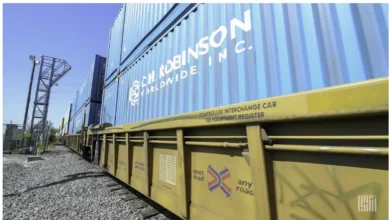
Amidst the challenging truckload market, the SONAR Sitrep identifies modal conversion, particularly to intermodal, as one of the clearest and most immediate opportunities for cost relief. The data is compelling: the Intermodal Contract Savings Index currently stands at an impressive 31.52%, with a year-to-date average of 23.78%. This average is more than double the levels recorded during the same period in the prior year, underscoring a significant and growing arbitrage opportunity.
The primary driver behind these record intermodal savings is a divergence in pricing trends. As truckload contract rates have repriced upward in response to tightening capacity and increased carrier leverage, intermodal contract pricing has not kept pace. This creates a widening gap in savings available on comparable lanes, reaching the largest differential in the index’s recent history.
For shippers with freight that is transit-tolerant and rail-eligible—meaning it can withstand slightly longer transit times and originates/terminates near intermodal ramps—the current spread signals an imperative to conduct lane-level conversion reviews. A typical 1,500-mile truckload shipment costing $3.78 per mile now equates to approximately $5,670. A 31.52% saving on this would mean a reduction of nearly $1,787 per shipment, translating into substantial savings for companies moving high volumes of freight.
"We’ve seen our intermodal spend deliver significant value in recent months," comments Maria Chen, Supply Chain Director for a major consumer goods conglomerate. "While the transition requires careful planning for lead times and drayage, the cost efficiencies are undeniable, particularly for our long-haul domestic movements. It’s become a cornerstone of our strategy to mitigate the soaring truckload rates."
Beyond intermodal, the report suggests other modal conversion options. These include strategically shifting underweight truckload moves to Less-Than-Truckload (LTL) shipments, which can offer cost efficiencies for smaller volumes that don’t fill an entire trailer. Additionally, the strategic movement of lanes between spot and contract channels, based on real-time spread conditions, is highlighted as a flexible procurement tactic. With the spot-to-contract spread now positive after running negative through most of 2022-2025, lanes heavily reliant on spot markets have become prime candidates for contract conversion through targeted mini-bids, locking in more predictable pricing.
Tariff Frontloading Exposes Geographic Concentration Vulnerabilities
The first half of 2026 also saw geographic constraints compounding market pressure, particularly in U.S. gateway regions. A temporary tariff, set to expire on July 24, prompted importers to pull forward significant volumes of containerized freight into a compressed window. This strategic frontloading resulted in a massive surge of imports, predominantly through U.S. West Coast gateways.
This event starkly exposed the vulnerabilities of shippers dependent on a single gateway. Those with undiversified port strategies absorbed the full impact of both the initial surge—leading to severe congestion, chassis shortages, and drayage capacity crunches—and the subsequent pullback as volumes normalized post-frontloading. This created inconsistent freight flows and unpredictable costs. In contrast, shippers who had cultivated qualified alternatives, such as utilizing East Coast or Gulf Coast ports, or had established robust transloading and inland port strategies, possessed greater optionality. They were able to smooth timing and inland-capacity impacts, demonstrating the critical importance of geographic diversification in supply chain resilience.
"The tariff frontloading was a real-time stress test for port and inland network flexibility," notes Alex Volkov, a supply chain strategist specializing in international logistics. "Companies that had invested in multi-port strategies or had strong relationships with intermodal and drayage providers outside of the primary congested hubs fared significantly better. It reinforced the idea that relying on a single point of entry, no matter how efficient it usually is, introduces unacceptable risk in today’s volatile trade environment."
Six Dimensions of Transportation Optionality: A Blueprint for Resilience
The SONAR Sitrep goes beyond merely identifying problems; it provides a framework for building resilience by organizing transportation flexibility into six practical dimensions. While the original report did not detail these dimensions, a comprehensive approach to optionality typically includes:
- Modal Flexibility: The ability to seamlessly shift between different modes of transport (truckload, LTL, intermodal, air cargo, ocean freight) based on cost, transit time requirements, and market conditions. This includes understanding the specific characteristics of each mode and having established relationships with providers across the spectrum.
- Carrier Diversity: Cultivating relationships with a diversified portfolio of carriers, ranging from large national fleets to specialized regional providers and asset-light brokers. This reduces reliance on any single carrier and provides backup options during capacity crunches or service disruptions.
- Geographic Diversification: Establishing multiple points of entry (ports), warehousing locations, and distribution centers across different regions. This minimizes the impact of localized disruptions, whether due to port congestion, weather events, or labor issues, as demonstrated by the tariff frontloading scenario.
- Procurement Strategy Flexibility: Employing a dynamic procurement approach that balances long-term contracts with strategic use of the spot market, mini-bids, and even dedicated fleet options. This allows shippers to optimize costs and secure capacity based on real-time market spreads and demand fluctuations.
- Technology Integration and Visibility: Leveraging advanced transportation management systems (TMS), real-time visibility platforms, and data analytics tools. These technologies provide critical insights into market conditions, carrier performance, and freight movements, enabling proactive decision-making and rapid adaptation.
- Demand and Inventory Management: Implementing robust demand forecasting, inventory optimization, and supply chain planning strategies. By better aligning inventory levels with actual demand and adjusting lead times, shippers can reduce the urgency of shipments, providing more flexibility in mode and carrier selection.
The SONAR Sitrep further details a comprehensive 90-day implementation roadmap for building this transportation flexibility. A core tenet of this roadmap is the emphasis that optionality built proactively, before market tightening, invariably costs less than alternatives sourced under duress. The current market conditions, with their measurable impact on costs and service, serve as a stark validation of this principle.
Broader Impact and Strategic Imperatives
The implications of a volatile freight market extend far beyond individual logistics departments. Escalating transportation costs can erode profit margins, necessitate price increases for consumers, and disrupt inventory management strategies. For businesses, this translates to heightened supply chain risk, potential stockouts, and diminished customer satisfaction.
The current environment, therefore, demands a strategic shift from reactive problem-solving to proactive resilience building. Companies must view their logistics networks not as static cost centers, but as dynamic, adaptable assets that can provide a competitive edge. This involves:
- Investing in Data and Analytics: Gaining deeper insights into freight spend, carrier performance, and market trends to make informed decisions.
- Strengthening Carrier Relationships: Building collaborative partnerships with carriers based on transparency and mutual understanding, rather than purely transactional interactions.
- Embracing Technology: Adopting solutions that provide real-time visibility, optimize routes, and automate processes to enhance efficiency and agility.
- Diversifying Supply Chain Footprint: Rethinking sourcing, manufacturing, and distribution locations to reduce reliance on single points of failure.
- Developing Internal Expertise: Fostering a culture of logistics excellence within the organization, empowering teams with the knowledge and tools to navigate complexity.
The SONAR Sitrep serves as a critical warning and a practical guide for shippers grappling with unprecedented market volatility. The message is clear: the era of rigid, undiversified transportation strategies is over. The future belongs to those who embrace flexibility, leverage data, and proactively build optionality into every dimension of their supply chain. The cost of inaction is now demonstrably higher than the investment required for strategic adaptation.