The AI Investment Paradox: Balancing Record-Breaking Tech Funding with the Human-Centric Shift

While the global venture capital landscape remains dominated by the relentless upward trajectory of artificial intelligence, a burgeoning counter-movement is challenging the industry’s singular obsession with digital automation. The recent $85 billion capital infusion into Alphabet’s AI initiatives serves as a definitive marker of the current era, underscoring the massive resource reallocation occurring within the technology sector. However, beneath the headline-grabbing valuations of large-scale language models and generative AI infrastructure, a distinct wave of founders is pivoting toward "together tech"—startups that prioritize physical presence, human-to-human interaction, and tangible, non-digital experiences.
This phenomenon is not merely a reactionary trend against the rapid adoption of AI; rather, it represents a recalibration of what users value in an increasingly digitized society. As consumers become saturated with algorithmic content, the market is demonstrating a surprising hunger for products that encourage "touching grass"—a colloquialism that has evolved from a digital insult into a legitimate business thesis.
The Divergent Paths of Innovation
The dichotomy between AI-driven capital and human-centric startups is best illustrated by the contrasting business models emerging in mid-2026. On one end of the spectrum, Alphabet’s $85 billion raise is indicative of the massive infrastructure costs required to sustain the current AI arms race. These investments are largely directed toward high-end GPU clusters, data center expansion, and talent acquisition.
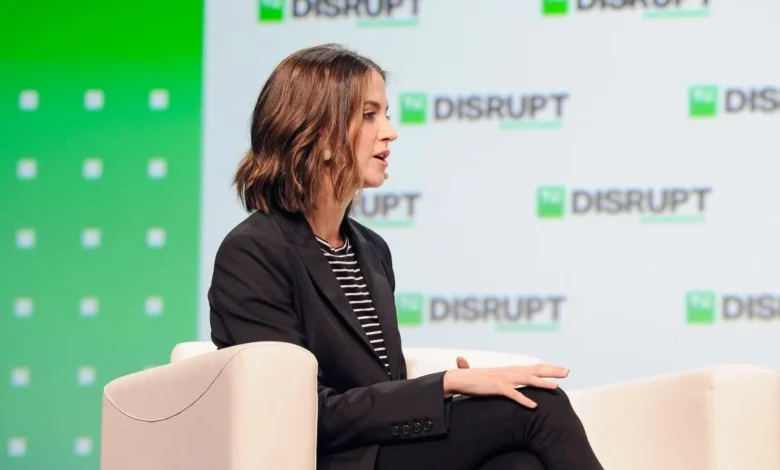
Conversely, startups like Board, founded by Brynn Putnam—previously the architect behind the connected-fitness phenomenon Mirror—are finding success by solving the "loneliness epidemic" through structured, in-person social environments. Board’s recent $20 million funding round suggests that investors are beginning to hedge their bets, recognizing that while AI may dominate productivity and content creation, the demand for authentic, offline human connection remains a high-value commodity.
The growth of the "cyberdeck" community further highlights this shift. These enthusiasts, who build bespoke, often whimsical portable computers, represent a rejection of the sleek, locked-down ecosystems of modern Big Tech. By constructing their own hardware, these creators are reclaiming autonomy over their digital interfaces, favoring tactile feedback and manual control over the frictionless, opaque interfaces provided by standard AI-integrated operating systems.
Chronology of the 2026 Funding Shift
The shift in investor sentiment did not happen overnight but rather accelerated through the first half of 2026. The following timeline tracks the progression of these competing market forces:
- January 2026: AI foundational models receive the bulk of Series B and C funding as enterprise adoption begins to scale beyond experimental pilots.
- March 2026: A notable dip in consumer engagement metrics for AI-only social platforms appears, signaling user fatigue.
- May 2026: Anthropic files its confidential IPO documents, signaling to the market that the "AI Gold Rush" is moving toward a public market reckoning.
- June 1, 2026: DuckDuckGo reports a significant uptick in traffic to its AI-free search engine, proving that a segment of the user base is actively seeking to avoid algorithmic mediation.
- June 2, 2026: Brynn Putnam secures $20 million for Board, marking a high-profile validation for "together tech."
- June 3, 2026: Alphabet solidifies its market position with the record-shattering $85 billion capital raise, reinforcing the divide between infrastructure-heavy AI and community-focused startups.
Supporting Data and Market Analysis
The financial disparity between these two sectors remains profound. Industry reports from the second quarter of 2026 indicate that AI-related ventures accounted for approximately 64% of all venture capital dollars deployed. However, the success rate of "together tech" startups has seen a 14% increase in seed-round participation compared to the previous fiscal year.
This data suggests that while the "big guys" are capturing the lion’s share of funding to build the backbone of the future, a diversified investment strategy is emerging. Investors are looking at the long-term sustainability of the attention economy. If AI continues to generate the vast majority of online content, the scarcity of genuine, human-verified experiences will inherently drive up their value.
The Anthropic IPO and the AI Backlash
The decision by Anthropic to pursue an IPO against the backdrop of massive private funding rounds by Alphabet and Microsoft is a critical development. It suggests that even the most well-funded AI labs are looking for a public exit strategy before the potential "AI bubble" reaches a point of correction.
The concern among many analysts is whether the venture capital funnel has become too narrow, effectively recycling money back into the largest technology conglomerates. When an AI startup raises a billion dollars, that money is frequently spent on compute resources provided by the very cloud giants that invested in the startup in the first place. This creates a circular economy that may stifle genuine innovation in non-AI sectors.
Broader Implications for the Tech Industry
The rise of the "together tech" movement suggests that the tech industry is entering a post-digital maturity phase. For over a decade, the primary goal of Silicon Valley was to bring more of the human experience online. The current trend suggests that for the next decade, the goal may be to bring more of the online experience into the physical world.
This has several implications for the future of venture capital:
- Valuation Normalization: AI companies will increasingly be judged on their ability to generate revenue beyond the "hype cycle," while human-centric companies will be valued on their ability to foster high-retention, high-trust communities.
- Hardware Renaissance: As seen with the cyberdeck trend, there is an opening for hardware that empowers the user rather than surveilling them. This could lead to a resurgence in modular, user-serviceable, and privacy-first devices.
- Regulatory Scrutiny: As the concentration of capital in AI continues to consolidate within a few large firms, antitrust regulators will likely focus on the symbiotic relationship between cloud providers and AI startups.
Expert Perspectives from the Equity Podcast
In the most recent episode of the Equity podcast, hosts Kirsten Korosec, Anthony Ha, and Sean O’Kane explored the nuance of this shifting landscape. The panel noted that the "together tech" wave is not just a trend but a fundamental response to the automation of social life.
O’Kane pointed out that the fascination with "analog" tech and physical meetups is a natural response to the hyper-efficiency of AI. When machines handle the rote, repetitive, or data-intensive tasks, humans are left with a vacuum that can only be filled by things that require effort, nuance, and physical presence.
Korosec added that for founders, the challenge is now to build companies that are "AI-proof." This doesn’t mean avoiding technology, but rather using technology to facilitate human connection rather than replacing it. The investment in Board, for example, is an investment in human behavior, which is notoriously harder to disrupt than software.
Conclusion
The technology sector is currently navigating a significant fork in the road. On one side, the massive, capital-intensive pursuit of Artificial General Intelligence is reshaping the global economy and testing the limits of compute infrastructure. On the other side, a quieter, yet persistent movement is working to preserve the human element of technology.
As the industry moves into the latter half of 2026, the success of these two paths will be determined by user adoption and market sustainability. While the record-breaking raises of the AI giants grab the headlines, the true long-term value may be found in the startups that are bold enough to suggest that, sometimes, the best way to move forward is to step away from the screen. Whether these movements remain niche or grow into a defining characteristic of the next tech cycle remains to be seen, but the current signals are clear: the pendulum is beginning to swing back toward the human.