The Fragrance Playbook: How Smart-Home Pioneer Pura Scaled to Nine-Figure Revenues Through Strategic IP Collaborations

Smart-home fragrance brand Pura has established itself as a dominant force in the modern home scent industry, crossing the coveted nine-figure revenue threshold by leveraging a business model frequently compared to the coffee pod titan Keurig. Founded in 2014, the privately owned enterprise has successfully married hardware innovation with consumer-packaged-goods consistency. By engineering internet-connected diffusers that allow users to remotely control and cycle through proprietary oil vials via a smartphone application, Pura has transformed home fragrance from a static, passive purchase into an interactive, dynamic subscription experience.
As of 2026, the company continues to command an impressive 15% year-over-year growth rate, buoyed by an active base of over two million app users. While Pura has steadily cultivated its own robust portfolio of in-house private-label permanent and seasonal fragrances—typically retailing at a lower price point than its branded counterparts to encourage experimentation—its secret weapon for customer acquisition and long-term retention remains an ambitious, high-profile collaborative strategy.
The Evolution of the Keurig-Eschewing Scent Model
To understand Pura’s current market position, one must examine the trajectory of the smart home tech and direct-to-consumer (DTC) beauty intersections over the past decade. When the company launched in 2014, the home fragrance sector was largely dominated by traditional candles, plug-in air fresheners with limited scent profiles, and reed diffusers that offered little room for customization.
Pura identified an opening for personalization and technological integration. The core hardware—a smart diffuser plugged directly into wall outlets—acts as a platform. The consumable software consists of dual-vial fragrance cartridges, usually lasting about a month and priced accessibly between $11 and $16. This hardware-as-a-service approach guarantees a steady, recurring revenue stream through consumable refills.
However, hardware alone does not maintain subscriber loyalty in a crowded e-commerce landscape. Recognizing this, Pura pivoted early toward strategic intellectual property (IP) and brand partnerships. By integrating beloved luxury, lifestyle, and niche fragrance houses into its ecosystem, the brand solved a critical consumer friction point: the desire to experience high-end or boutique scents without the commitment of a full-sized candle or diffuser setup that cannot be easily swapped out.
Chronology of Collaboration: From Niche Startups to Global Icons
Over the years, Pura’s partnership catalog has expanded significantly. The brand has methodically curated alliances spanning diverse cultural touchpoints, ranging from high-end interior design houses to wellness platforms and artistic institutions.
Among its most notable historical and ongoing partnerships are collaborations with renowned lifestyle labels such as Capri Blue, Thymes, Nest New York, LAFCO, Anthropologie, and Glasshouse. Furthermore, Pura has ventured into mainstream cultural territory with collections featuring The Walt Disney Company, The Metropolitan Museum of Art (The Met), the Malala Fund, and interior design powerhouse Studio McGee.
The strategy reached new emotional and experiential depths earlier this year with a landmark collaboration with Calm. By integrating sensory profiles that correspond with the meditation app’s sleep and relaxation stories, Pura tapped directly into the burgeoning wellness economy.
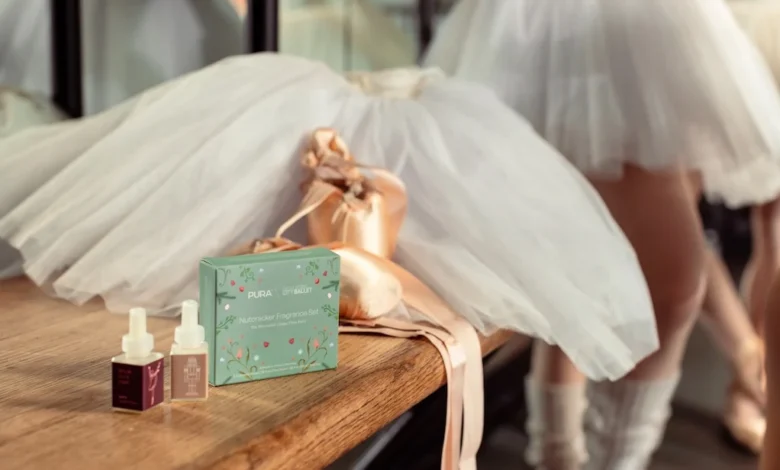
Looking ahead to late 2026 and 2027, the brand’s release calendar shows no signs of slowing down. For the 2026 holiday shopping season, Pura secured an exclusive partnership with the New York City Ballet, introducing a limited-edition holiday collection inspired by The Nutcracker. The set features two distinct fragrances, The Nutcracker and Sugar Plum Fairy, launched exclusively on Pura’s website just ahead of Black Friday. To support the launch, Pura rolled out an immersive digital content series filmed on-site, featuring New York City Ballet principal dancer Tiler Peck alongside members of the corps de ballet.
Looking further into the 2027 roadmap, the company has already slated upcoming collaborations with prominent sunscreen and lifestyle brand Vacation, as well as functional genderless fragrance startup DedCool.
The C-Suite Perspective: Curating the "Spotify for Fragrance"
According to Pura co-founder Bruno Lima, these labor-intensive, year-round collaborations are foundational to the brand’s overarching market positioning. Despite receiving a high volume of inbound acquisition requests from prospective partner brands eager to access Pura’s multi-million-customer ecosystem, Lima and his executive team exercise strict quality control.
"We probably say ‘no’ more often than ‘yes,’" Lima noted in an interview with retail media. The curation process relies on disciplined internal metrics, evaluating whether a prospective release addresses a specific consumer pain point or targets an underserved demographic within their subscriber base.
Lima frequently frames Pura’s long-term vision around a familiar digital streaming analogy: "We talk about this goal of becoming the Spotify for fragrance. So it’s like us asking, ‘Which songs and which artists are you not finding here?’"
This digital-first curation relies heavily on continuous user experience research. By polling subscribers on which brands they wish to see integrated into the Pura app, the company ensures that its collaborative roadmap reflects actual consumer demand rather than purely top-down marketing initiatives. These exclusive drops act as a vital retention mechanism, incentivizing subscribers to maintain monthly recurring deliveries rather than drifting away toward one-off retail purchases.
Balancing DTC Exclusivity and Omnichannel Expansion
As Pura navigates its rapid transition from a digital-first DTC startup to a formidable omnichannel presence—with products now distributed through major retail partners including Nordstrom, Target, and Ulta—maintaining the allure of its direct channel remains paramount.
While some collaborative and private-label SKUs enjoy wide distribution across traditional brick-and-mortar retail networks, exclusive digital-only releases play a crucial psychological role for the brand’s loyal subscriber base. They create a sense of urgency, community, and insider access that keeps users engaged with the proprietary smartphone application.
Furthermore, private-label lines offer a lower price barrier, allowing consumers to test a wider array of stock-keeping units (SKUs) without financial hesitation. Once hooked on the platform’s mechanics, these same consumers readily trade up to premium collaborative scents that mirror their lifestyle preferences or seasonal moods.
Broader Industry Implications and Future Outlook
Pura’s trajectory underscores a broader shift in the home goods and fragrance markets toward experiential, platform-based commerce. In an era where direct-to-consumer brands face tightening capital markets and soaring customer acquisition costs on traditional digital ad networks, Pura has engineered a defensible moat.
By functioning as a centralized utility for home scenting, the company has effectively outsourced its product development diversity to trusted third-party brands while retaining absolute control over the distribution hardware. For legacy fragrance houses and independent DTC startups alike, partnering with Pura offers a low-friction entry point into the lucrative smart-home ecosystem without the capital expenditure required to develop proprietary hardware.
As Pura approaches its 2027 milestones with brands like Vacation and DedCool on the horizon, the company’s disciplined approach to cadence and curation suggests that strategic IP integration will remain a cornerstone of modern retail success. By treating scent not merely as a commodity, but as a dynamic playlist curated for the home, Pura has redefined what consumers expect from the air they breathe.