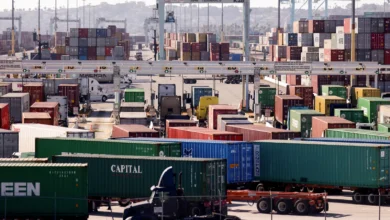
The proposal marks a significant milestone in the Trump administration’s ongoing utilization of Section 301 of the Trade Act of 1974, a powerful legal tool that allows the executive branch to impose trade sanctions against nations found to be engaging in unfair trade practices. While the implementation date for these duties remains unconfirmed, officials indicate that the earliest possible start would be in the 2027 calendar year, providing a narrow window for diplomatic negotiation and public scrutiny.
The Scope and Scale of Proposed Duties
The proposed tariff structure is multifaceted, reflecting a nuanced approach to different economies based on their specific manufacturing output and current trade relationship with the United States. Under the current plan, imports from China face the most stringent penalties, with duties reaching up to 20%. The European Union is slated for a 15% duty on covered goods.
Notably, the USTR has structured the policy to incentivize reciprocal trade concessions. For nations such as Vietnam, India, and Singapore, the proposed tariff rates—which currently sit at the higher end of the spectrum—could be significantly reduced to 20%, 17%, and 10% respectively, provided that these nations reach formal trade agreements that address the U.S. government’s concerns regarding market distortion and manufacturing overcapacity.
This tiered strategy underscores a "negotiation-first" approach, where the threat of economic friction is utilized as leverage to force structural changes in the industrial policies of foreign trading partners. The USTR has established a public comment period concluding on January 5, 2027, followed by a series of formal hearings beginning January 25, 2027, to evaluate the economic impact of these proposals.
Historical Context and Chronological Development
The road to this announcement began in March 2026, when the Trump administration launched two distinct, high-stakes Section 301 investigations. The first, which culminated in this week’s announcement, focused on the global proliferation of excess manufacturing capacity. The second investigation, which concluded earlier in the year, targeted forced labor practices and resulted in the implementation of 10% to 12.5% tariffs on imports from 60 countries.
The current list of 14 affected economies represents the majority of the 16 nations originally targeted in the capacity probe. Interestingly, Mexico and Norway were excluded from the new round of proposed duties, suggesting that bilateral discussions or specific market conditions have temporarily shielded these economies from the latest round of sanctions.
This move follows a long-standing pattern of aggressive trade enforcement by the Trump administration. Since 2025, the White House has utilized Section 301 to target various sectors and nations, ranging from Brazilian industrial imports to Chinese-manufactured ship-to-shore port cranes. Furthermore, the administration maintains active investigations into German pharmaceutical pricing and Vietnam’s intellectual property frameworks, signaling a comprehensive, "all-of-the-above" approach to rebalancing global trade.
The Economic Mechanics of Overlapping Tariffs
For businesses and supply chain managers, the primary concern lies in the compounding nature of these tariffs. Pete Mento, director of global trade advisory services at Baker Tilly, emphasized the complexity of these calculations in a recent professional assessment. Because the new capacity-based tariffs are net of existing Most-Favored Nation (MFN) rates and previous Section 301 duties, the financial impact for importers could be substantial.
Using a hypothetical scenario of a company importing $1 million in Chinese goods, Mento illustrated that if a shipment is already subject to a 12.5% forced-labor tariff, the application of a 20% excess-capacity tariff would not be additive in all cases; rather, the higher of the two rates would apply. In this example, the importer’s cost would jump from $125,000 to $200,000, a 60% increase in duty payments. This volatility makes long-term supply chain planning notoriously difficult, as companies must navigate an ever-shifting landscape of overlapping trade barriers.
Strategic Rationale and Official Stance
The administration’s argument for these tariffs is rooted in the belief that for decades, foreign nations have exploited the global trade system to the detriment of the American workforce. According to USTR Jamieson Greer, the policy is designed to combat "industrial strategies built on targeting manufacturing, wage and labor suppression, financial and other support, and non-market economy inputs."
Greer’s statement encapsulates the administration’s core philosophy: that the trade balance has been intentionally tilted through state-sponsored distortion, leading to the gradual erosion of the U.S. manufacturing base. By imposing these duties, the government aims to force a "leveling of the playing field," arguing that the short-term economic pain of tariffs is a necessary price to pay for long-term domestic industrial revitalization.
Implications for Global Markets and Supply Chains
The announcement has sent shockwaves through global markets, particularly as manufacturers in the European Union and Asia assess the potential for a significant contraction in export volumes to the U.S. market. Economists suggest several potential outcomes:
- Supply Chain Relocation: Companies may accelerate the "near-shoring" or "friend-shoring" of their operations to avoid the volatility associated with Section 301 investigations.
- Inflationary Pressure: While the stated goal is to protect domestic manufacturing, critics argue that these tariffs function as a tax on domestic consumers and businesses that rely on imported raw materials and intermediate goods.
- Retaliatory Cycles: There is a heightened risk that affected trading partners will initiate their own trade measures against U.S. exports, potentially sparking a wider trade war that could dampen global economic growth.
- Reciprocal Negotiations: Conversely, the prospect of lower tariffs in exchange for structural changes may lead to a series of mini-trade deals, potentially yielding a more transparent and balanced global trading system in the long run.
Data-Driven Analysis of the Current Landscape
Data from the Department of Commerce suggests that manufacturing capacity in several of the targeted nations has expanded at a rate that significantly outpaces domestic demand, leading to the "dumping" of excess goods into the U.S. market at depressed prices. This phenomenon creates a "predatory pricing" cycle that makes it impossible for domestic U.S. producers to compete, regardless of their own efficiency or innovation.
By targeting 14 nations simultaneously, the U.S. is effectively declaring that the problem of excess capacity is systemic rather than localized. The decision to exclude Mexico and Norway from this specific proposal may indicate that the administration is utilizing its "Section 301 leverage" as a surgical tool, potentially rewarding countries that cooperate on other bilateral issues while pressuring those that remain recalcitrant on industrial policy.
The Path Forward: Public Hearings and Implementation
The upcoming timeline is critical for industry stakeholders. Between now and the January 5, 2027, deadline for public comments, corporations, trade associations, and foreign governments are expected to mount significant lobbying efforts. The January 25 hearings will serve as a venue for these stakeholders to present their arguments, potentially leading to modifications in the final list of products covered or the final tariff percentages applied.
The USTR has indicated that hearings will continue "as appropriate," suggesting that the administration is willing to keep the process open-ended to allow for adjustments based on the information gathered. For businesses operating in the global space, the next several months represent a period of high uncertainty, requiring a proactive approach to trade compliance and supply chain diversification.
Ultimately, this move represents a fundamental shift in U.S. trade policy. By prioritizing the protection of domestic industrial capacity over traditional free-trade orthodoxy, the administration is betting that the global economy will adjust to the new reality of American economic protectionism. Whether this leads to a more robust U.S. manufacturing sector or a fragmented global trade environment remains the central question for the coming year. As the world watches, the intersection of international trade, domestic politics, and industrial policy will continue to dominate the global economic agenda through the early months of 2027.