Meta Leadership Transition: Infrastructure Head Santosh Janardhan Steps Down as Ex-AWS Executive Dave Brown Takes the Reins

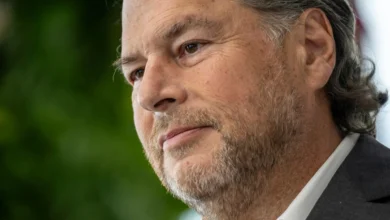
Santosh Janardhan, a foundational pillar in Meta’s evolution from a burgeoning social media startup into a global technology conglomerate, is stepping down from his role as the company’s head of infrastructure and co-head of engineering. Meta confirmed the departure on November 11, 2026, marking the end of an era for the executive who spent nearly two decades helping architect the physical and digital backbone of the tech giant.
Janardhan will be succeeded by Dave Brown, a seasoned cloud and artificial intelligence veteran who joined Meta earlier this year as vice president of infrastructure. Brown brings deep industry expertise to the role, having spent 19 years at Amazon Web Services (AWS), where he spearheaded initiatives centered on cloud computing, large-scale compute infrastructure, and artificial intelligence systems.
While Janardhan’s departure represents a significant shift in Meta’s executive ranks, the transition is expected to be gradual. Meta representatives have indicated that Janardhan will remain with the company temporarily to facilitate a smooth handover of responsibilities before formally departing next year. During this transition window, Janardhan is slated to shift into an advisory capacity specifically focused on Meta Compute, an internal initiative he was recently tasked with leading to scale the company’s data center investments and cloud-facing strategies.
The departure first came to light following an internal memo circulated within the company, which was initially reported by Bloomberg. While the internal memo did not explicitly detail the motivations behind Janardhan’s exit, reports indicate that his message to employees centered on the theme of "passing the baton" after a distinguished, multi-year tenure that fundamentally shaped modern internet architecture. Meta officials have not released further public statements detailing specific reasons for the executive change.
A Legacy Spanning Nearly Two Decades
To understand the weight of Janardhan’s departure, one must examine the timeline of his tenure at the company. Janardhan joined Meta—then known as Facebook—in 2009, a critical juncture when the platform was scaling rapidly to accommodate tens of millions of new users worldwide. Over the next seventeen years, he rose through the engineering ranks, eventually overseeing the massive global infrastructure network that powers Facebook, Instagram, WhatsApp, Messenger, and Reality Labs.
Under his leadership, Meta’s infrastructure operations expanded from a handful of regional data centers into a sprawling, hyper-scale global network designed to handle staggering volumes of daily traffic, media uploads, and real-time messaging. Janardhan’s teams were responsible for designing energy-efficient data centers, deploying custom silicon chips, optimizing server hardware, and building out the fiber-optic networks necessary to keep billions of people connected globally.
His ascent culminated in his dual role as head of infrastructure and co-head of engineering, placing him at the absolute center of Meta’s technical decision-making apparatus. In recent years, as the technology sector pivoted aggressively toward artificial intelligence, Janardhan’s role became even more critical. The surge in generative AI applications demanded unprecedented computational horsepower, placing immense pressure on technology companies to upgrade their underlying infrastructure at record speeds.

The Pivot to AI Infrastructure and Meta Compute
The timing of Janardhan’s departure coincides with an unprecedented capital expenditure cycle at Meta. In recent years, the company’s financial commitments toward infrastructure have exploded as Chief Executive Officer Mark Zuckerberg and other executives position Meta as a primary contender in the global artificial intelligence race. To train and run increasingly sophisticated large language models and multimodal AI systems, Meta has poured billions of dollars into procuring advanced graphics processing units (GPUs), building specialized AI data centers, and securing sustainable energy sources.
Recognizing the strategic importance of this hardware boom, Meta appointed Janardhan earlier this year to lead Meta Compute. This specialized initiative was established to scale the company’s data center investments and aggressively drive its long-term hardware strategy. Furthermore, reports emerged earlier this year that Meta was exploring the development of a cloud business model designed to monetize excess AI compute capacity—a strategic pivot that would pit the social media giant more directly against traditional cloud providers.
By handing over the reins to Dave Brown, Meta is bringing in a leader with deep, specialized experience in commercial cloud infrastructure. Brown’s nearly two-decade career at AWS gave him a front-row seat to the evolution of the cloud computing industry, where he managed core compute services and helped scale AWS into the dominant cloud provider it is today. His background in managing enterprise-grade cloud systems and AI infrastructure aligns directly with Meta’s evolving business model, which increasingly relies on selling or leveraging high-performance computational power.
Industry Implications and Broader Market Context
Executive shuffles within Big Tech’s infrastructure divisions rarely occur in a vacuum, particularly during periods of intense technological transition. The race for AI dominance has transformed data centers from background operational costs into strategic corporate battlegrounds. Companies are no longer just competing on software algorithms; they are competing on access to electricity, advanced silicon, and architectural efficiency.
Meta’s aggressive spending on AI infrastructure has been a frequent topic of discussion among financial analysts and investors. Earlier this year, the company’s projected capital expenditures—spanning tens of billions of dollars dedicated to AI data centers and hardware partnerships, such as those with Nebius—highlighted the immense financial commitment required to stay competitive against peers like Microsoft, Google, Amazon, and Apple.
Janardhan’s departure and the subsequent elevation of an AWS veteran like Dave Brown signal that Meta’s infrastructure division is entering its next evolutionary phase. While Janardhan successfully scaled Meta’s systems to support social media dominance for billions of users, Brown’s expertise may help steer the company deeper into enterprise-adjacent territory, commercial cloud offerings, and hyper-scale AI deployment.
As Meta navigates this high-stakes transition, the industry will be watching closely to see how the leadership change impacts the company’s ongoing data center expansions and its broader monetization strategy for AI compute. Although Janardhan will remain on board in an advisory capacity for Meta Compute in the near term, the ultimate responsibility for steering the tech giant’s physical and computational future now rests firmly with Brown.