The Global Memory Supercycle Reaches New Heights As DRAM Revenue Surges Toward 200 Billion Dollars

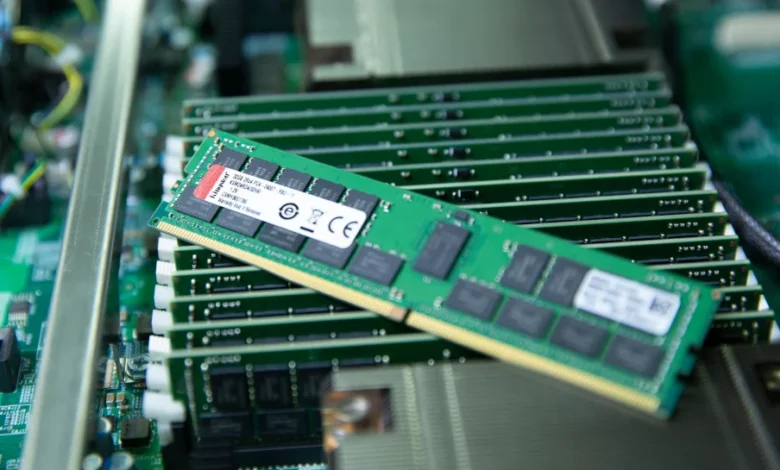
The worldwide memory semiconductor industry is currently navigating a period of unprecedented expansion, characterized by a fundamental shift in market dynamics that has pushed DRAM revenue to record-breaking levels. According to recent data from Counterpoint Research, global DRAM revenue skyrocketed by 369% year-over-year in the third quarter of 2026, reaching a valuation just shy of the $200 billion milestone. This remarkable growth trajectory is not driven by a proportional increase in physical chip production, but rather by an aggressive, supply-constrained pricing environment fueled by the insatiable appetite for artificial intelligence infrastructure.
The current landscape represents a departure from the traditional commodity-driven nature of memory manufacturing. As demand from AI accelerators and high-performance data center servers continues to outstrip available supply, manufacturers have transitioned from a volume-based business model to one defined by premium pricing. Industry analysts note that bit shipment volumes—a traditional metric for measuring industry growth—rose by a modest 4% during the third quarter. This discrepancy between low shipment growth and triple-digit revenue expansion highlights a market where price elasticity has effectively vanished, leaving buyers to scramble for limited inventory at nearly any cost.
A Retrospective on the 2026 Memory Boom
To understand the scale of the current phenomenon, one must look at the rapid progression of the year. In the first quarter of 2026, global DRAM revenue stood at approximately $97 billion, reflecting a 260% year-over-year increase at that time. Within the span of just six months, the market has essentially doubled its revenue output. This rapid escalation has fundamentally altered the economics of computing hardware.
Historically, the memory market has been defined by extreme cyclicality, with periods of oversupply leading to price crashes followed by periods of relative stability. However, the current "supercycle" is being driven by the structural requirements of the AI era. Memory, once a standard commodity component, is now being treated as a high-value, scarce resource. Average selling prices (ASP) have seen a dramatic ascent; where prices previously hovered between 20 and 30 cents per gigabit, they have now surged toward an average of $1.90, with high-bandwidth memory (HBM4) components reaching costs as high as $4 per gigabit.
Comparing this to the previous industry peak in 2018—which saw server module pricing reach roughly $1 per gigabit—it becomes clear that the current market has entered uncharted territory. The price of individual components serves as a vivid illustration of this trend: a standard 16Gb DDR5 chip, which traded at approximately $8.70 in October 2025, commanded a price of $48 by September 2026. This represents a staggering 450% increase in contract pricing over a twelve-month period.

The Shift Toward Agentic AI and Resource Competition
A critical, yet often overlooked, component of this shift is the role of agentic AI. While much of the early hype focused on GPU-attached HBM, the rise of autonomous AI agents is creating an unprecedented demand for conventional DRAM. Because these agentic workloads rely heavily on general-purpose CPU servers, they require massive amounts of standard DDR5 memory. This has created a direct conflict for fabrication capacity, pitting hyperscalers—the primary builders of AI clouds—against traditional PC and smartphone manufacturers.
This competition has not been without public friction. Industry leaders have voiced concerns regarding the allocation of limited memory resources. OpenAI CEO Sam Altman, in a recent appearance on the Cheeky Pint podcast, characterized the allocation of limited DRAM to personal computing devices as "quite terrible" given the desperate need for capacity in AI training clusters. While Altman later softened his stance—stating on social media that he hoped for a future where users have access to abundant RAM—the underlying tension remains. His subsequent meeting with Samsung executives in Yongin signaled the seriousness with which AI developers are approaching the supply chain to secure long-term allocations.
Corporate Winners and Consumer Casualties
The financial performance of the major memory manufacturers in the third quarter of 2026 underscores the immense wealth generation occurring within this sector. Samsung, which maintains the largest market share at 38%, reported a record-breaking operating profit of approximately $80 billion for the quarter. SK hynix similarly saw explosive growth, with operating profits climbing 632% year-over-year and quarterly revenue exceeding 100 trillion won for the first time in its history. Micron Technology, meanwhile, reported a 379% increase in fiscal fourth-quarter revenue, bolstered by an impressive gross margin of 86.8%.
However, the downstream impact on consumer technology has been profound. The increased cost of bill-of-materials (BOM) has forced manufacturers to adjust pricing or sacrifice margins. According to data from TrendForce, memory components—including CPU, RAM, and SSDs—now account for approximately 68% of the total production cost for a standard $900 laptop. This pressure has contributed to a cooling in the consumer hardware market; smartphone shipments fell by 20% in the third quarter of 2026, marking the weakest performance for that period since 2012. Analysts estimate that retail prices for mobile devices have risen by roughly 20% throughout the year as a direct result of these upstream cost pressures.
Future Outlook and Industry Projections

Looking ahead, there is little consensus on when the market might reach a point of equilibrium. Major manufacturers are managing expectations with long-term forecasts. SK hynix has publicly warned that the supply shortage could persist through 2030, a sentiment echoed by Micron, which suggests that the tightness in supply and demand will intensify throughout 2027 and 2028.
Some industry figures, such as Team Group CEO Gerry Chen, have adopted an even more cautious outlook, suggesting that the industry is approaching a point where even significant capital investment will not be enough to satisfy demand. Conversely, academic experts like Harvard Business School professor Willy Shih suggest that historical precedence indicates the boom will eventually conclude once new fabrication capacity comes online, likely in late 2027 or 2028.
What distinguishes this cycle from its predecessors, however, is the fundamental change in contract structures. Micron has reportedly secured 26 multi-year "take-or-pay" agreements, which are expected to cover over 35% of its revenue through 2030. These agreements, backed by $32 billion in customer commitments, represent a new paradigm in the memory industry. By locking in supply through long-term contracts, manufacturers are effectively insulating themselves from the traditional boom-and-bust cycles that have historically dictated the semiconductor industry.
Conclusion: A New Economic Reality
The implications for the broader technology sector are significant. If the current model of long-term, high-cost contracts becomes the industry standard, the era of fluctuating, lower-cost memory may be a relic of the past. For consumers and enterprises alike, the current high-price environment is not merely a temporary supply chain disruption, but a potential recalibration of the cost of entry for modern computing. As AI continues to integrate into every facet of digital infrastructure, the demand for high-capacity, high-speed memory will remain the defining constraint of the global tech economy. Whether this "supercycle" will eventually lead to a massive correction or a sustained plateau remains the most critical question facing the semiconductor industry today.
Related posts: