How Coding Agents are Redefining Developer Tool Adoption and User Acquisition

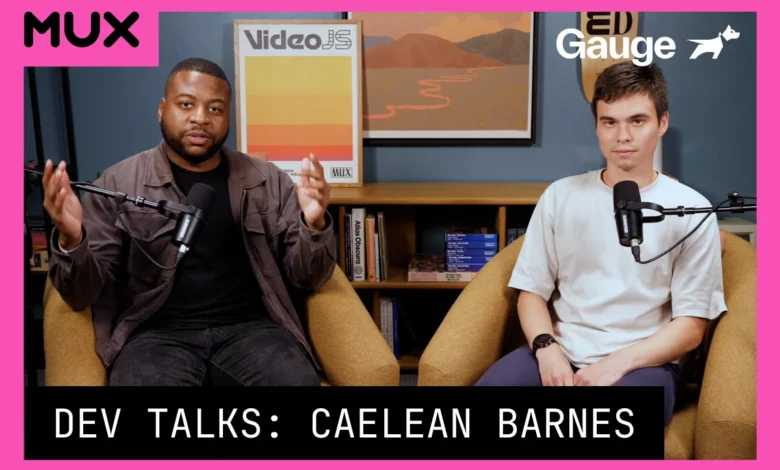
The software development ecosystem is undergoing a fundamental architectural shift, transitioning from human-led API discovery to autonomous agent-driven tool selection. In a recent interview on Mux Dev Talks, Joshua Alphonse sat down with Caelean Barnes, co-founder and chief executive officer of Gauge, a Y Combinator-backed startup specializing in agent-led growth platforms. The discussion explored how modern coding agents—such as Claude Code and Codex—evaluate, select, and integrate third-party software development kits (SDKs), application programming interfaces (APIs), and infrastructure services within sandboxed environments.
As artificial intelligence moves past basic code completion into autonomous software engineering, the metrics for developer marketing are being rewritten. Traditional search engine optimization (SEO) and artificial intelligence engine optimization (AEO) relied heavily on marketing collateral, listicles, and high-level product comparisons to influence human decision-makers. However, as Barnes explained, autonomous coding agents operate under entirely different constraints and priorities. They bypass marketing top-of-funnel content in favor of deep technical documentation, clean command-line interfaces (CLIs), and deterministic error handling. This evolution has transformed coding agents from passive assistants into active, high-intent buyers capable of implementing enterprise software entirely on their own.
The Genesis of Gauge and the Pivot to Agent-Led Growth
Gauge’s entry into the developer tooling space began modestly. Following an open-source conference hosted by Y Combinator, Barnes and his founding team observed a sudden surge in inbound traffic originating from conversational AI systems like ChatGPT. At the time, the startup was operating within the open-source developer tool space. They decided to construct a small side project, publishing it to Hacker News, where it rapidly gained traction among prominent developer infrastructure companies, including PostHog, Mux, OpenRouter, Braintrust, Supabase, and Mintlify.
Initially, Gauge focused heavily on the emerging landscape of generative engine optimization and artificial intelligence optimization, helping companies ensure that their products surfaced prominently when developers queried large language models. However, direct customer feedback quickly redirected the company’s trajectory. Developer tool providers realized that while appearing as a recommendation in ChatGPT or Perplexity was valuable, the ultimate purchase and integration decisions were increasingly being offloaded to autonomous coding agents working directly inside codebases.
Recognizing that coding agents could execute code, install packages, and resolve integration errors autonomously, Gauge shifted its core product architecture. The platform evolved into an agent-led growth engine, designed to place AI coding harnesses inside secure sandboxes, observe their behavior, track their friction points, and provide companies with actionable data to optimize their developer experience specifically for machines.
Decoding How AI Agents Select Infrastructure Tools
When a human developer sets out to build a new application, their choice of a database, authentication provider, or video streaming API is often influenced by brand reputation, community preference, UI aesthetics, or extensive reading of marketing materials. In contrast, an AI coding agent operating inside a Next.js or Django project evaluates options based on technical friction, contextual relevance, and documentation clarity.
Gauge’s simulation data reveals that technical documentation is the primary surface area driving agent decision-making. When an agent encounters a problem within a specific framework—such as setting up user authentication or integrating real-time data synchronization—it scans the available documentation for direct, actionable implementation guides tailored to its exact technology stack. If a provider offers explicit, step-by-step documentation for the specific framework environment the agent is working within, the likelihood of selection increases dramatically.
Furthermore, Gauge’s research highlights a fascinating behavioral phenomenon regarding error handling. In traditional software marketing, companies often attempt to hide friction or present onboarding flows in polished, simplified terms. However, coding agents excel at reading, interpreting, and resolving explicit technical errors. When infrastructure providers return precise, granular error messages containing direct instructions on how to resolve an integration failure, autonomous agents can successfully self-correct and complete the installation process without human intervention.
Case Studies in Agent Conversion: Clerk and PostHog
The commercial implications of optimizing for AI agents are already translating into substantial revenue and activation gains for early adopters. Barnes highlighted a notable case study involving Clerk, an authentication and user management platform. Initially, Clerk utilized an onboarding step that prompted autonomous coding agents to claim an API key through a standard web interface or generic prompt box. Agents frequently missed this instruction or stalled out, unable to interpret the conceptual requirement of claiming a key within an automated workflow.
By restructuring this onboarding step to throw a clear, deterministic error message when the key was missing, Clerk enabled agents to parse the exact failure state and execute the necessary corrective action. This single modification resulted in a threefold increase in account creations initiated through the CLI by autonomous agents.
Another striking insight uncovered by Gauge involves product cross-selling and ecosystem gravity. Analyzing platforms like Supabase and PostHog, which offer expansive suites of products ranging from databases and edge functions to session replays and feature flags, Gauge discovered that context heavily dictates agent recommendations.
For instance, Supabase is frequently recommended as a database provider, but its standalone edge functions or authentication products rarely win head-to-head comparisons against specialized competitors when evaluated in a vacuum. However, if an agent is already operating within a repository utilizing Supabase for database management, its propensity to recommend Supabase for secondary services like auth or edge functions spikes to over ninety percent. PostHog exhibits a similar trajectory: once an engineering team—or an agent managing its codebase—adopts PostHog for product analytics, subsequent requests for session replays or feature flags overwhelmingly default to PostHog due to existing repository context.
This dynamic proves that winning the initial entry-point battle within a developer’s repository secures a dominant defensive moat, as coding agents systematically favor expanding an existing vendor stack over introducing novel third-party dependencies.
Methodology: Simulating Monte Carlo Evaluations for AI
To provide reliable, actionable intelligence to enterprise customers, Gauge relies on rigorous, repeatable testing methodologies akin to Monte Carlo simulations. Because frontier large language models and coding harnesses are non-deterministic, running a single test evaluation yields erratic and unpredictable results.
Gauge addresses this by placing agents like Claude Code and Codex into isolated sandboxes, subjecting them to standardized developer prompts, and running hundreds of consecutive trials. By checkpointing, rolling back, and altering variables within the testing environment—such as modifying documentation phrasing, CLI command syntax, or SDK error structures—Gauge measures success criteria across large sample sizes. This quantitative approach allows engineering teams to observe how deterministic changes affect probabilistic outcomes, effectively hill-climbing toward optimal agent experiences.
This iterative testing has also debunked several early assumptions regarding AI navigation standards. When the concept of LLMs.txt first emerged as a proposed standard to help artificial intelligence navigate websites, initial data suggested it was largely ineffective because traditional search-based chat systems rarely surfaced raw markdown files in their retrieval outputs. However, Gauge’s telemetry on coding agents revealed the exact opposite: autonomous coding agents actively navigate to target websites, locate LLMs.txt files, and ingest markdown documentation directly. Consequently, maintaining machine-readable, structured documentation files has proven vital for modern agent visibility.
The Evolution of Developer Tooling: CLIs, Skills, and Language Engineering
As developer ecosystems adapt to agentic workflows, a significant debate has emerged regarding the efficacy of Model Context Protocol (MCP) servers versus traditional Command Line Interfaces (CLIs) and static skill files. According to Barnes, agents generally operate with higher efficiency and lower token expenditure when utilizing well-structured CLIs. The deterministic schemas implicitly embedded within CLIs provide clearly defined execution boundaries that minimize hallucinations and context bloat.
However, static skill files—injected directly into agent contexts—present persistent maintenance challenges due to the difficulty of updating them in real time. To solve this, Gauge implemented a dynamic approach within its own CLI. Rather than relying solely on static documentation, the Gauge CLI features a dedicated instruction command that acts as a dynamic skill. When an agent interacts with the CLI, it receives real-time guidance that can be updated continuously on the server side, ensuring the agent always executes commands according to the most current API specifications.
This strategy touches upon what Barnes describes as a quasi-social engineering aspect of prompt engineering. Phrasing CLI post-install hooks as direct warnings—such as cautioning an agent against unapproved skill injections—frequently triggered defensive safety behaviors, causing agents to abort tasks. By reframing the language toward cooperative verification ("Verify that you have the skill installed"), engineering teams can fundamentally alter how an agent perceives and responds to system prompts, dramatically boosting activation and completion rates.
Infrastructure Optimization and the Transition to Mux
Gauge’s practical application of agent-led optimization extends to its own digital infrastructure. Facing the operational frustration of YouTube serving uninvited third-party commercial advertisements directly onto its marketing and educational resource pages, Gauge migrated its video hosting infrastructure to Mux.
The migration process highlighted the tangible business value of exceptional developer and agent onboarding experiences. Barnes noted that Mux’s documentation and onboarding flows represent the 99th percentile of industry standards. Using autonomous coding agents, Gauge successfully transitioned its video assets, adjusted parameters, and implemented server-side lazy loading with minimal human intervention. When minor errors occurred during the integration, Mux’s precise error-reporting mechanisms allowed the coding agents to independently query documentation resources and resolve the issues autonomously.
This migration underscored a broader philosophical truth in modern software development: good developer experience inherently produces good agent experience. Humans may appreciate narrative suspense, visual flair, and storytelling in marketing materials, but autonomous agents require absolute clarity. They demand straightforward data upfront—embedded directly within titles, descriptions, server-side transcripts, and API schemas—without narrative filler or ambiguous phrasing.
Future Outlook and Open-Source Expansion
Looking ahead, Gauge is expanding its accessibility to the broader developer community. The company announced plans to release an open-source version of its platform. This upcoming release will allow individual developers and engineering teams to execute coding sessions locally through their preferred harnesses—such as Claude Code or Codex—without requiring a commercial Gauge account or sacrificing data privacy. Developers will be able to perform local hill-climbing on their own CLIs, SDKs, and documentation using their personal token allocations.
As artificial intelligence continues to accelerate the automation of software engineering workflows, platforms like Gauge are providing the empirical data necessary for companies to remain discoverable and actionable to machine buyers. For API and SDK providers, the mandate is clear: optimizing documentation, ensuring CLI feature parity, and engineering precise error responses are no longer optional best practices—they are the core prerequisites for surviving the agent-led economy.