Navigating the Shifting Tides: Major Retailers Unveil High-Stakes 2026 Holiday Strategies Amid Economic Pressures

The retail industry has officially fired the starting gun on the critical 2026 holiday shopping season, with major brick-and-mortar giants unveiling their blueprint for Black Friday, Cyber Monday, and the weeks leading up to December 25. As press releases cascade from boardrooms at Target, Walmart, Kohl’s, Best Buy, Macy’s, and home improvement leader Lowe’s, executives are betting big that consumers will once again open their wallets despite persistent macroeconomic headwinds. Yet, beneath the polished marketing campaigns and early promotional rollouts lies an atmosphere of intense caution. With household budgets squeezed by inflation, fluctuating fuel costs, and rising fixed expenses, retailers are stepping into a holiday landscape defined by heightened volatility, fierce price wars, and technological disruption.
The stakes for the season are undeniably high. The National Retail Federation (NRF) has issued a historically optimistic forecast, projecting that U.S. holiday retail sales will eclipse the $1 trillion milestone for the first time. This anticipated record-breaking performance reflects the enduring resilience of American consumers, who have continued to spend even as economic anxieties persist. However, industry analysts warn that crossing the trillion-dollar threshold does not guarantee a universally prosperous season for every merchant. If consumer budgets are depleted prematurely by aggressive early discounting or if discretionary spending is curtailed by unexpected spikes in gas and energy prices, retailers could experience a fragmented season characterized by unexpected winners and quiet losers.
Michael Brown, partner and Americas Retail Leader at global strategy and management consulting firm Kearney, noted the unpredictable nature of the upcoming months. According to Brown, there are simply too many variables at play to definitively forecast market share leaders at this stage. Retailers are deploying a sophisticated mix of early bird promotions, curated value tiers, cross-category expansions, and cutting-edge artificial intelligence to capture consumer attention, but execution will ultimately dictate who triumphs in this fiercely competitive arena.
A Chronology of Early Promotions and Evolving Retail Tactics
The timeline for the holiday shopping season has fundamentally shifted over the past decade, moving away from the traditional singular focus on the day after Thanksgiving. In 2026, the acceleration of holiday promotions has reached a new zenith. Major retailers began releasing their strategic roadmaps and promotional calendars in mid-September, offering media previews, interactive product showcases, and sneak peeks at upcoming marketing campaigns well ahead of Halloween.
By late October, the promotional floodgates were fully open. Companies such as Best Buy and Lowe’s initiated major sales events prior to the conclusion of October, fundamentally altering consumer shopping habits. This early commencement is designed to capture wallet share before household funds are stretched thin, but it introduces a distinct risk: "front-loading" consumer demand. When shoppers exhaust their discretionary funds by late autumn, late-season sales can suffer dramatic drops, forcing retailers into margin-eroding clearance markdowns in mid-December.
To sustain momentum through the entire cycle, retailers are extending their Cyber Week events by additional days, creating prolonged promotional windows that blur the lines between early bird savings and final holiday clearance. This elongated timeline requires supply chain precision, robust inventory management, and finely tuned omnichannel capabilities to ensure that digital storefronts and physical locations remain stocked and efficient.
The Battle Over Value and Affordability
Affordability has emerged as the central narrative of the 2026 holiday season. Across the retail spectrum, corporate executives are leaning heavily into the concept of "value," striving to convince cost-conscious shoppers that their merchandise offers superior quality at a competitive price point. This emphasis is a direct response to consumer sentiment shaped by years of cumulative inflation, which has outpaced wage growth for significant segments of the population.
Target set an aggressive tone for the autumn season by announcing price reductions across nearly 2,000 everyday home and apparel items in September. As the calendar turned toward the holidays, the retailer refined this strategy by organizing its holiday assortment into clear pricing tiers, highlighting more than 8,000 new gift options with over half priced under $20. Similarly, Kohl’s is capitalizing on its strategic partnership with Sephora to promote nearly 2,000 beauty items priced under $30, providing shoppers with accessible luxury options that fit within strict budgetary constraints.
Bryan Gildenberg, founder of Confluencer Commerce, emphasized that price points are paramount for shoppers whose fixed costs—housing, utilities, and transportation—continue to consume a growing share of household income. High fuel prices, in particular, act as a psychological and financial deterrent for consumers visiting physical shopping centers, elevating the importance of localized value and digital convenience.
However, competing purely on price presents a formidable challenge for traditional department stores and specialty retailers. Industry experts note that retail behemoths like Amazon and Walmart hold structural advantages in price-matching and operational scale. Walmart benefits from ubiquitous physical proximity to millions of consumers, while Amazon offers unmatched digital frictionless commerce. Consequently, companies like Target, Macy’s, and Kohl’s are forced to differentiate themselves through curated product exclusivity, distinct brand partnerships, and targeted value propositions rather than engaging in a race to the bottom on commodity pricing.
Category Creep and Merchandising Innovation
In their quest to capture a larger share of the consumer’s wallet, several retailers are aggressively expanding beyond their traditional core categories—a trend known in the industry as "category creep." While this strategy can successfully drive incremental revenue, it also carries the risk of confusing consumers if execution strays too far from a brand’s established identity.
Lowe’s provides a prominent example of this phenomenon in its 2026 holiday lineup. The home improvement giant is actively positioning its offerings as premier gift ideas, introducing unique propositions such as the "HomeCare+" annual gift card. Priced at $99 per year, the subscription gives homeowners access to professional home maintenance services twice a year, including air filter replacements and dryer vent cleaning, performed by trained Lowe’s associates. Additionally, Lowe’s has expanded its holiday assortment to include toys, bedding, apparel, and pet-focused merchandise under its Heart & Heard brand, alongside a broader selection of traditional holiday decor.
Gildenberg notes that while stretching into unfamiliar categories can quickly become disorienting for shoppers, Lowe’s maintains a coherent thread because these products directly relate to homeownership and domestic care. The home, therefore, serves as a unifying umbrella that justifies the expansion into adjacent lifestyle categories.
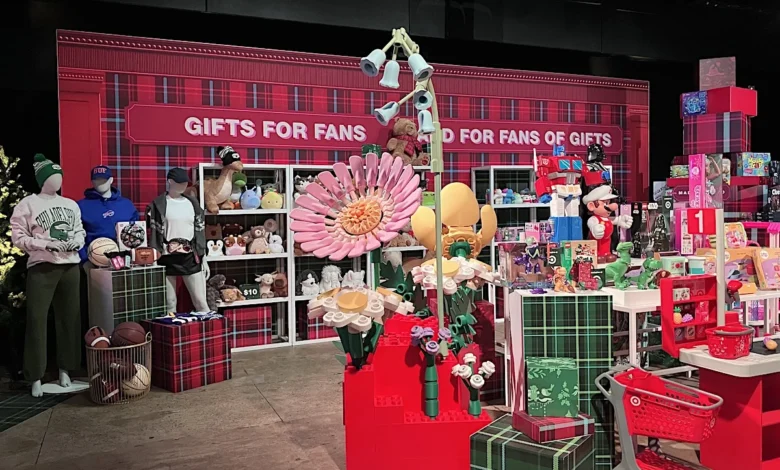
Meanwhile, Target is leveraging pop culture and exclusive merchandising to drive traffic. In one of its most anticipated holiday campaigns, Target will launch a collection of 350 exclusive, Harry Potter-inspired products across its stores and digital platform on November 7, timed to coincide with the release of a major new television series on Christmas Day. The collection spans apparel, home decor, accessories, and collectibles, demonstrating how strategic partnerships and exclusive merchandise can create urgency and draw foot traffic independent of traditional discounting.
The Rise of Agentic Commerce and AI Shopping Assistants
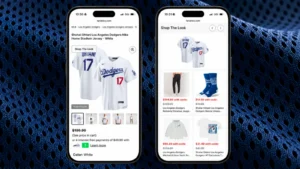
Perhaps the most unpredictable variable of the 2026 holiday season is the integration and consumer adoption of artificial intelligence in shopping workflows. Often referred to as "agentic commerce," the rise of AI-driven shopping assistants represents a fundamental shift in how consumers discover, evaluate, and purchase holiday gifts.
Major retailers have rapidly deployed proprietary AI tools to capture this emerging market. Target introduced the beta version of its AI shopping assistant, "Ask Target," just in time for the holiday sales rush. This follows the 2026 rollouts of Walmart and Lowe’s respective conversational AI assistants, "Sparky" and "Mylow." These digital tools are engineered to handle complex, highly specific consumer queries, such as generating recommendations for "a quiet-luxury-inspired gift for her, focusing on clothing and accessories under $50."
Industry analysts suggest that the full economic impact and consumer adoption rates of these AI assistants will not be fully quantified until retailers report their fourth-quarter financial earnings in early 2027. However, the implications extend far beyond simple gift recommendation engines.
According to Michael Brown of Kearney, the most profound disruption stems from consumers utilizing external AI platforms—such as ChatGPT, Gemini, and specialized retail bots—for continuous, automated price monitoring. As consumers delegate comparison shopping to autonomous software agents, the risk of losing a sale increases exponentially if a competitor’s automated pricing drops by even a marginal amount on a given day. This automated consumer behavior transforms the traditional retail battlefield, shifting competition from human-facing marketing to algorithmic supremacy. Retailers must now ensure their pricing and inventory data are optimized not just for human eyes, but for the digital agents acting on behalf of the consumer.
Outlook and Market Implications
As the holiday shopping season accelerates through November and into December, the retail sector stands at a critical crossroads. The convergence of a projected trillion-dollar sales ceiling, aggressive early discounting, non-traditional category expansions, and the nascent power of agentic commerce creates an environment of immense opportunity tempered by profound risk.
For consumers, the abundance of early sales, financing options, and AI-driven tools provides unprecedented optionality to navigate tight budgets. For retailers, the challenge will lie in maintaining profitability amidst heavy promotional pressure, managing supply chain logistics through extended shopping windows, and capturing consumer loyalty in a digital ecosystem increasingly mediated by algorithms. Ultimately, the winners of the 2026 holiday season will not simply be those who generate the highest gross volume, but those who successfully balance affordability, operational agility, and technological innovation in an unpredictable economic climate.