Decoding the Video Stream: How Mux Robots Reinvents Artificial Intelligence Analysis Through Granular Video Segmentation


The rapid evolution of artificial intelligence in media processing has fundamentally transformed how video content is indexed, searched, and analyzed. As enterprise platforms manage petabytes of visual data, the challenge is no longer merely capturing or storing footage, but efficiently extracting actionable insights without incurring prohibitive computational costs. Addressing this industrial bottleneck, video infrastructure provider Mux has officially announced the general availability and production readiness of Mux Robots, featuring a stable API designed to streamline how multimodal AI models interact with video assets.
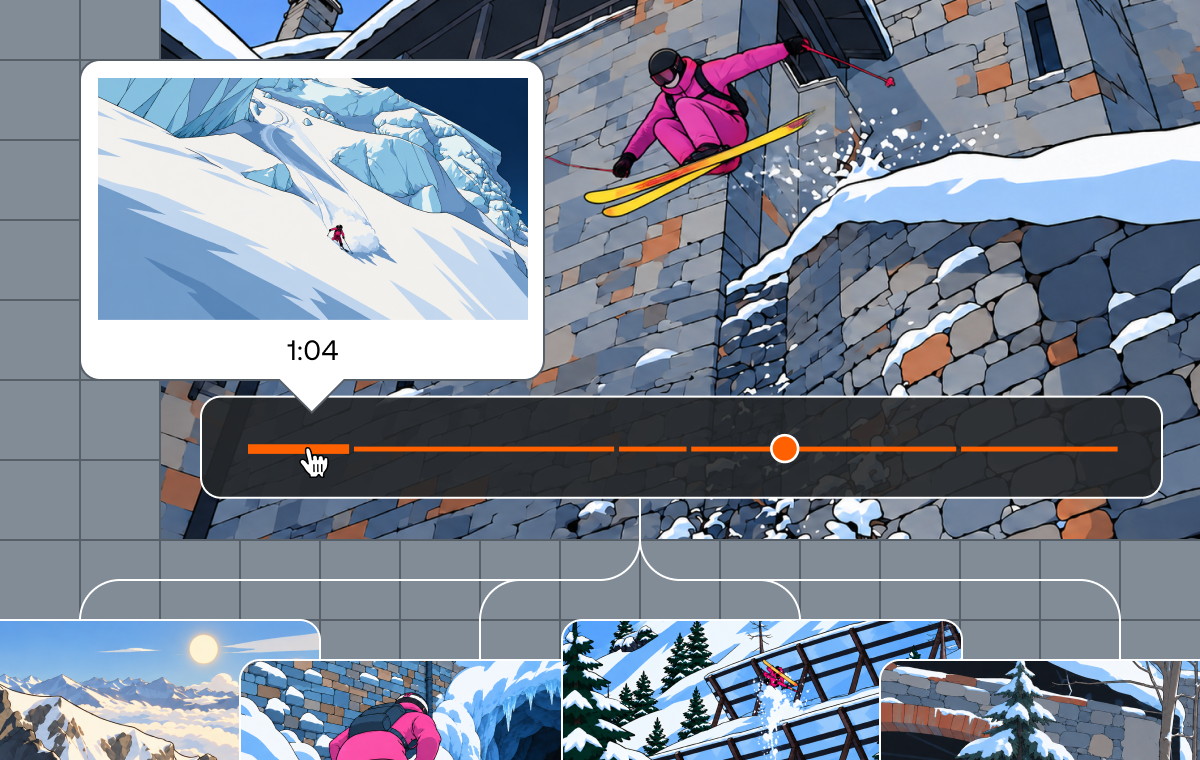
The core technological breakthrough behind Mux Robots lies in a fundamental shift in methodology: recognizing that a single video asset requires vastly different analytical approaches depending on the specific query a user or system needs to resolve. Rather than processing raw video uniformly—an approach that is both economically and computationally unsustainable—Mux Robots leverages a hierarchical system of video segmentation, breaking long-form media down into distinct building blocks ranging from individual frames to overarching scenes.
The Computational Dilemma of Video Analysis
To understand the engineering challenge Mux set out to solve, one must examine the raw scale of digital video. A standard high-definition video running for just one hour at 30 frames per second yields approximately 108,000 distinct images. Feeding every single frame into a vision-language model is not only drastically slow but financially impractical, as the vast majority of consecutive frames contain redundant visual information that does not advance the narrative or answer the posed query.
Historically, developers attempting automated video analysis faced a binary choice: either sample video uniformly at arbitrary intervals—risking the omission of rapid visual changes, fast camera cuts, or critical micro-actions—or process entire files indiscriminately, driving up latency and cloud computing expenses.
Mux Robots addresses this inefficiency by adopting a precision-first philosophy: feeding the AI model the smallest possible slice of video that still retains sufficient context to accurately answer the question at hand. This methodology balances computational frugality with contextual depth, optimizing both performance and cost for enterprise applications.

Granular Segmentation: From Frames to Scenes
To operationalize this concept, Mux Robots categorizes video decomposition into specific structural layers, each tailored to distinct functional outcomes.
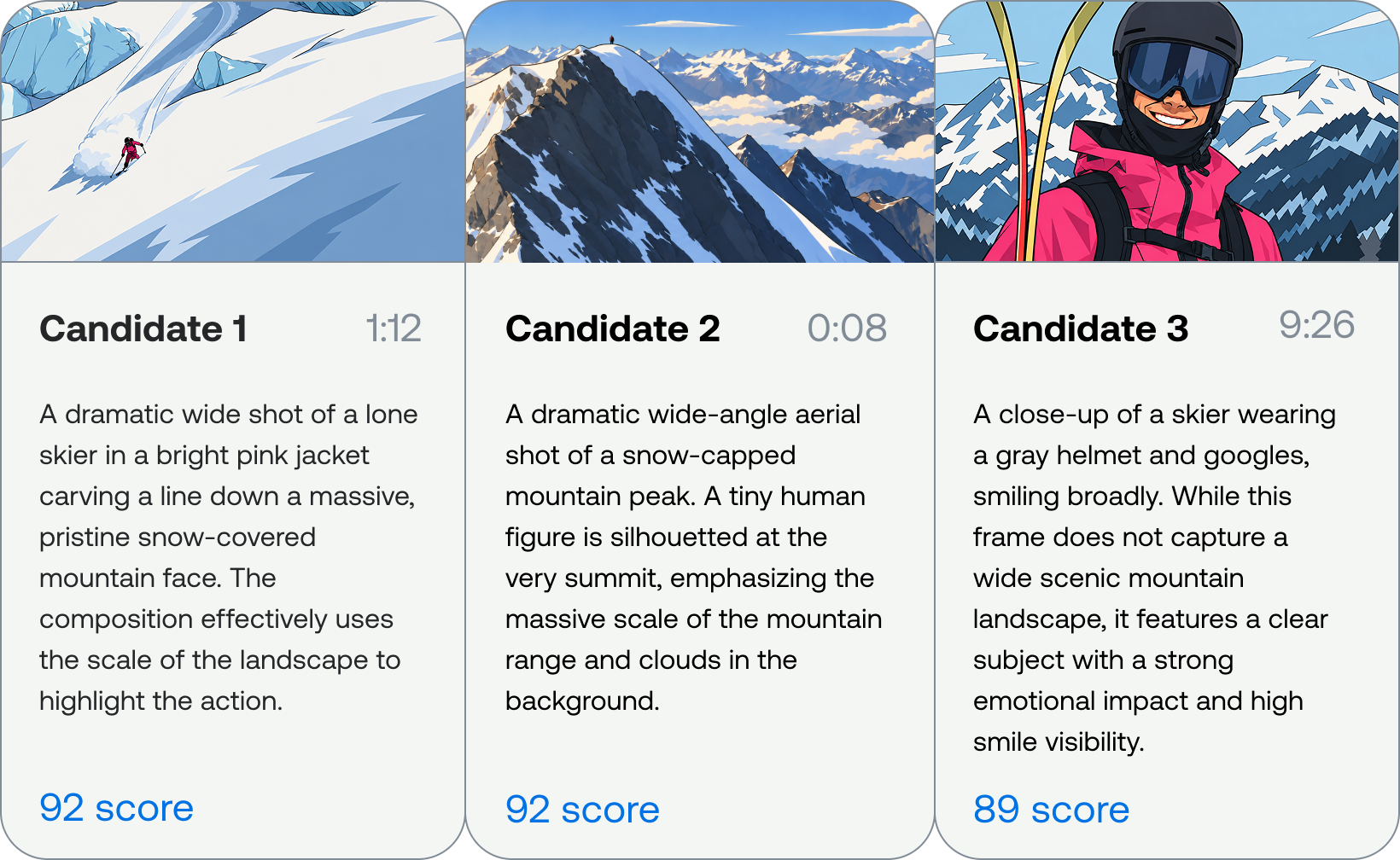
At the most microscopic level is the individual frame. Frames are deployed when a single static image holds the complete answer to a query. Typical use cases include automated content moderation—scanning individual images for policy violations or inappropriate visual signals—and thumbnail selection. For instance, the Find Best Thumbnails feature within Mux Robots evaluates candidate frames based on compositional clarity, facial prominence, lighting, and action visibility, applying programmatic scores to determine the optimal preview image.

However, frames prove inadequate when queries depend on temporal sequencing, motion, or narrative progression. To capture visual state changes, the platform utilizes shots. Defined as a continuous sequence of frames captured between two distinct camera cuts, shot detection algorithms analyze consecutive frames using lightweight visual metrics to map the boundaries of visual transitions. This ensures that fast-paced sequences—such as rapid camera angle changes, dynamic athletic movements, or quick edits—are preserved without forcing an AI model to process every single pixel change.
Moving higher up the structural hierarchy, scenes aggregate neighboring shots that share thematic, narrative, or environmental continuity. While pixel-level algorithms can easily detect a camera cut, identifying a cohesive scene requires multi-modal reasoning. By synthesizing initial visual boundaries with available transcript audio cues and contextual model logic, Mux Robots groups related segments into unified chapters. This enables applications to return a coherent sequence—such as an extended action sequence or a specific topical discussion in a podcast—rather than an isolated collection of disconnected shots.

Industry Implications and the Future of AI Video Workflows
The commercial deployment of Mux Robots arriving at general availability signals a maturing market for multimodal AI infrastructure. As enterprises increasingly deploy autonomous software agents to manage, edit, and audit video libraries, the demand for structured, query-driven video parsing has intensified.
Industry analysts note that traditional media workflows—spanning automated trailer assembly, compliance review, programmatic ad placement, and accessibility description generation—rely heavily on efficient metadata extraction. By abstracting the complexity of video segmentation into standardized, production-ready APIs, infrastructure providers like Mux lower the barrier of entry for developers seeking to integrate advanced video intelligence into their applications.

Furthermore, the integration of embedding generation within this granular framework addresses complex retrieval-augmented generation (RAG) queries. When users search for specific semantic concepts within a video archive—such as retrieving a particular environmental setting or a specific spoken topic—the system must determine whether the retrieval target should be an entire video asset, a multi-shot scene, or a precise timestamp. By aligning embedding generation with the underlying structural hierarchy of the video, Mux Robots ensures that retrieval results are both semantically relevant and operationally precise.
As production environments shift toward automated, agentic workflows, the ability to programmatically parse, categorize, and query video assets with surgical precision will become a baseline requirement for digital media platforms. With Mux Robots now production-ready, developers and enterprise organizations possess the foundational toolset required to scale video intelligence efficiently across modern digital architectures.