YouTube Blurs the Line Between Mobile and Living Room as TV Becomes Its Dominant Viewing Screen

The modern living room has undergone a radical transformation over the past decade, shifting from a traditional space for passive, scheduled broadcast consumption into an interactive, on-demand media ecosystem. At the center of this evolution is YouTube, which has firmly established the television set as its largest and most rapidly expanding viewing screen. Far from treating the television as a static display reserved for traditional "lean-back" viewing, the technology giant is aggressively introducing counterintuitive, highly interactive mobile features to the big screen, redefining how audiences consume digital video at home.
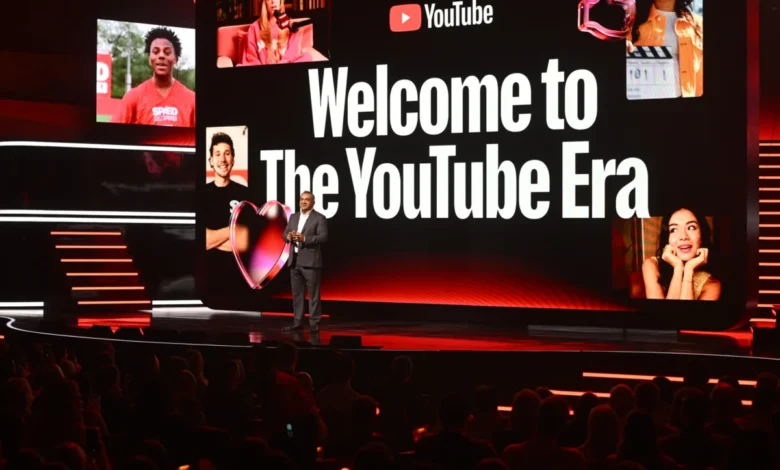
This strategic shift was underscored at the annual Made on YouTube event, where company executives unveiled nearly three dozen new product features tailored for creators, viewers, and advertisers. According to CEO Neal Mohan, this latest rollout represents a fraction of the roughly 3,000 product updates deployed across the platform throughout the year. Among the most notable additions are features that allow television viewers to actively participate in comment sections, view creator "posts"—consisting of static images and text updates—and seamlessly stream bite-sized programming via YouTube Shorts directly from their living room sofas.
A Legacy of Continuous Evolution
To understand the magnitude of YouTube’s current living room strategy, it is necessary to examine the platform’s trajectory since its inception in 2005. Founded by Jawed Karim, Steve Chen, and Chad Hurley, the platform launched with the upload of the historic "Me at the Zoo" video, famously accompanied by the first-ever user comment: a succinct "Lol." For the first decade of its existence, YouTube was primarily viewed as a desktop and, later, mobile phenomenon, where users engaged with user-generated content in isolated, highly individual sessions.
However, as broadband infrastructure improved and smart TVs saturated the global market, YouTube steadily migrated to the living room. By the late 2010s, television screens had transitioned from a secondary afterthought to the platform’s primary consumption medium. This dominance was officially validated when YouTube began topping Nielsen’s Gauge report charts as the most-watched streaming platform on televisions in the United States—a position it has held consecutively for three years. As of recent metrics, YouTube commands a commanding 14.2% share of all television viewing in the U.S., bolstered by its accessible, free-to-watch, ad-supported model alongside subscription tiers like YouTube TV and YouTube Premium.
Breaking the Mold: The Rise of Interactive Television
For decades, the television experience was defined by passivity—audiences sat back, watched scheduled programming, and rarely interacted with the content. YouTube’s product leadership, however, argues that modern audiences no longer fit neatly into binary categories of active or passive viewers. Instead, viewing habits fluctuate dynamically.
Kurt Wilms, senior director of product management for YouTube on TV, described this phenomenon in an interview following the New York product showcase. "I wouldn’t call it passive. I would call it, like, lean back," Wilms explained. "I’m watching it. Something maybe happens in the show. And then I’m like, ‘Oh, well, I want to read the comments, or I want to leave a comment myself, or, wait, what did she just talk about in a different video? I wanna go to her channel and see.’ So now, instantly, I become a leaned-in viewer. And so I think it flows, ebbs and flows between the two. We don’t think of them as a hard line."
Bringing features traditionally designed for touchscreens—such as writing comments, checking channel community tabs, and scrolling through vertical video feeds—to a ten-foot television interface initially raised internal skepticism. Within the company’s engineering and product departments, teams frequently questioned whether features native to mobile devices belonged on a television. Yet, consumer and creator demand consistently pointed in the opposite direction.
The Unlikely Triumph of YouTube Shorts and Microdramas
Perhaps the most surprising success story in YouTube’s living room expansion has been the rapid adoption of YouTube Shorts. Launched globally to compete with short-form video platforms like TikTok, Shorts was engineered primarily as a mobile-first, vertical format. Adapting it for horizontal, widescreen living room displays seemed counterintuitive on its face.
Yet, the format has achieved runaway success on TVs, with global audiences currently consuming more than 2 billion hours of Shorts programming on television screens each month. Company research revealed that the living room environment solved a major limitation of mobile viewing: the inability to enjoy short-form content communally.
"The first thing everyone was telling me about Shorts on the TV is there was no good way to watch this content with friends or family," Wilms noted. "The TV unlocked communal viewing for Shorts in a way that just wasn’t possible before."
Building upon the success of Shorts, YouTube has capitalized on another surging global entertainment trend: microdramas. Originating primarily out of Asian digital entertainment ecosystems, microdramas feature fast-paced, high-stakes, bite-sized episodes designed for rapid consumption. These productions have found an eager audience on YouTube, accumulating more than 6.5 billion views globally within a single year. On television screens specifically, microdrama viewership has surged by 90% year-over-year, demonstrating that audiences are increasingly willing to watch rapid-fire, serialized short-form storytelling in their living rooms.
The Psychology of Viewer "Modes"
To better cater to these evolving consumption patterns, YouTube’s product strategy is increasingly built around the concept of user "modes." Rather than assuming a single user has a static intent when turning on their television, the platform recognizes that intent shifts depending on the time of day, social context, and personal mood.
According to internal company research, viewers frequently transition through distinct psychological modes when interacting with the YouTube app on their TVs:
- The Audio Mode: Utilizing the television as a home stereo system during evening hours to stream music playlists, albums, or live concerts.
- The Communal/Family Mode: Engaging in shared viewing experiences with children or family members, watching educational content, gaming streams, or entertainment creators together.
- The Discovery Mode: Leaning into algorithmic feeds like Shorts or microdramas when looking for quick, low-commitment entertainment without a specific title in mind.
This flexibility allows YouTube to capture fragmented attention spans throughout the day, transforming the television from a dedicated evening entertainment portal into an all-day digital companion.
Industry Implications and Future Outlook
The continuous blurring of lines between mobile, web, and television interfaces carries significant implications for the broader media and advertising landscape. As traditional cable television continues to shed subscribers in favor of connected TV (CTV) streaming services, platforms like YouTube are capturing an increasingly large share of corporate advertising budgets.
By integrating interactive features such as live comments and community posts into the television environment, YouTube is providing advertisers with deeper engagement metrics. Advertisers are no longer just paying for passive impressions on a big screen; they are gaining access to an ecosystem where viewers actively participate, converse, and click through to creator merchandise and brand partnerships.
Furthermore, the integration of diverse content formats—ranging from long-form podcasts and high-production gaming videos to vertical Shorts and rapid-fire microdramas—cements YouTube’s position as a universal aggregator of video culture. As technological advancements continue to shrink the gap between different computing platforms, YouTube’s strategy proves that the future of television is not merely about broadcasting high-definition video, but about building an interactive, community-driven digital public square directly in the living room.