Ukraine Strikes Deep into Russian Territory Destroying Tu-95 Strategic Bomber at Engels-2 Air Base

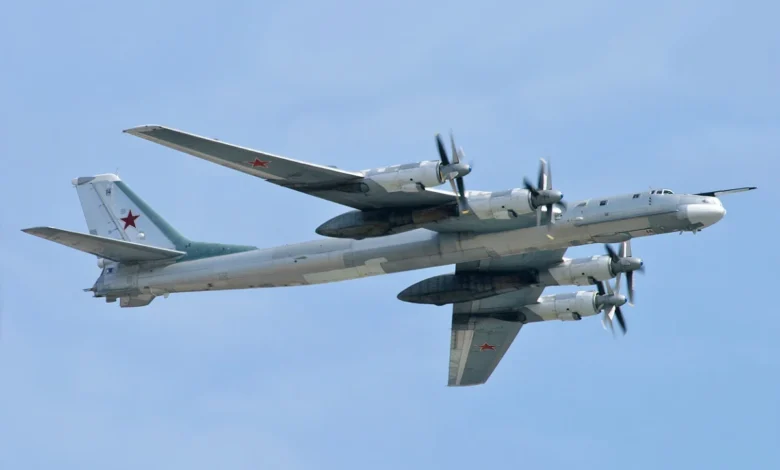
Ukrainian President Volodymyr Zelenskyy has confirmed a successful operation by the Security Service of Ukraine (SBU) targeting one of the Russian Federation’s most critical military assets: a Tu-95MS strategic bomber. The strike, which took place at the Engels-2 air base located approximately 800 kilometers from the Ukrainian border, represents a significant escalation in Kyiv’s campaign to neutralize the Kremlin’s long-range aviation capabilities. While initial reports of the strike were met with skepticism regarding the extent of the damage, independent verification has since emerged through high-resolution satellite imagery.
The confirmation of the destruction of the Tu-95MS came via open-source intelligence (OSINT) analysts and investigative journalists. The OSINT group AviVector, alongside the "Schemes" investigative project—a collaboration between Radio Free Europe and Radio Liberty—obtained and analyzed Planet Labs satellite images. These images clearly depict the charred remains of a Tu-95MS on the tarmac at the Engels-2 facility, providing the "receipts" for a claim that many initially viewed as an ambitious piece of wartime propaganda. This successful deep-strike operation highlights the increasing vulnerability of Russian strategic assets, even those stationed far beyond the immediate theater of ground operations.
Technical Specifications and the Role of the Tu-95MS
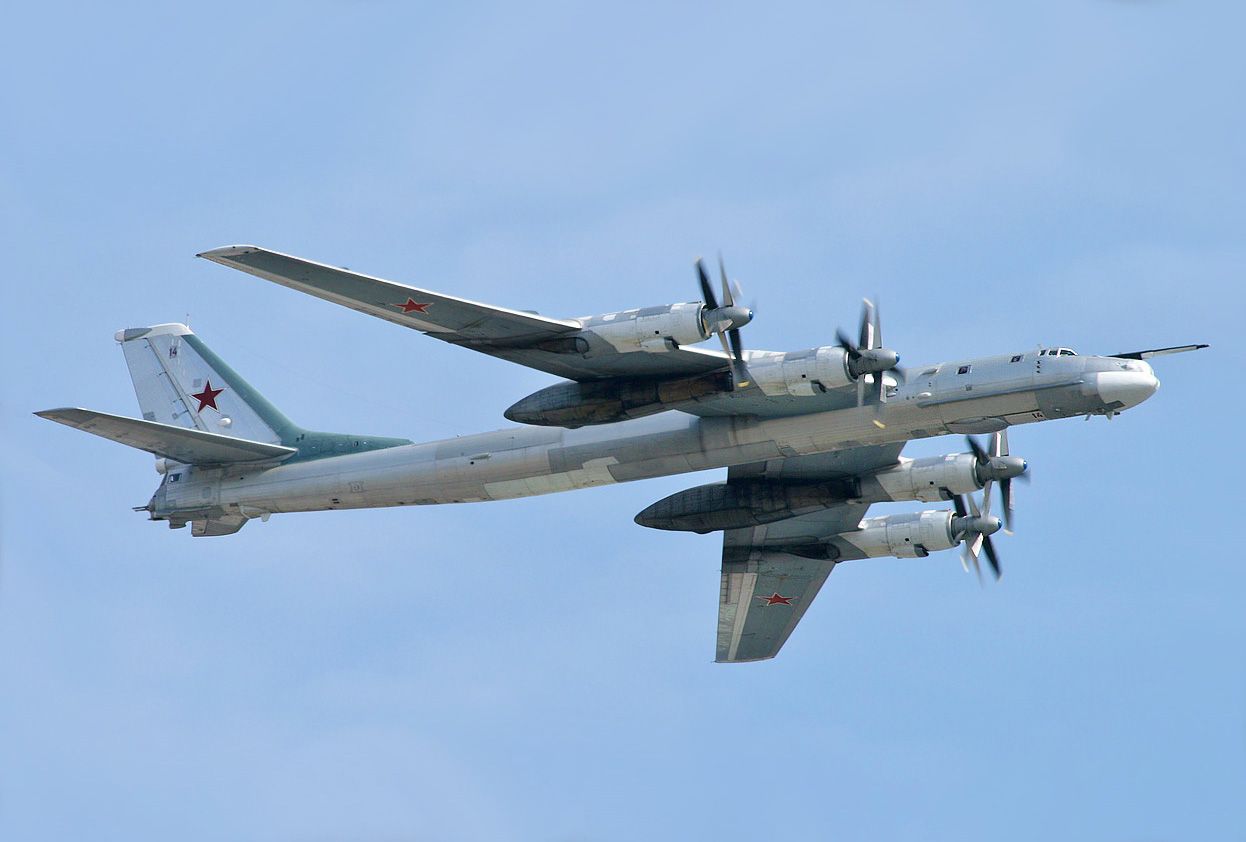
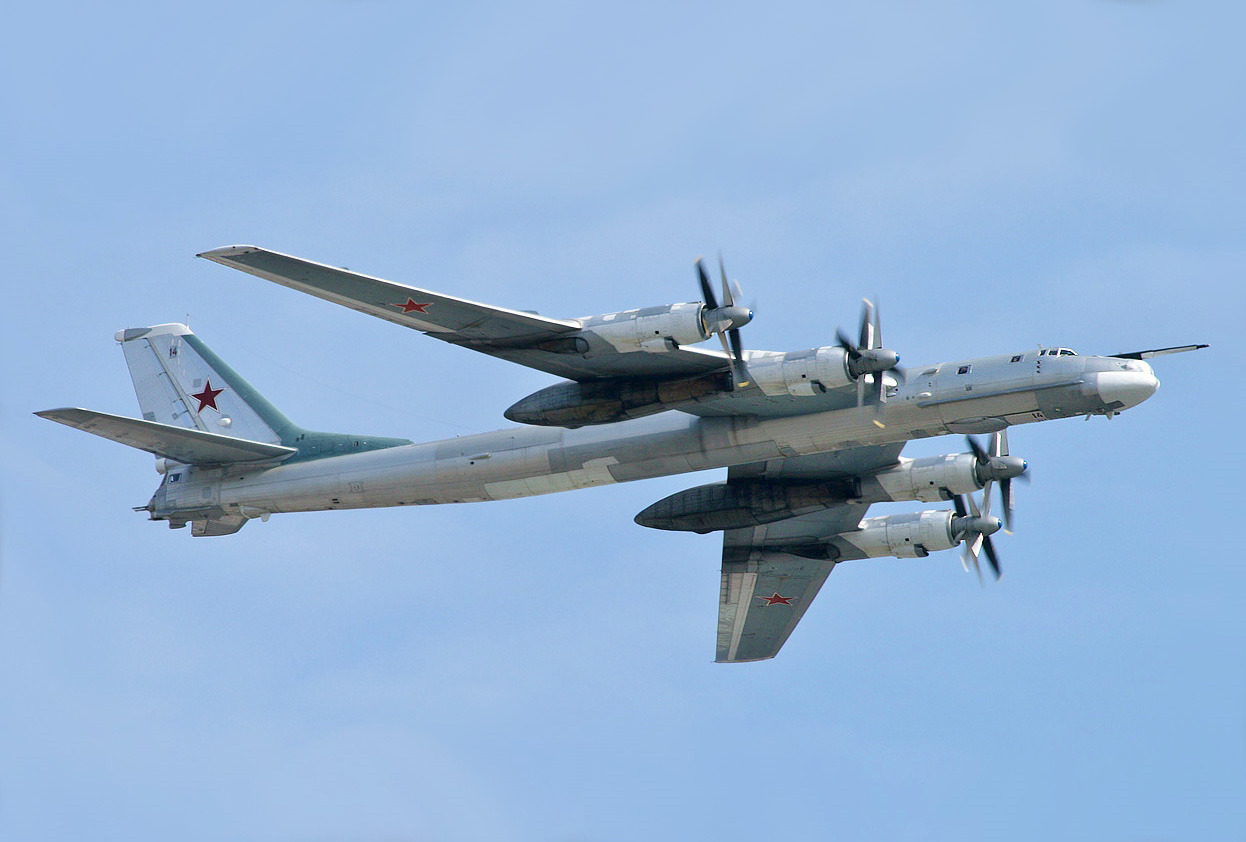
The Tupolev Tu-95, known by its NATO reporting name "Bear," is an iconic and formidable relic of the Cold War era. First taking to the skies in 1952, the aircraft is a swept-wing turboprop bomber that has remained in service for over seven decades due to its immense range and payload capacity. It is powered by four Kuznetsov NK-12 engines, which remain the most powerful turboprop engines ever built. These engines drive contra-rotating propellers, making the Tu-95 one of the loudest aircraft in operation globally, often detectable by sonar in submerged submarines when flying over oceans.
The specific variant targeted at Engels-2, the Tu-95MS, is a modernized version adapted from the Tu-142 maritime patrol airframe. In the context of the current conflict in Ukraine, the Tu-95MS serves as the primary launch platform for the Kh-101 air-launched cruise missile (ALCM). The Kh-101 is a stealthy, long-range weapon that has been used extensively by Russian forces to strike Ukrainian energy infrastructure and urban centers. A standard Tu-95MS can carry up to six of these missiles on an internal rotary launcher. The further modernized Tu-95MSM variant features reinforced pylons, allowing it to carry an additional eight missiles externally, bringing its total capacity to 14.
Beyond its conventional role, the Tu-95 is a cornerstone of Russia’s "nuclear triad." It is capable of carrying the Kh-102, the nuclear-tipped sibling of the Kh-101. While nuclear weapons have not been deployed in the current conflict, the presence and operational readiness of the Tu-95 fleet are central to Russia’s global deterrence posture. The loss of even a single airframe is therefore not merely a tactical setback but a degradation of Russia’s strategic nuclear capability.
The Strategic Significance of Engels-2 Air Base
Engels-2, located in the Saratov Oblast, is Russia’s premier strategic bomber base. It is the only location equipped to house the Tu-160 (Blackjack) supersonic bomber and serves as a major hub for the Tu-95MS fleet. Because of its distance from the Ukrainian border—over 800 kilometers (approx. 500 miles)—the Russian Ministry of Defense long considered it a "safe" rear-area installation.
However, the recent strike proves that distance is no longer a guarantee of safety. Ukraine has increasingly utilized long-range kamikaze drones, and reportedly weaponized stratospheric balloons and other innovative delivery systems, to bypass Russian integrated air defense systems (IADS). By striking Engels-2, Ukraine is forcing Russia to make difficult choices regarding the deployment of its limited air defense assets, potentially pulling S-400 or Pantsir systems away from the front lines to protect high-value targets deep within the interior.
Historical Context: A Legacy of Attrition
The destruction of the Tu-95MS at Engels-2 follows a pattern of successful Ukrainian operations targeting Russian aviation. One year ago, Ukraine launched "Operation Spiderweb," a series of coordinated strikes that resulted in the destruction or damage of several billion dollars worth of Russian combat aircraft. These operations have consistently aimed at the "Long Range Aviation" (LRA) branch of the Russian Aerospace Forces (VKS).
The LRA is particularly vulnerable because its heavy bombers are no longer in serial production. The production infrastructure for the Tu-95 was shuttered more than 30 years ago following the collapse of the Soviet Union. While Russia has attempted to restart production of the Tu-160 and is reportedly developing the PAK DA (Prospective Aviation Complex for Long-Range Aviation) stealth bomber, the latter remains largely a "paper project" with no operational prototypes in sight. Consequently, every Tu-95 lost is an "irretrievable loss." With an estimated fleet of only 60 operational Tu-95s remaining, a double-digit percentage of which may be in various states of maintenance or disrepair, the loss of even one aircraft significantly impacts the VKS’s long-term sortie rate.
Official Responses and Psychological Warfare
The Ukrainian government and the Security Service of Ukraine (SBU) have been quick to highlight the multi-dimensional impact of the strike. In a statement released on the Telegram messaging app, the SBU emphasized that the operation was part of a systematic effort to dismantle the Russian military machine.
"The SBU systematically destroys important elements of the Russian military machine," the statement read. "Each liquidated strategic bomber means dozens of unlaunched missiles over Ukrainian cities, saved Ukrainian lives, and tens of millions of dollars in irretrievable losses for the enemy. Russian strategic aviation can no longer feel safe even at its most remote military airfields."
This messaging serves a dual purpose: it boosts Ukrainian domestic morale by demonstrating the ability to "strike back" at the platforms responsible for the bombardment of their cities, and it conducts psychological warfare against Russian military personnel. The realization that a base 800km from the front is within reach creates a sense of insecurity among Russian pilots and ground crews, potentially leading to the relocation of aircraft to even more remote bases in the Arctic or the Russian Far East. Such relocations, however, increase the fuel consumption and maintenance wear for every mission flown against Ukraine, further straining the Russian logistics chain.
The Russian Ministry of Defense has typically remained tight-lipped regarding losses at Engels-2, often reporting that "all incoming drones were intercepted" and that "falling debris" caused only minor damage. However, the satellite imagery provided by Planet Labs contradicts these official narratives, showing a clear "burn scar" and the unmistakable silhouette of a destroyed aircraft on the parking apron.
Implications for the Future of the Conflict
The destruction of a Tu-95MS does not, in isolation, change the immediate trajectory of the war. Russia maintains a significant stockpile of cruise missiles and other delivery platforms, including the Tu-22M3 backfire bomber and sea-launched Kalibr missiles. Nevertheless, the strike is a potent example of asymmetric warfare. A drone costing perhaps a few tens of thousands of dollars was able to destroy a strategic asset worth upwards of $30 million that cannot be replaced by modern Russian industry.
Analysts suggest that Russia will respond by further hardening its airfields. Recent satellite imagery from various Russian bases has shown the use of tires placed on the wings of bombers to confuse drone infrared seekers, the painting of "decoy" aircraft on the tarmac to waste Ukrainian munitions, and the construction of new hangars and reinforced shelters. Despite these efforts, the SBU’s success at Engels-2 suggests that Ukraine’s intelligence-gathering and strike-planning capabilities are evolving faster than Russia’s defensive measures.
Furthermore, this strike may influence the ongoing debate among Ukraine’s Western allies regarding the use of long-range weapons. While Kyiv used domestically produced drones for the Engels-2 strike, the success of such missions bolsters the argument that Ukraine can responsibly and effectively manage long-range operations.
Conclusion
The confirmed destruction of the Tu-95MS at Engels-2 is a milestone in the ongoing aerial campaign between Ukraine and Russia. It underscores the fragility of Russia’s aging strategic fleet and the reach of Ukraine’s burgeoning long-range strike capabilities. As the war continues, the attrition of high-value, non-replaceable assets like the "Bear" will likely play a crucial role in the broader strategic calculus. For Russia, the challenge is now to protect a vast interior that was once thought to be invulnerable. For Ukraine, the mission remains clear: to continue raising the cost of the war for the Kremlin, one airframe at a time. Through a combination of OSINT verification and bold military action, the "safe havens" of the Russian Aerospace Forces are rapidly disappearing.