
V One Servers To Ship Linux Ready
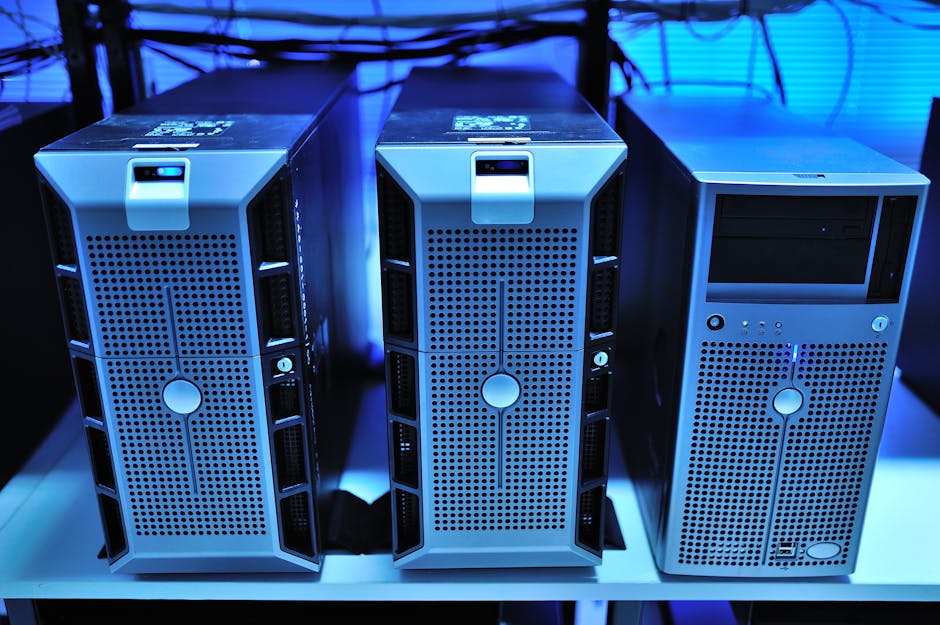
V One Servers: Shipping Linux Ready for Optimized Performance and Deployment
V One servers represent a new paradigm in bare-metal server provisioning, specifically engineered for rapid deployment and optimized performance when shipping Linux-ready. The core innovation lies in the tight integration of hardware and software, enabling a streamlined process from order to fully functional Linux environment. This approach eliminates the typical bottlenecks associated with traditional server setup, such as manual operating system installations, driver configurations, and initial network configuration. V One servers are designed for IT professionals and businesses that require immediate access to robust computing power without the overhead of extensive pre-deployment work. Their architecture prioritizes flexibility, scalability, and security, making them an attractive option for a wide range of applications, from web hosting and content delivery networks to high-performance computing and data analytics. The "Linux-ready" aspect is not merely an afterthought; it is a fundamental design principle, ensuring that common Linux distributions install and perform optimally with minimal to zero manual intervention. This is achieved through meticulously tested hardware-software compatibility matrices and pre-loaded firmware that is inherently aware of Linux kernel requirements.
The hardware backbone of V One servers is characterized by robust, enterprise-grade components. This includes powerful multi-core Intel Xeon or AMD EPYC processors, ample DDR4 or DDR5 ECC RAM for data integrity and performance, and a variety of high-speed storage options such as NVMe SSDs for lightning-fast I/O. Network connectivity is paramount, with multiple high-speed Ethernet ports (10GbE, 25GbE, 40GbE, 100GbE) typically included as standard, supporting modern networking protocols for efficient data transfer and low latency. The server chassis are designed for optimal airflow and thermal management, ensuring sustained performance even under heavy loads. Furthermore, V One servers often feature redundant power supplies and hot-swappable components, minimizing downtime and facilitating easier maintenance. The integration of hardware features like IPMI (Intelligent Platform Management Interface) or similar out-of-band management controllers is crucial, allowing for remote monitoring, control, and troubleshooting of the server, even if the operating system is unresponsive or not yet installed. This out-of-band management is a key enabler for the "ship Linux ready" philosophy, as it allows for initial OS installation and configuration remotely, often through network booting or pre-configured deployment tools.
The "Linux-ready" designation on V One servers translates to a pre-configured boot environment and firmware optimized for Linux. This means that when a supported Linux distribution is chosen for deployment, the server’s BIOS/UEFI settings, boot order, and essential hardware drivers are already in place to ensure a smooth and successful installation. For instance, the firmware may contain optimized drivers for onboard network interfaces, storage controllers, and other critical hardware components that are recognized by common Linux kernels. This significantly reduces the likelihood of installation failures due to incompatible hardware or missing drivers, a common pain point in traditional server deployments. Moreover, the server’s boot process might be pre-configured to support PXE (Preboot Execution Environment) booting, enabling network-based operating system installation without the need for physical media like USB drives or DVDs. This is a cornerstone of efficient, at-scale server provisioning, allowing for automated deployments across multiple machines simultaneously. The choice of supported Linux distributions is typically broad, encompassing popular enterprise-grade options such as Ubuntu Server, CentOS Stream, Rocky Linux, AlmaLinux, and Debian. These distributions are rigorously tested by V One to ensure maximum compatibility and performance.
The deployment process for V One servers is designed for extreme efficiency. After receiving a V One server, the user simply needs to connect it to their network and power it on. If a specific Linux distribution was pre-selected during the order, the server can often be configured for automated network installation. This typically involves a PXE boot, where the server requests an IP address from a DHCP server and then downloads the operating system installer and configuration files from a TFTP (Trivial File Transfer Protocol) or HTTP server. This automated process can be further enhanced with tools like Kickstart for Red Hat-based distributions or preseed for Debian-based distributions, allowing for fully unattended installations with pre-defined partitioning, software packages, user accounts, and network settings. This drastically reduces the manual labor involved in setting up each server, freeing up IT staff for more strategic tasks. For users who prefer manual installation, the "Linux-ready" nature still means that a standard installation media will likely proceed without complications, identifying all hardware components correctly. The flexibility of the out-of-band management system also allows for remote mounting of ISO images, further simplifying the installation process from a distance.
Security is a fundamental consideration in the design of V One servers, particularly given their role in bare-metal deployments. The pre-configured firmware and BIOS/UEFI settings are hardened to reduce the attack surface. This includes disabling unnecessary ports and services, implementing secure boot mechanisms to ensure that only trusted operating systems can load, and configuring password-protected access to management interfaces. When shipping Linux-ready, V One also often includes recommendations and best practices for securing the chosen Linux distribution, such as mandatory access control (MAC) frameworks like SELinux or AppArmor, firewall configurations, and regular security updates. The out-of-band management controller itself is typically protected by strong authentication and encryption, preventing unauthorized access to the server’s core functions. For users deploying at scale, the ability to consistently apply security policies across all servers from the point of initial deployment is a significant advantage. This inherent security focus at the hardware and firmware level provides a solid foundation for building secure applications and services on top of the deployed Linux operating system.
Scalability is a key benefit of the V One server approach. The standardized hardware configurations and automated deployment capabilities make it straightforward to scale infrastructure by adding more servers. Businesses can procure V One servers in quantities that match their growth trajectory, confident that each new unit will integrate seamlessly into their existing environment with minimal setup time. The high-performance components within V One servers ensure that they can handle increasing workloads as demand grows. Furthermore, the networking capabilities are designed to support high-bandwidth, low-latency communication, which is essential for distributed systems, microservices architectures, and other modern, scalable applications. The ability to rapidly deploy new Linux instances also facilitates A/B testing, load balancing, and disaster recovery strategies, all of which are critical for robust and scalable operations. The modular nature of server racks and the hot-swappable components also contribute to the ease of maintaining and scaling the physical infrastructure itself.
The economic implications of adopting V One servers are significant. By reducing the time and labor required for server deployment and configuration, businesses can realize substantial cost savings. The elimination of manual OS installations, driver configuration, and initial network setup frees up valuable IT resources that can be redirected to revenue-generating activities. The optimized hardware and software integration also leads to improved performance, which can translate into better application responsiveness, faster data processing, and ultimately, a more positive user experience and increased business efficiency. The predictable and standardized nature of V One servers simplifies budgeting and procurement, as the costs associated with setup and ongoing management are more easily quantifiable. Furthermore, the focus on enterprise-grade components and robust design often leads to a longer hardware lifespan and reduced risk of premature hardware failure, contributing to a lower total cost of ownership (TCO) over the server’s operational life. The ability to get servers online and serving applications quickly also means a faster time-to-market for new products and services.
V One servers are well-suited for a variety of demanding use cases. In the realm of web hosting and content delivery, their fast boot times and high-speed networking enable rapid deployment of web servers and caching nodes, ensuring low latency and high availability for end-users. For high-performance computing (HPC) clusters, the powerful processors, ample memory, and high-speed interconnects provide the necessary computational power for complex simulations, scientific research, and data analysis. Businesses involved in big data analytics can leverage V One servers for deploying distributed data processing frameworks like Hadoop or Spark, benefiting from the high I/O throughput of NVMe storage and the raw processing power. Cloud service providers can utilize V One servers to quickly provision virtualized or bare-metal instances for their customers, offering a competitive edge through faster deployment times. Gaming server operators will appreciate the low latency and high throughput for delivering responsive gaming experiences. The flexibility to install any supported Linux distribution means that V One servers can be tailored to the specific needs of each application, from database servers and application servers to dedicated file servers and render farms.
The future of server provisioning is moving towards greater automation and integration, and V One servers are at the forefront of this trend. The concept of "shipping Linux ready" is an embodiment of this shift, addressing the long-standing challenges of bare-metal server deployment. As technology continues to evolve, V One servers are likely to incorporate even more advanced features, such as integrated container orchestration platforms, AI-driven performance optimization, and enhanced security features at the firmware level. The trend towards edge computing also presents an opportunity for V One servers, where ruggedized and easily deployable server solutions are needed at distributed locations. The continued development of open standards and APIs will further enhance the interoperability and automation capabilities of these servers. The focus on a robust hardware-software co-design approach will remain critical, ensuring that as new processor architectures, memory technologies, and storage solutions emerge, V One servers can adapt and continue to offer a streamlined, Linux-optimized deployment experience. The ultimate goal is to abstract away the complexities of hardware management, allowing users to focus solely on their applications and services, accelerating innovation and driving business value.
