The Rise of Together Tech and the Counter Movement to Artificial Intelligence Dominance

The global technology landscape is currently witnessing a profound ideological and financial schism as record-breaking investments in artificial intelligence clash with a burgeoning movement dedicated to physical connection and analog-inspired hardware. While Alphabet recently dominated headlines with a staggering $85 billion capital allocation toward its artificial intelligence division, a parallel narrative is emerging from a diverse group of founders, creators, and consumers who are actively seeking to "unplug" from the algorithmic saturation of modern life. This shift is characterized by the rise of "together tech," the viral popularity of DIY "cyberdecks," and a strategic pivot by major players like Anthropic toward the public markets. As the industry grapples with the social and economic consequences of the AI boom, the tension between digital immersion and human-centric experiences has become the defining conflict of the mid-2020s.
The Emergence of Together Tech and the Return to Physicality
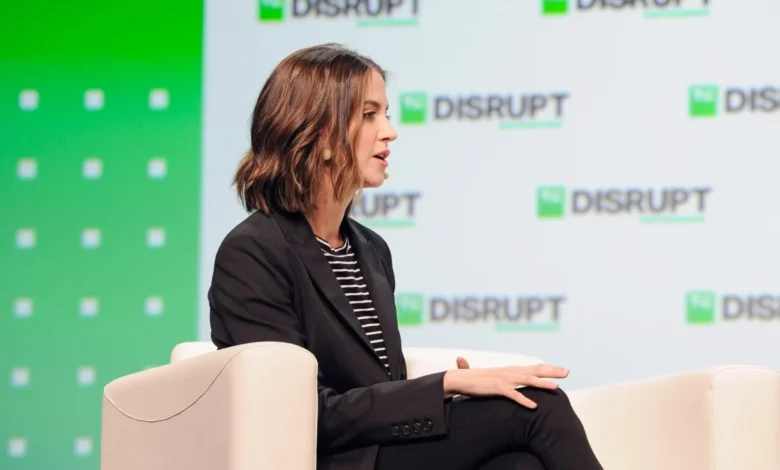
Leading the charge in the "together tech" movement is Brynn Putnam, the visionary founder behind the fitness technology company Mirror. After selling Mirror to Lululemon for $500 million in 2020, Putnam has shifted her focus from digital fitness to a new venture called Board. The startup recently secured $20 million in funding, a significant sum for a company whose primary mission is to facilitate in-person gaming and social interactions. Unlike the fitness-tech wave of the early 2020s, which focused on bringing the gym into the home via screens, Board aims to draw people out of their digital silos and into shared physical spaces.
The success of Board’s initial fundraising round reflects a growing realization among venture capitalists that there is an untapped market for "anti-loneliness" technology. According to recent public health data, the "loneliness epidemic" has become a significant driver of consumer behavior, with younger generations increasingly reporting a sense of isolation despite being more digitally connected than any previous cohort. Board has already reported the sale of thousands of units of its physical gaming products, suggesting that the appetite for tangible, shared experiences is not merely a niche trend but a significant market shift.
Industry analysts suggest that "together tech" represents a maturing of the consumer technology sector. Where the previous decade focused on the "attention economy"—capturing as much screen time as possible—the current era is beginning to value "quality of presence." This shift is forcing developers to reconsider how technology can serve as a bridge to the physical world rather than a replacement for it.
The Cyberdeck Phenomenon: Rejecting Big Tech Enclosures
Parallel to the rise of social-focused startups is the viral "cyberdeck" trend, which has gained immense traction on platforms like TikTok and YouTube. Cyberdecks are whimsical, often DIY computers that prioritize aesthetics, tactile feedback, and modularity over the sleek, closed-ecosystem designs of companies like Apple or Microsoft. These devices frequently incorporate mechanical keyboards, ruggedized cases, and specialized displays that encourage a more intentional, hands-on relationship with computing.
The philosophy behind the cyberdeck movement is often summarized by the phrase "touch grass"—a colloquialism urging people to disconnect from the internet and engage with the natural world. Many cyberdeck creators build their machines specifically for outdoor use, utilizing low-power components and e-ink screens that are readable in direct sunlight. This aesthetic movement is more than just a hobby; it is a form of digital protest. By building their own hardware, enthusiasts are rejecting the planned obsolescence and "black box" nature of modern consumer electronics.
The popularity of these devices highlights a growing segment of the population that feels alienated by the current trajectory of the tech industry. For these users, the promise of AI-driven efficiency is less appealing than the satisfaction of building and maintaining a tool that they fully understand and control. This "slow tech" movement mirrors trends in other industries, such as the resurgence of vinyl records or film photography, where the perceived "friction" of the medium is seen as a benefit rather than a drawback.
The AI Fundraising Machine: Alphabet’s $85 Billion Milestone
While the "together tech" and cyberdeck movements represent a grassroots shift toward the analog, the upper echelons of the tech industry remain firmly committed to the AI arms race. Alphabet, the parent company of Google, recently shattered records with an $85 billion internal and collaborative raise dedicated to its AI business. This capital infusion is intended to bolster its cloud infrastructure, accelerate the development of Large Language Models (LLMs), and integrate generative AI across its entire suite of products.
The sheer scale of Alphabet’s investment underscores the immense capital requirements of the AI era. Training state-of-the-art models requires billions of dollars in specialized hardware, primarily from manufacturers like NVIDIA, and astronomical energy costs. Critics argue that this level of spending creates a "moat" that is impossible for smaller startups to cross, effectively centralizing the future of intelligence in the hands of a few trillion-dollar corporations.
The financial data surrounding these raises indicates a "winner-takes-most" dynamic. As Alphabet and its peers pour tens of billions into infrastructure, the primary beneficiaries are often the providers of chips and energy. This has led to questions about the long-term sustainability of the AI investment cycle and whether the massive capital outlays will eventually translate into proportionate revenue growth.
Anthropic’s Confidential IPO Filing and the Path to Liquidity
In a move that signals a new phase of the AI boom, Anthropic, one of the primary competitors to OpenAI, has reportedly filed for a confidential initial public offering (IPO). This development comes on the heels of significant investments from Amazon and Google, who have collectively funneled billions into the startup. Anthropic’s decision to go public—or at least prepare for it—indicates a need for sustained capital that private markets may no longer be able to provide alone.
A confidential IPO filing allows a company to keep its financial details private while it undergoes the initial stages of the SEC review process. For Anthropic, this strategy provides flexibility in timing its market debut to coincide with favorable economic conditions. It also serves as a litmus test for public market appetite for "pure-play" AI companies.
The potential Anthropic IPO is being closely watched by the venture capital community as a signal for other high-valuation AI startups. If Anthropic successfully transitions to the public market with a multi-billion dollar valuation, it could trigger a wave of AI IPOs. However, if the market responds with skepticism regarding the company’s path to profitability, it may lead to a cooling of the current investment frenzy.
The Demand for "No-AI" Alternatives: DuckDuckGo’s Strategic Pivot
As AI becomes increasingly integrated into every facet of the internet, a counter-demand for AI-free services is emerging. DuckDuckGo, the privacy-focused search engine, has recently made its "no-AI" search options easier to access. This move comes as its traffic continues to boom, driven by users who are frustrated by the "hallucinations" and perceived clutter of AI-generated search summaries provided by Google and Bing.
The push for AI-free search is not just about accuracy; it is about the preservation of the human-authored web. Many users prefer a list of links to original articles, blogs, and forums rather than a synthesized paragraph generated by a machine. By positioning itself as the "un-AI" search engine, DuckDuckGo is capitalizing on a growing sentiment that the internet is becoming less useful as it becomes more automated.
This trend suggests that "AI-free" could become a powerful marketing term in the coming years, similar to "organic" or "non-GMO" in the food industry. As AI-generated content begins to saturate the digital landscape, consumers may be willing to pay a premium for services that guarantee human-curated information and interaction.
Chronology of the Shift: From AI Hype to Human Realism
The current state of the industry can be traced through a series of pivotal events over the last twenty-four months:
- Late 2023 – Early 2024: The "Gold Rush" phase, where any company with an ".ai" domain saw unprecedented valuation spikes. OpenAI and Anthropic secured massive tranches of funding from cloud providers.
- Mid-2024: The "Efficiency Phase," where enterprises began to realize the high cost and technical difficulty of implementing AI at scale.
- Late 2024 – Early 2025: The rise of "AI Fatigue." Consumer sentiment began to shift as social media feeds and search results became increasingly dominated by synthetic content.
- Current Period (2025-2026): The "Bifurcation." The market splits into two distinct directions: the hyper-funded AI infrastructure layer (Alphabet, Anthropic) and the human-centric "together tech" and DIY hardware layers (Board, Cyberdeck movement).
Broader Impact and Market Implications
The divergence between the multi-billion dollar AI machine and the grassroots human-centric movement has several long-term implications for the global economy and society:
- Market Consolidation vs. Fragmentation: While the core infrastructure of AI is becoming more consolidated among the "Big Tech" players, the consumer application layer is becoming more fragmented. Niche communities are forming around specialized hardware and "offline" software, creating new opportunities for smaller startups that do not require massive GPU clusters to operate.
- The Premium on Human Interaction: As AI reduces the cost of digital content to near zero, the value of physical, human-led experiences is likely to rise. This could lead to a "prestige economy" where in-person events, hand-crafted goods, and human-curated information are seen as luxury markers.
- Regulatory Scrutiny: The massive internal raises by companies like Alphabet are likely to draw the attention of antitrust regulators. Questions will be raised about whether these companies are using their dominant market positions to unfairly subsidize their AI divisions, potentially stifling competition from independent AI startups.
- Mental Health and Technology: The success of companies like Board will be a key indicator of whether technology can be successfully repurposed to solve the mental health crises it helped create. If "together tech" becomes a viable category, it could lead to a new wave of social-impact investing.
In conclusion, the technology sector is no longer a monolithic entity moving toward a singular digital future. Instead, it is a battlefield of competing philosophies. On one side stands the promise of artificial intelligence—vast, efficient, and fueled by unprecedented amounts of capital. On the other stands the human desire for connection, tactile experience, and digital sovereignty. The coming years will determine whether these two paths can coexist or if one will eventually consume the other. For now, the rise of "together tech" and the cyberdeck movement serves as a potent reminder that even in an age of silicon and algorithms, the human element remains the ultimate disruptor.