Tesla Semis Signal a Shift in Heavy Freight Amidst Geopolitical Energy Volatility and Shifting Federal Policy

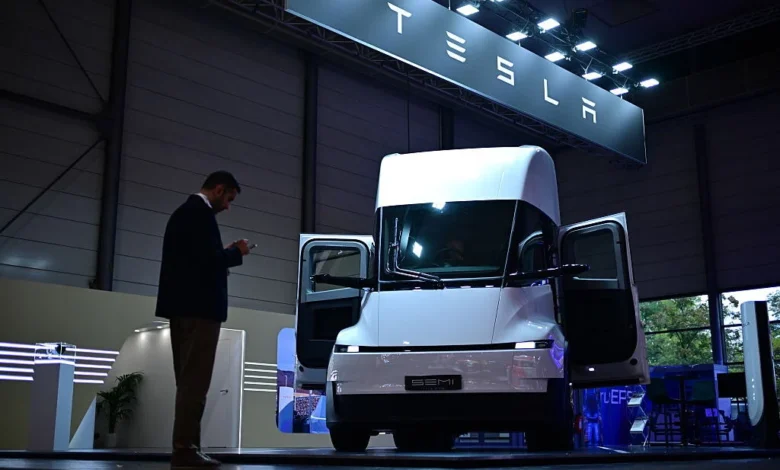
The landscape of American long-haul logistics is undergoing a significant transformation, marked by a record-breaking procurement of electric semi-trucks that underscores a decoupling between private sector climate initiatives and federal energy policy. This week, a coalition of major corporate shippers, including technology giant Microsoft and consumer goods leader PepsiCo, announced a joint order for 2,500 Tesla Semi trucks. This deployment, scheduled to roll out over the next 18 months, represents a monumental leap for the heavy-duty electric vehicle (EV) sector, effectively doubling the current population of such vehicles operating on United States roadways.
This acquisition arrives at a paradoxical moment for the automotive industry. Despite Elon Musk’s substantial financial contributions to the Trump administration’s ascent, the current White House and its Republican allies have moved aggressively to roll back federal subsidies for electric vehicles. These policy shifts, which include the elimination of billions in federal support and a concerted effort to relax fuel economy standards for heavy-duty truck engines, place the burgeoning EV market in direct competition with a regulatory environment that appears increasingly hostile to the energy transition.
The Economic Reality of Energy Volatility
The decision by large-scale carriers to pivot toward electrification is driven less by ideological alignment with climate goals and more by the harsh realities of global energy markets. The ongoing conflict in the Middle East, precipitated by the Iran War, has created severe disruptions in global oil production and maritime shipping lanes. These geopolitical tensions have sent diesel prices soaring to record highs, with costs nearly doubling compared to the same period last year.
For the freight industry, where fuel represents the largest variable operating expense, the economics of diesel-powered logistics have become increasingly untenable. During a pre-taped address, Elon Musk emphasized the shift in value proposition, noting that the Tesla Semi offers a compelling economic alternative to traditional internal combustion engines. "The truck is going to make a ton of sense economically because the cost of electricity is much less than the cost of diesel, especially in these crazy times," Musk stated.
The reliance on heavy trucks, which currently account for approximately 7 percent of total U.S. greenhouse gas emissions, makes them a primary target for regulatory scrutiny. However, the current administration’s push to lower fuel economy standards threatens to stall the momentum of decarbonization in this sector. By softening emissions requirements, the government is arguably prolonging the operational lifespan of high-polluting diesel fleets, creating a market environment where only the most cost-efficient electric models can compete against the artificially supported status quo.
Strategic Procurement and Market Competition
The alliance formed by Microsoft, PepsiCo, and other industry players highlights a sophisticated approach to supply chain management. By pooling demand, these companies have achieved a level of leverage that allowed them to drive down per-unit costs for the new trucks. Meena Bibra, a spokesperson for the nonprofit Smart Freight Centre, which facilitated the deal, noted that the decision-making process was rooted in rigorous operational assessment.
"The group selected Tesla trucks after assessing price, performance, production capability, and service support," Bibra explained. While Tesla emerged as the preferred partner for this specific order, the industry remains open to a diverse range of technological solutions. Carriers with existing maintenance infrastructure tied to traditional manufacturers are closely monitoring the performance of other industry leaders, including Kenworth, Rivian, and Volvo. Each of these companies is currently developing their own heavy-duty electric platforms, suggesting that while Tesla may hold the current spotlight, the market for zero-emission freight is evolving into a competitive ecosystem rather than a monopoly.
A Chronology of the Semi’s Development
The journey of the Tesla Semi has been characterized by significant ambition punctuated by repeated delays. When the vehicle was first unveiled in 2017, Tesla promised a technological revolution in the trucking industry, including the integration of Enhanced Autopilot. However, the path to mass production proved more complex than initial projections suggested.
- November 2017: Tesla officially unveils the Semi, promising a 500-mile range and a production start date of 2019.
- 2019–2021: Production timelines are repeatedly pushed back due to battery supply constraints and a focus on prioritizing the Model 3 and Model Y production lines.
- December 2022: The first deliveries of the Tesla Semi are made to PepsiCo, marking the beginning of real-world testing.
- 2023: The Trump administration moves to cut federal EV incentives, creating uncertainty for manufacturers and buyers alike.
- 2024: The joint procurement announcement by Microsoft, PepsiCo, and others serves as a definitive signal of corporate commitment to electrification despite federal headwinds.
Technological Hurdles and the Path Forward
Despite the scale of this new order, questions regarding the technological readiness of the fleet remain. One of the most highly anticipated features—Tesla’s "Full Self-Driving (Supervised)" software—is currently absent from the Semi. While Musk has hinted that the technology will debut in the "very near future," industry analysts remain cautious. The promise of autonomous freight was a cornerstone of the 2017 pitch, and the failure to deliver on those timelines has invited scrutiny from federal regulators regarding the safety and reliability of Tesla’s driver-assistance systems.
Furthermore, the integration of 2,500 new electric vehicles into the national power grid and the logistics network requires more than just the trucks themselves. The expansion of high-speed "Megacharger" infrastructure is a critical prerequisite for these vehicles to match the utility of their diesel counterparts. Without a robust network of charging stations capable of replenishing massive batteries in a timeframe compatible with commercial delivery schedules, the utility of these electric fleets will remain limited to regional routes rather than true transcontinental hauls.
Broader Implications for the Logistics Sector
The divergence between the Biden-era push for green infrastructure and the current administration’s policy of supporting traditional energy sectors has left the automotive industry in a state of strategic flux. For logistics companies, the risk of investing in technology that might lose federal support is weighed against the certainty of rising diesel costs.
The success of the current procurement strategy by the Microsoft-PepsiCo alliance indicates that the private sector is increasingly capable of self-insulating against federal policy swings. By focusing on total cost of ownership (TCO) and operational efficiency, these companies are betting that the long-term economic benefits of electrification will outweigh the short-term loss of government subsidies.
If this cohort of 2,500 trucks performs according to specifications, it could serve as a "proof of concept" that triggers a cascade of similar orders across the logistics industry. Such a shift would not only reduce the carbon footprint of the nation’s supply chain but also fundamentally alter the economics of energy consumption in the United States. As global oil markets remain susceptible to the instabilities of the Middle East, the transition to electric freight is increasingly being viewed as a national security imperative as much as a climate goal.
As the industry moves forward, the success of these deployments will likely depend on the balance between Tesla’s ability to scale production and the ability of freight operators to adapt their logistics models to the unique requirements of battery-electric propulsion. While the political climate remains contentious, the economic forces currently at play suggest that the electrification of American heavy transport has reached a point of no return. The coming 18 months will provide the most comprehensive data yet on whether these vehicles can truly serve as the backbone of the next generation of global trade.