NVIDIA to Acquire Hugging Face for $12.93 Billion in Landmark Expansion of Open Source AI Ecosystem

In a move that promises to redefine the landscape of generative artificial intelligence, NVIDIA has officially announced a definitive agreement to acquire Hugging Face, the industry-leading platform for open-source AI, for $12.93 billion. This acquisition marks one of the most significant consolidations in the history of the software industry, effectively bridging the world’s most powerful hardware manufacturer with the most prominent hub for open-model collaboration. The integration aims to scale Hugging Face’s infrastructure while preserving its foundational commitment to an open, multi-cloud ecosystem for developers worldwide.
A Chronology of Collaboration and Growth
The relationship between NVIDIA and Hugging Face has been years in the making, evolving from collaborative open-source contributions to this full-scale acquisition. Hugging Face, founded in 2016 by Clément Delangue, Julien Chaumond, and Thomas Wolf, began as a chatbot company before pivoting to become the "GitHub of AI." Over the past decade, the startup transformed into a critical piece of global digital infrastructure.
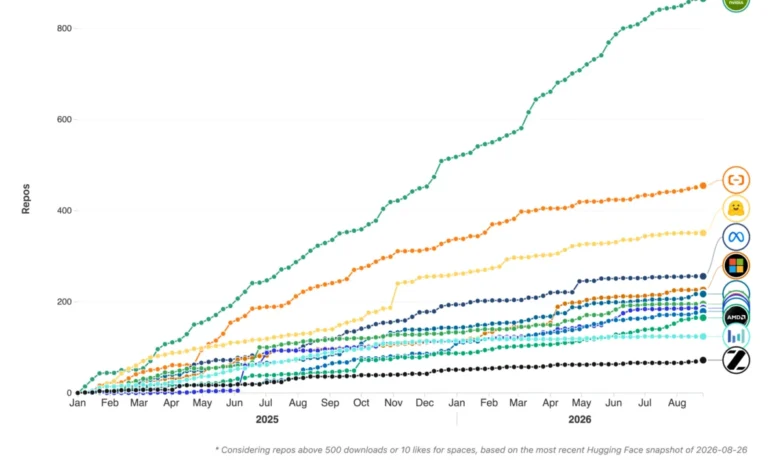
NVIDIA’s interest in the platform became increasingly visible during the generative AI boom of 2022 and 2023. As developers flocked to Hugging Face to download foundational models like Llama, Stable Diffusion, and Mistral, NVIDIA provided the underlying compute power—through its H100 and A100 GPU clusters—that made running these models feasible. In recent years, NVIDIA has contributed hundreds of models and datasets to the platform, signaling a deep-seated institutional belief that the future of AI cannot be siloed within proprietary "black box" systems. The transition to a formal acquisition marks the culmination of this symbiotic evolution, moving from strategic partnership to a unified corporate structure.
By the Numbers: The Scale of the Hugging Face Ecosystem
The acquisition price reflects the massive scale at which Hugging Face currently operates. According to the latest usage metrics, the platform has become the primary destination for the global AI developer community. Currently, the site hosts:
- User Base: More than 18 million researchers, developers, and creators.
- Model Repository: Over 3 million pre-trained machine learning models.
- Data Resources: Approximately 500,000 datasets used for training and fine-tuning.
- Application Hub: Over 1 million active AI applications (Spaces) hosted on the platform.
- Enterprise Adoption: More than 200,000 companies—ranging from early-stage startups to Fortune 500 institutions—rely on the platform to discover, evaluate, and deploy AI models into production environments.
These figures illustrate a platform that has transcended its origins as a hobbyist site to become a vital pillar of the global digital economy. By bringing this infrastructure under the NVIDIA umbrella, the hardware giant secures a direct pipeline to the developers who define the next generation of software applications.
Maintaining Neutrality in an Open Ecosystem
One of the most pressing questions surrounding this $12.93 billion deal is whether NVIDIA will exert control over the platform’s neutrality. In the official announcement, leadership from both organizations emphasized that Hugging Face will remain an open platform.
The strategy hinges on "infrastructure agnosticism." Developers will continue to have the freedom to select their preferred frameworks (such as PyTorch or TensorFlow), cloud service providers (AWS, Google Cloud, Azure), and inference backends. Critically, NVIDIA hardware will not be a prerequisite for utilizing Hugging Face tools. The company intends to maintain support for multi-accelerator development, ensuring that builders can continue to leverage alternative hardware, including TPUs or specialized inference chips, as their specific workflows demand. This commitment is viewed by industry analysts as a strategic move to prevent antitrust concerns and to ensure that the platform remains the industry standard for collaborative research.
Industry Implications: The Power of Open Weights
The acquisition occurs amidst a heated global debate regarding "open weights" versus "closed-source" models. Recently, a coalition of industry leaders—including NVIDIA’s executive leadership—published an open letter advocating for the necessity of open-weight models in the AI economy.
The argument is that proprietary models, while powerful, create significant barriers to entry for startups, academic institutions, and smaller enterprises. By contrast, open-weight models allow organizations to customize AI for specific tasks without the prohibitive costs of training foundational models from scratch. This democratizes access, ensuring that AI innovation is distributed across various sectors, from agricultural tech and hospital diagnostics to cybersecurity and public sector policy.
NVIDIA’s acquisition is framed as a commitment to this ethos. By providing the engineering and financial resources to scale Hugging Face, NVIDIA aims to stabilize the "open" wing of the AI industry, ensuring it remains competitive against companies that pursue strictly proprietary strategies.
Market Analysis and Strategic Outlook
Financial analysts note that the valuation of $12.93 billion places Hugging Face in the upper echelon of software acquisitions. However, the move is seen as a logical hedge for NVIDIA. While NVIDIA currently dominates the hardware market, the software layer—the interface where developers actually interact with AI—is where long-term customer loyalty is forged.
By acquiring Hugging Face, NVIDIA effectively owns the "front door" to the AI development world. If a researcher wants to find a new vision model or a developer wants to test a new LLM, they start at Hugging Face. Ensuring this front door is optimized for NVIDIA’s hardware stack—while still offering the open-source interoperability that users expect—creates a powerful competitive advantage.
Furthermore, the deal allows for significant improvements in platform reliability and safety. Hugging Face has struggled at times with the massive influx of traffic and the security challenges inherent in hosting millions of user-submitted models. NVIDIA’s global infrastructure and engineering prowess are expected to provide the necessary stability to handle the next decade of AI growth, including the expansion of model evaluation, security scanning, and inference deployment services.
Looking Toward the Future
For the millions of builders currently relying on the platform, the transition is expected to be seamless. The iconic "hugging face" brand and the community-first ethos will remain at the forefront of the company’s operations. Clément Delangue and his team will continue to lead the organization, now backed by the massive R&D capabilities of NVIDIA.
The objective is clear: to build a future where AI is not just more capable, but more accessible. By combining the agility of an open-source community with the massive compute and engineering infrastructure of NVIDIA, the deal creates a new paradigm for how AI will be developed. As the industry moves toward a future defined by agentic workflows and specialized domain models, the infrastructure provided by this merger will likely serve as the bedrock upon which the next generation of global innovation is built.
As the regulatory review process begins, the tech community will be watching closely to see how this consolidation impacts the broader balance of power in Silicon Valley. For now, the sentiment remains one of cautious optimism—a belief that, at this scale, an open-source commitment from a hardware giant could prove to be the ultimate catalyst for the next era of technological progress.