Radaris Domain Seizure Marks a Watershed Moment in the Battle Over Data Broker Accountability


For years, the consumer data broker Radaris.com operated with a perceived sense of invulnerability, systematically ignoring requests from individuals to remove sensitive personal information from its expansive people-search databases. That era of unchecked data harvesting has come to a dramatic, court-ordered halt. In a landmark decision, a New Jersey judge has ordered the transfer of Radaris.com and more than a dozen associated data broker domains to Atlas Data Privacy Corp, a firm actively litigating on behalf of individuals protected under New Jersey’s Daniel’s Law. The transfer serves as a stark rebuke to a company that for a decade relied on a labyrinthine corporate structure and procedural stalling to avoid accountability.
The Catalyst: Daniel’s Law and the Fight for Privacy
The litigation stems from New Jersey’s Daniel’s Law, named in honor of Daniel Anderl, the son of U.S. District Court Judge Esther Salas, who was murdered at his home in 2020 by an assailant who had easily located the family’s private address online. The legislation was drafted with a clear, urgent intent: to allow state law enforcement officials, judicial personnel, and their immediate families to demand the absolute removal of their personal data from commercial search platforms.
The statute carries significant teeth, mandating fines of $1,000 per violation for data brokers that fail to comply with timely removal requests. Atlas Data Privacy Corp, the lead plaintiff in the case, has utilized this legal framework to aggressively target the data broker industry, arguing that companies like Radaris have built lucrative business models on the backs of sensitive information that puts public servants at risk.
A Chronology of Evasion and Shell Games
The history of Radaris is characterized by what legal observers describe as "island-hopping" tactics—a recurring pattern of shifting corporate ownership to offshore jurisdictions to complicate service of process and jurisdictional enforcement.
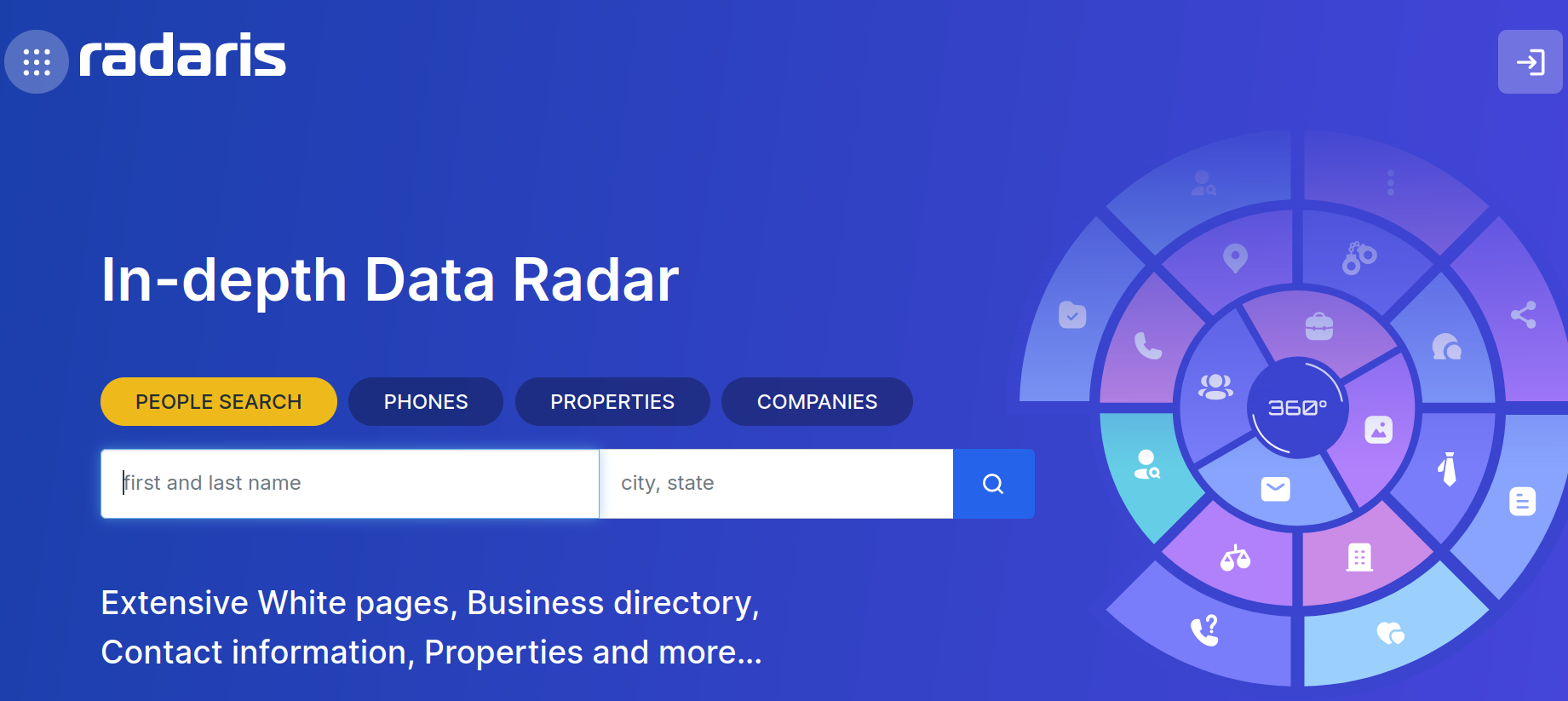
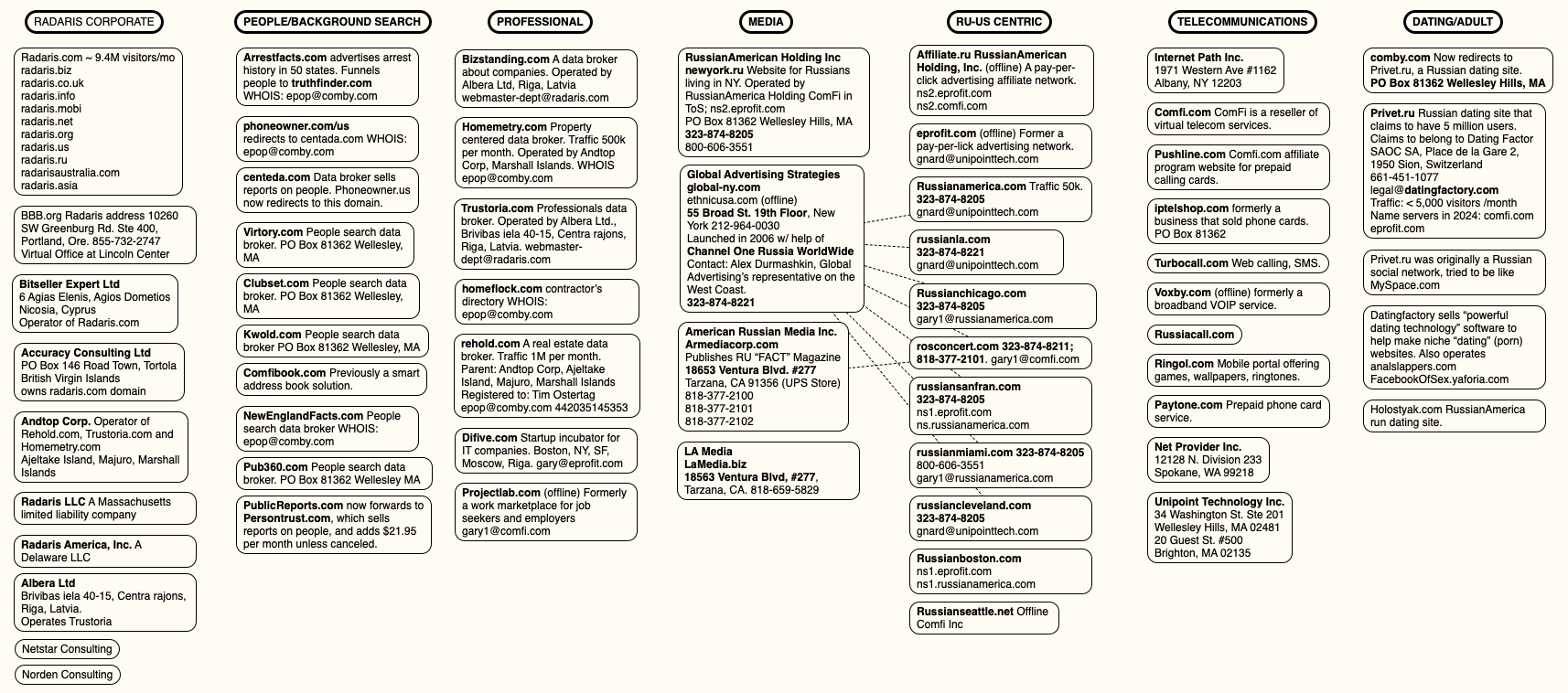
The saga reached a tipping point in February 2024, when Atlas first filed suit. Throughout the proceedings, the company’s defense—led by attorney Val Gurvits of the Boston Law Group—utilized a strategy of attrition. As litigation moved forward, the corporate entities behind Radaris frequently changed. The company shifted from being associated with Cyprus-based Bitseller Expert Limited to entities registered in the Marshall Islands, such as Andtop Company, often claiming that the prior entities were no longer the proper parties to sue.
Matt Adkisson, CEO of Atlas Data Privacy Corp, characterized these maneuvers as a "shell game." When Atlas verified that one such Marshall Islands entity did not exist at the time it was cited as a manager of Radaris, the court’s patience with the defense began to wane. This was not the first time Radaris faced such scrutiny; in 2017, the company lost a $7.5 million default judgment in a class-action suit, only to avoid payment by effectively out-maneuvering the plaintiffs on procedural grounds.
The Lubarsky Brothers and the Fictitious CEO
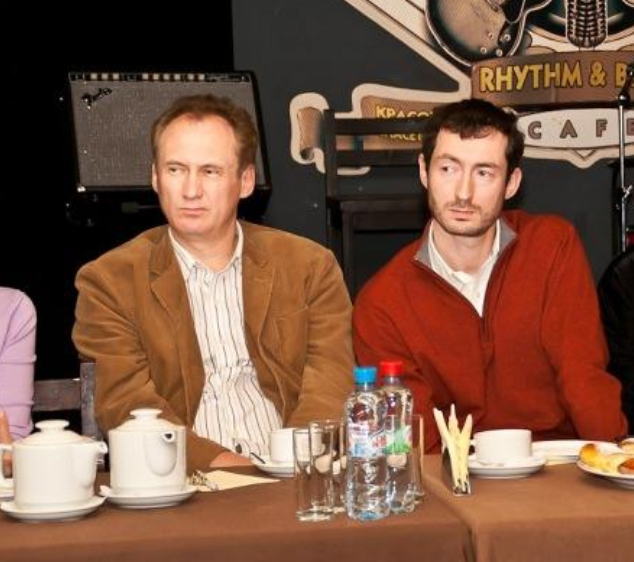
The corporate transparency of Radaris was further eroded by revelations concerning its founders, Russian-born brothers Igor and Dmitry (also known as Dan) Lubarsky. Residing in Massachusetts, the brothers oversaw an ecosystem of people-search sites, dating platforms, and affiliate marketing programs.
A key element of their corporate persona involved the use of a fictitious CEO named "Gary Norden." For years, press releases and investor pitches featured quotes from "Norden," a persona that investigators later confirmed was an entirely fabricated identity. When confronted with evidence of this deception—and the true ownership of the Radaris network—the Lubarsky brothers’ legal counsel initially threatened defamation lawsuits, claiming the sites were owned by Ukrainian interests. Subsequent document disclosures, however, solidified the link between the Boston-area group and the broader Radaris network.
Data Infrastructure and Financial Scope
The discovery process in the Atlas litigation unearthed more than 10,000 emails and internal documents that provide a rare, granular look at the profitability of the people-search industry. These documents reveal that Radaris and its sister sites—such as Veripages.com—function as a unified operation sharing common technical, financial, and administrative backbones.
According to internal data shared by Atlas, Radaris.com generates approximately $42,000 in monthly revenue, while Veripages.com generates roughly $45,000. These figures are bolstered by high-volume partnerships with major marketing and advertising firms, including the Lifetime Value Company. Perhaps most ironically, the documents suggest that the Radaris network earned as much as $25,000 monthly through partnerships with "data removal" services like Onerep—a firm that has itself faced scrutiny for its dual role in operating people-search sites while simultaneously selling the service to remove information from them.
Official Responses and Legal Pushback
The recent domain transfer has not gone unchallenged. Victor Worms, the attorney currently representing the Radaris interests, has filed a motion to vacate the judgment. Worms contends that the court’s action is void because the lawsuit named "Radaris.com" as a defendant—a domain name, he argues, rather than a legal entity capable of being sued.
"We also intend to pursue all appropriate appeals because we believe the transfer of Radaris.com amounts to a forfeiture in violation of various constitutional principles," Worms stated in response to inquiries. Despite this, the current reality for the company is significant: the Radaris.com domain now redirects users to an official notice of the court-ordered transfer, effectively halting the sale of personal dossiers through that specific portal.
Broader Implications for Privacy Law
The Radaris case is a bellwether for the future of data privacy in the United States. While New Jersey’s Daniel’s Law is currently being challenged by roughly 150 data broker firms on First Amendment grounds, the movement to restrict data harvesting is gaining momentum at the state level. At least 14 other states have introduced or passed similar legislation.
However, the legal landscape remains fractured. In August 2025, a federal court ruled West Virginia’s version of Daniel’s Law facially unconstitutional, setting the stage for a likely showdown at the U.S. Supreme Court. Privacy experts argue that until a comprehensive federal law is passed, these battles will remain local and piecemeal.
Justin Sherman, a leading privacy expert and author of The Middlemen, emphasizes that the current system is fundamentally broken. "The lack of a comprehensive federal privacy law is not for a lack of knowledge," Sherman noted. "We have had eight million wake-up calls already."
Sherman points out that most state-level privacy laws are riddled with exemptions for "public" or "government" data—records such as marriage certificates, property filings, and motor vehicle registrations. These exemptions are precisely the data sources that fuel the people-search industry. Even as states mandate age verification for adult content, there remains no federal safeguard to prevent companies from aggregating, scanning, and leaking the very drivers’ licenses used to verify identities.
The Radaris domain seizure is a significant tactical victory for privacy advocates, demonstrating that courts are increasingly willing to look past corporate shell games to hold operators accountable. Whether this victory translates into a lasting shift in the industry, however, depends on whether lawmakers can overcome the intense lobbying efforts of big tech, social media, and data-aggregation firms that argue that limiting data scraping would stifle economic innovation. For now, the case of Radaris serves as a warning: the era of hiding behind offshore domains and fictitious CEOs may be drawing to a close.
Related posts: