Mux Introduces Directives API to Streamline Complex Video Workflows and Automate Mux Robots Integration


Video infrastructure platform Mux has officially announced the launch of Directives, a brand new application programming interface (API) designed to simplify how developers manage and sequence complex video processing workflows. The new capability allows engineering teams to coordinate multiple Mux Robots operations—such as automated caption generation, translation, and advanced content analysis—under a single, unified command. By shifting dependency management and state tracking to the backend, the Directives API aims to eliminate the need for intricate custom queueing systems and manual API polling, reducing multi-step video operations to a single line of code.
The Evolution of Video Intelligence and Workflow Automation
Historically, managing video transformation pipelines at scale has presented significant engineering hurdles. Modern user-generated content (UGC) platforms, media streaming applications, and enterprise video archives rarely rely on a single processing step. Instead, a newly uploaded video often requires a cascade of operations: encoding into multiple bitrates, generating primary transcripts using speech-to-text models, translating those captions into several foreign languages, extracting frame-level thumbnails, and executing safety or content moderation checks.
Prior to the introduction of Directives, developers had to manually orchestrate these tasks by chaining distinct API calls. This required engineering teams to build robust backend state machines—often leveraging third-party queue workers like Laravel queues, AWS SQS, or Redis—to monitor job statuses, handle network timeouts, manage retries, and ensure that dependent tasks only executed after their prerequisites were fully resolved. For instance, a translation job would frequently fail if triggered before the foundational caption track had completely finished rendering.
Mux Senior Software Engineer Walker Frankenberg explained the architectural philosophy behind the new release during a recent technical briefing alongside Community Engineer Joshua Alphonse. According to Frankenberg, the core motivation was to leverage Mux’s deep domain expertise in video processing to establish intelligent defaults and handle infrastructure orchestration directly on the backend.
How the Directives API Functions
The Directives API fundamentally alters how developers interact with Mux Robots by shifting orchestration logic from client-side or server-side application code directly into the Mux platform. Rather than writing custom polling loops to check whether a video asset has reached a specific processing state, developers can now define a comprehensive sequence of jobs as a single "Directive."
This Directive can be assigned directly to a video asset at the moment of upload or triggered programmatically via the API during catalog backfills and batch migrations. Once initialized, the Mux platform automatically manages the execution order, monitors task dependencies, handles state transitions, and guarantees that subsequent steps—such as multi-language translations—only initiate once prerequisite assets are fully available and verified.
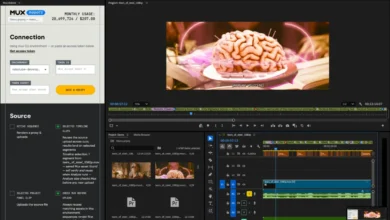
For end users and development teams, this drastically reduces the boilerplate code required to maintain reliable pipelines. Operations that previously demanded extensive error-handling logic across dozens of asynchronous queue workers can now be invoked reliably with minimal code configuration. Furthermore, Mux has integrated Directive management directly into its web dashboard, allowing non-engineering stakeholders and administrative teams to monitor and apply workflows without writing custom code.
Industry Implications and Developer Impact
The release of Directives addresses a pervasive pain point in modern software development: the friction of infrastructure integration. As the volume of digital video continues to scale exponentially across e-commerce, education, social media, and enterprise communications, engineering organizations are under increasing pressure to optimize developer velocity.
By offloading dependency management, retry logic, and state tracking to Mux’s cloud infrastructure, companies can reallocate engineering hours away from maintaining custom video pipelines and toward core product development. Industry analysts note that developer-first infrastructure services are increasingly competing on their ability to abstract operational complexity. Features that minimize the cognitive load of asynchronous state management—such as Mux’s Directives—are viewed as essential tools for modern web and mobile application development.
The operational efficiency gained through Directives is particularly pronounced for platforms supporting global audiences. Localizing video content via automated subtitle generation and multi-language translation is no longer an enterprise luxury; it is a baseline expectation for user retention and market reach. By collapsing what was once a fragile, multi-step API integration into a fault-tolerant, single-action workflow, Mux has lowered the technical barrier to entry for advanced video intelligence.
Getting Started with Mux Directives
The Directives API is available immediately to all Mux customers across web and mobile application environments. Developers looking to implement the new feature can access comprehensive technical documentation, code snippets, and integration guides directly through the official Mux developer portal. In line with the platform’s broader onboarding strategy, new users can begin exploring Mux Robots and the Directives API without requiring a credit card or upfront financial commitment.