Microsoft Shatters Security Records with 570 Patches as AI-Driven Vulnerability Discovery Accelerates Global Cybersecurity Demands

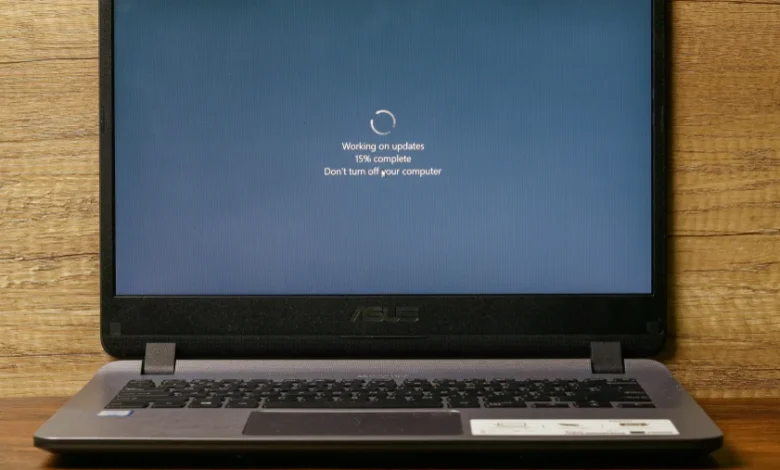
Microsoft Corp. released a monumental suite of software updates today, addressing a record-breaking 570 security vulnerabilities across its Windows operating systems and associated software ecosystem. This release represents nearly triple the volume of the company’s previous record-setting Patch Tuesday last month, marking a paradigm shift in how software flaws are identified and remediated. Senior leadership at Microsoft attributed this unprecedented surge in vulnerability counts to the integration of advanced artificial intelligence (AI) tools, which have revolutionized the speed and depth of code analysis. As the cybersecurity landscape enters this high-velocity era, the sheer volume of these updates signals both a triumph of defensive discovery and a looming challenge for IT administrators worldwide.
The July 2026 update cycle is notable not only for its quantity but for the severity of the flaws addressed. Nearly 60 of the 570 vulnerabilities received a "critical" designation, the highest severity rating in Microsoft’s hierarchy. These flaws are particularly hazardous because they allow for remote code execution (RCE), enabling attackers to gain full control over a target system with little to no interaction from the end-user. Furthermore, the release includes fixes for three "zero-day" vulnerabilities—flaws that were known to the public or actively exploited by threat actors before a patch was available. Of these three, two were confirmed to be under active exploitation in the wild at the time of the release.
Technical Breakdown of Key Vulnerabilities
Among the most pressing issues addressed this month are two zero-day vulnerabilities that facilitate elevation of privilege (EoP). These flaws, identified as CVE-2026-56155 and CVE-2026-56164, represent a significant portion of the update’s focus on identity and access management. CVE-2026-56155 affects Active Directory Federation Services (ADFS), a critical component in many enterprise environments used for Single Sign-On (SSO) and identity federation. An attacker who successfully exploits this bug could escalate their permissions to gain administrative control over an entire domain.
The second zero-day, CVE-2026-56164, targets Microsoft SharePoint, a ubiquitous platform for document management and collaboration. Given SharePoint’s central role in corporate data storage, an elevation of privilege flaw here could grant an unauthorized user access to sensitive internal documents and proprietary data. Beyond these zero-days, the July update addressed approximately 250 other elevation of privilege flaws, highlighting a concentrated effort by Microsoft to harden the internal permission structures of the Windows environment.
Another significant fix involves CVE-2026-50661, a security feature bypass vulnerability in Windows BitLocker. BitLocker is the primary full-disk encryption tool used to protect data on Windows devices. This specific flaw could allow an attacker with physical access to a device to bypass encryption and access protected data. While Microsoft noted that details of this vulnerability had been made public prior to the patch, the company stated it has not yet seen evidence of active exploitation. Nevertheless, for organizations with high-security requirements for portable hardware, this patch is considered a high priority.
The Microsoft Copilot Threat: AI Securing AI
One of the most modern threats addressed in this cycle involves Microsoft’s flagship AI assistant, Copilot. Jack Bicer, Director of Vulnerability Research at Action1, highlighted CVE-2026-48561, a remote code execution flaw in Microsoft Copilot that carries a near-perfect Common Vulnerability Scoring System (CVSS) threat score of 9.6. This vulnerability allows an unauthorized attacker to execute malicious code over a network.
According to Microsoft’s technical advisory, the attack vector for this flaw is particularly sophisticated. An attacker could host a malicious website that, when visited by a user via Microsoft Edge for Android, automatically sends specially crafted prompts to the Copilot interface. These prompts can then trigger the execution of code within the user’s context. This vulnerability underscores the emerging "AI-on-AI" threat landscape, where traditional web vulnerabilities are leveraged to manipulate generative AI systems into performing unauthorized actions.
The Impact of Artificial Intelligence on Vulnerability Management
The transition to triple-digit patch counts appears to be the "new normal" for the software industry, driven by the same technology that powers the tools being patched. Pavan Davuluri, Microsoft’s Executive Vice President, explained that the company has intentionally evolved its vulnerability management strategies to match the capabilities of modern AI.
"The pace of vulnerability discovery is changing with advances in AI making it possible to find more issues, faster, across more code, with new mechanisms that can accelerate both discovery and analysis," Davuluri wrote in a public blog post. This AI-driven approach allows Microsoft’s internal security teams and "Red Team" units to scan millions of lines of legacy and modern code simultaneously, identifying patterns and edge cases that would take human researchers months or years to uncover.
However, this technological leap is a double-edged sword. While defenders use AI to find and fix bugs, attackers are utilizing the same tools to reverse-engineer patches and develop functional exploits. This has led to a debate regarding the efficacy of traditional risk assessment models.
The Crisis of the Exploitability Index
Satnam Narang, a senior staff research engineer at Tenable, has raised concerns that Microsoft’s traditional "Exploitability Index" is becoming obsolete in the age of AI. The index is intended to help IT teams prioritize which patches to install first by predicting how likely it is that a bug will be exploited. Historically, this was a human-centric prediction.
Narang pointed to the SharePoint zero-day as a primary example of this disconnect. Microsoft had initially labeled the flaw as "exploitation less likely," despite the fact that it was added to the Cybersecurity and Infrastructure Security Agency’s (CISA) Known Exploited Vulnerabilities (KEV) list on July 1. This suggests that the speed at which attackers are moving is outstripping the manual assessment processes used by software vendors.
Further complicating the matter is research from Anthropic’s Red Team. Using their "Mythos Preview" AI model, researchers were able to generate functional proof-of-concept (PoC) exploits for 13 out of 14 vulnerabilities that Microsoft had rated as "exploitation less likely" or "unlikely."
"What this means is that our way of looking at Patch Tuesday has changed," Narang said. "The exploitability index is centered around humans, not AI tools. As these tools continue to improve, defense needs to improve alongside it." The implication is that "low-risk" bugs can now be weaponized almost instantly by automated systems, requiring a shift toward a policy of "patch everything, everywhere, as fast as possible."
A Global Trend: The Industry-Wide Patch Surge
Microsoft is not alone in this massive increase in security updates. The July 2026 cycle reveals a broader industry trend where major software manufacturers are struggling to keep up with the volume of discovered flaws. Chris Goettl, Vice President of Product Management at Ivanti, noted that several other tech giants are moving toward more frequent and high-volume update cycles.
Adobe, for instance, announced today that it is moving to a twice-monthly security bulletin schedule, publishing updates on the second and fourth Tuesday of each month. Like Microsoft, Adobe cited AI-accelerated discovery as the primary reason for this change. Other major players, including Cisco, Mozilla, and Oracle, have also increased the frequency of their security releases. Google recently set its own record in June 2026, releasing more than 900 security fixes in a single month.
This "patch inflation" places an immense burden on corporate IT departments. In an era where 500+ patches are released in a single day, the traditional method of testing patches in a lab environment before deploying them to production is becoming increasingly difficult to maintain.
Chronology of the July 2026 Update Cycle
The events leading up to today’s record-breaking release followed a rapid timeline that highlights the urgency of modern cybersecurity:
- July 1, 2026: CISA adds a critical SharePoint vulnerability to the Known Exploited Vulnerabilities (KEV) catalog, signaling that active attacks are occurring in the wild.
- July 3-7, 2026: Security researchers at Action1 and Tenable report a spike in automated scanning for ADFS and BitLocker-related configurations.
- July 9, 2026 (Morning): Microsoft Executive Vice President Pavan Davuluri publishes a blog post warning of a "higher volume of security updates" due to AI-powered discovery.
- July 9, 2026 (Mid-day): Microsoft officially releases the 570-patch payload, including three zero-day fixes.
- July 9, 2026 (Afternoon): Industry analysts at Ivanti and Action1 release technical deep-dives, specifically warning about the 9.6-rated Copilot vulnerability.
Strategic Recommendations for Users and Organizations
In light of the massive volume of updates, security experts are offering nuanced advice for deployment. While the instinct in cybersecurity is to patch immediately, the risk of "breaking" systems with such a large number of changes is non-trivial.
"Backing up your Windows system and data is always a good idea before applying operating system updates," security analysts noted. Given the complexity of the 570 patches, some experts suggest that end-users and non-critical business systems might benefit from waiting 48 to 72 hours to ensure that the updates do not cause widespread system stability issues or "blue screen" errors.
However, for critical infrastructure, the advice remains focused on speed. Organizations are encouraged to prioritize the 60 "critical" RCE bugs and the three zero-days immediately. The use of automated patch management tools is no longer optional; it has become a necessity for managing the sheer scale of modern software maintenance.
Implications for the Future of Cybersecurity
The July 2026 Patch Tuesday serves as a landmark event in the history of digital security. It confirms that we have entered the "AI Era" of vulnerability management, where the human element is being augmented—and in some cases replaced—by machine-speed discovery.
For Microsoft, the successful discovery and patching of 570 bugs is a testament to the power of their internal AI security initiatives. For the broader world, it is a stark reminder that the software we rely on is more complex and potentially more fragile than previously understood. As AI continues to peel back the layers of code to find hidden flaws, the race between those who seek to secure the digital world and those who seek to exploit it will only continue to accelerate. The 570-patch record is unlikely to stand for long; in the world of AI-driven security, today’s record is tomorrow’s baseline.
Related posts: