Karmada Orchestration Project Graduates CNCF to Become Global Standard for Multi-Cluster AI and Hybrid Cloud Infrastructure

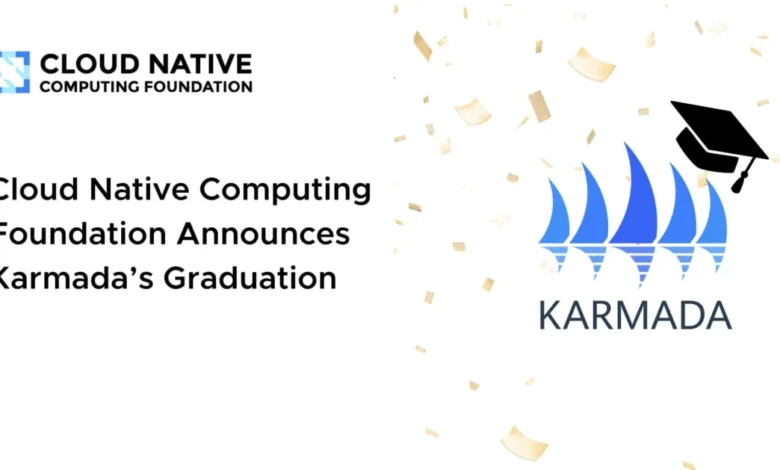
The Cloud Native Computing Foundation (CNCF) has officially announced the graduation of Karmada, marking a pivotal transition for the open-source Kubernetes orchestration project as it moves from an incubating status to a fully matured, enterprise-ready standard. Announced at the joint KubeCon + CloudNativeCon + OpenInfra Summit + PyTorch Conference China 2026, the graduation signifies that Karmada has met the highest levels of technical rigor, security, and community governance required for mission-critical deployments. As global enterprises grapple with the complexities of scaling artificial intelligence training and inference across geographically distributed, heterogeneous infrastructure, Karmada’s ability to treat multiple Kubernetes clusters as a single, unified resource pool has positioned it as a cornerstone of modern cloud-native architecture.
The Evolution of Kubernetes Orchestration
Since its inception, Kubernetes has revolutionized how software is deployed and managed, yet it was originally designed with a single-cluster focus. As organizations expanded their footprints across public clouds, private data centers, and edge environments, they encountered significant operational silos. Karmada, short for "Kubernetes Armada," was developed to solve this fragmentation. By extending the standard Kubernetes API, Karmada enables organizations to propagate applications, manage configurations, and perform failovers across clusters without requiring modifications to existing application code.
The project’s journey within the CNCF ecosystem has been marked by steady, calculated growth. It was first introduced to the community with its inaugural commit in November 2020. Recognizing its potential to bridge the gap between complex multi-cloud deployments, the CNCF accepted Karmada as a Sandbox project in September 2021. By December 2023, the project had matured significantly, earning Incubating status. Today’s graduation is the culmination of years of iterative development, community-led security audits, and the establishment of a formal steering committee dedicated to transparent, inclusive governance.
Technical Milestones and AI Integration
The timing of Karmada’s graduation aligns with the urgent industry requirement for robust AI infrastructure. The recent release of version 1.19 serves as a technical centerpiece for this milestone, introducing advanced multi-component scheduling capabilities tailored specifically for distributed AI training jobs. As AI models grow in size and complexity, they require massive amounts of GPU resources that rarely exist within a single cluster. Karmada’s new priority-based scheduling, now enabled by default, ensures that critical, resource-intensive AI workloads receive the necessary compute capacity ahead of secondary tasks.
By integrating with the existing CNCF landscape—leveraging Prometheus for observability, etcd for state management, and Helm for standardized packaging—Karmada provides a seamless experience for platform engineers who are already familiar with the cloud-native ecosystem. Its roadmap for the remainder of 2026 focuses on moving beyond basic workload propagation toward a highly intelligent, resource-aware control plane. Future developments include support for Kubernetes Dynamic Resource Allocation (DRA) across diverse hardware accelerators, ensuring that GPUs and other specialized AI hardware can be managed with the same agility as general-purpose CPUs.
A Global Footprint: Adoption and Impact
The production footprint of Karmada now spans a diverse array of sectors, including telecommunications, finance, e-commerce, and logistics. A significant segment of the project’s growth has been driven by large-scale Chinese enterprises, including Alibaba Cloud, Huawei, JDCloud, and Trip.com. These organizations have deployed Karmada to handle massive traffic spikes, cross-region resilience, and the orchestration of complex microservices.
Bloomberg and Wellhub represent the growing international adoption of the platform. For financial institutions like Bloomberg, where downtime is not an option, Karmada provides the necessary framework for automated disaster recovery and improved resource utilization. By abstracting the complexities of underlying infrastructure, the project allows developers to focus on application logic rather than the intricacies of multi-cluster connectivity.
"Karmada has become foundational to how Bloomberg operates resilient cloud-native infrastructure," noted Michas Szacillo, Engineering Team Lead of Bloomberg’s Streaming Platform. "By automating disaster recovery and simplifying the management of individual Kubernetes clusters, it has enabled our platform engineering teams to operate more efficiently while giving internal application teams a more consistent experience."
Governance and Security Standards
Reaching CNCF graduation is not merely a reflection of code volume or star counts on GitHub; it is a rigorous process that demands high standards of security and maintainability. To qualify for graduation, the Karmada community underwent a comprehensive third-party security audit, identifying and remediating potential vulnerabilities to ensure enterprise-grade safety. Furthermore, the project has adopted the CNCF Code of Conduct and maintains a Core Infrastructure Initiative (CII) Best Practices Badge, signaling to potential adopters that the software is built with long-term stability and security at its core.
The establishment of a formal steering committee has been instrumental in this success. This governance model ensures that the project remains vendor-neutral, preventing any single corporation from dominating the direction of the software. This transparency has been a primary driver for its rapid adoption, as companies are increasingly wary of lock-in and prefer solutions backed by open, collaborative communities.
Broader Implications for the Cloud-Native Landscape
The joint gathering of the CNCF, the OpenInfra Foundation, and the PyTorch Conference in China underscores a major shift in the industry: the convergence of cloud-native orchestration and specialized AI hardware. As compute-intensive AI applications move from R&D into production, the "infrastructure gap"—the disconnect between AI requirements and existing cluster management—has become a critical bottleneck.
Karmada addresses this by providing a unified control plane that spans private data centers and public cloud providers. This is particularly vital for companies pursuing multi-cloud strategies, as it allows them to maintain a consistent policy and security posture regardless of the underlying hardware or cloud provider. As Kay Yan, Chief Architect at DaoCloud, observed, the graduation provides "greater confidence in Karmada as a long-term foundation" for AI token factories and large-scale inference workloads.
Future Outlook and Roadmap
As the project looks toward 2027 and beyond, the focus will shift toward the challenges of agent-based infrastructure and automated resource optimization. The community aims to implement multi-cluster queuing for batch jobs, which will further streamline the life cycle of AI training tasks that span thousands of nodes.
Furthermore, the integration with Kubernetes Dynamic Resource Allocation (DRA) will be a critical development to watch. As specialized AI chips become more prevalent, the ability of a control plane to negotiate resource availability across cluster boundaries will determine which organizations can scale their AI capabilities most efficiently.
For the CNCF, the graduation of Karmada is a signal of the project’s maturity. According to Chad Beaudin, a TOC Sponsor, the project has successfully solved the "consistency problem" for organizations scaling beyond single-cluster limitations. By extending familiar Kubernetes APIs, Karmada avoids the "added complexity" trap that often plagues new infrastructure layers, making it a highly attractive option for enterprises seeking to modernize their stacks.
In conclusion, the graduation of Karmada is a milestone that reflects the current state of enterprise IT: increasingly complex, geographically distributed, and heavily reliant on AI. By providing a stable, secure, and vendor-neutral layer to manage this complexity, Karmada has secured its place as a critical component of the future cloud-native stack. As more organizations adopt this technology, the focus will remain on refining the intelligence of the control plane to ensure that the infrastructure of tomorrow is as scalable and resilient as the applications it supports.
For those looking to adopt the platform, the project’s official documentation and growing list of community-driven resources provide a clear path for integration. With a robust governance structure and a proven track record in massive-scale production environments, Karmada is poised to continue its influence as a foundational element of the global computing ecosystem.
Related posts: