The landscape of marketing is undergoing a seismic shift, driven by the rapid advancement and integration of Artificial Intelligence. While Chief Marketing Officers (CMOs) overwhelmingly express excitement about AI’s potential, a significant chasm exists between this enthusiasm and tangible organizational action. Recent industry reports highlight a critical need for marketing leaders to move beyond aspiration and implement strategic AI adoption to remain competitive and relevant in the evolving business environment.
A comprehensive June 2026 McKinsey article surveyed marketing leaders, revealing that a remarkable 96% of CMOs agreed with the statement, "I feel excited about the possibilities of AI at work." This widespread optimism, however, starkly contrasts with the reported pace of actual implementation. The same McKinsey survey found that "only 28% of marketers from our survey view their companies as pursuing a fundamental rewiring of their marketing teams and workflows." This disparity underscores a pressing challenge for CMOs: translating their excitement into concrete, transformative strategies.
This disconnect can be understood through the lens of organizational inertia and the inherent complexities of technological integration. The analogy of the toothpaste factory from "Charlie and the Chocolate Factory" aptly illustrates the potential for displacement and subsequent rehiring. In this scenario, initial automation might render existing roles obsolete, but the long-term vision requires individuals to adapt and manage the new technologies. For CMOs, this means understanding that AI is not merely a tool to augment existing processes but a catalyst for fundamental reimagining of marketing functions. The digital revolution of the early 2000s serves as a historical parallel; those who resisted digital transformation often found themselves outmaneuvered by more agile competitors. The current AI wave presents a similar inflection point, where proactive engagement is paramount.

Building AI Literacy: The Foundation for Action
The first and perhaps most crucial step for CMOs is to cultivate a deep understanding of AI’s capabilities and limitations. This involves more than superficial knowledge; it requires developing robust AI literacy. Starting with foundational resources, such as those offered by the Marketing AI Institute, can provide a solid baseline. These institutions offer free courses and educational materials designed to demystify AI concepts and their applications within marketing.
However, theoretical knowledge is insufficient. CMOs must engage directly with AI tools to grasp their practical implications. By experimenting with the AI technologies already present within their organizations, leaders can develop more insightful questions for their teams. This hands-on approach fosters a deeper appreciation for the decisions marketing professionals make daily, the strategic importance of those decisions, and the potential of AI to inform and enhance them.
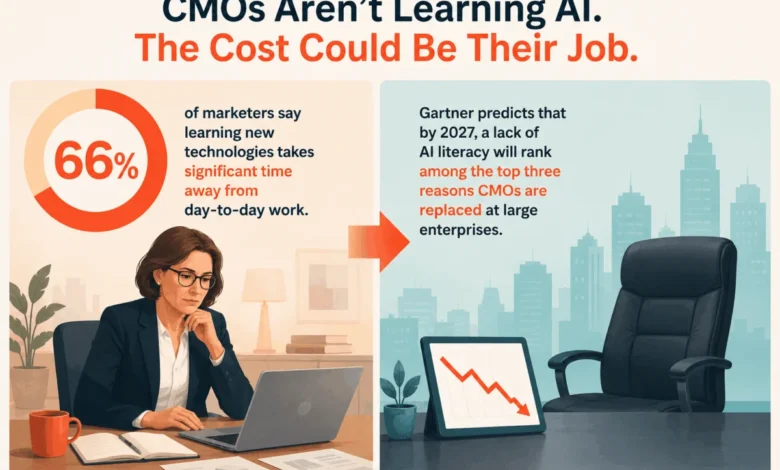
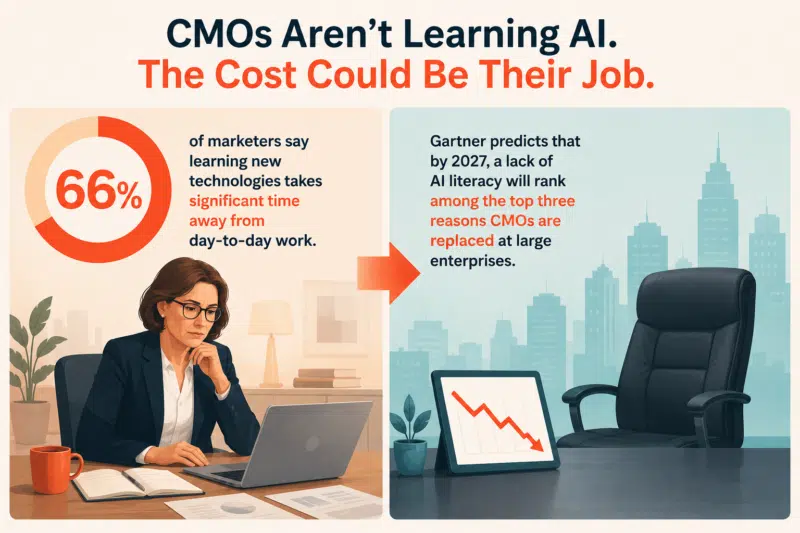
This commitment to learning is not without its challenges. A June 2026 Gartner article indicated that "66% of marketers say learning new technologies takes significant time away from day-to-day work." This sentiment is understandable, as balancing immediate operational demands with the investment in future capabilities is a perennial struggle for many. However, the long-term implications of neglecting AI are severe. Gartner predicts that "by 2027, a lack of AI literacy will rank among the top three reasons CMOs are replaced at large enterprises." This forecast serves as a stark warning, suggesting that the short-term disruption of learning new technologies is a necessary precursor to long-term career survival and organizational success.
Rethinking the Marketing Organization for an AI-Powered Future
The growing demand from boards and CEOs for AI adoption is a relatively recent phenomenon, meaning most existing marketing structures were not designed with AI at their core. Consequently, a significant organizational rethink is imperative. This strategic recalibration necessitates addressing two pivotal questions: the allocation of budget towards AI initiatives and the adaptation of the existing workforce.
Budgetary Allocation: Investing in the AI Future
The financial commitment to AI in marketing is escalating. Gartner’s May 2026 press release reported that "CMOs are allocating an average of 15.3% of marketing budgets to AI initiatives." This figure represents a substantial investment, signaling a clear industry trend. Further underscoring this trend, a June 2026 Boston Consulting Group (BCG) publication found that "43% of CMOs report their AI investments in marketing exceeded $15 million this year (compared with 28% last year)." This surge in investment reflects a growing recognition of AI’s potential to drive significant returns. However, for these investments to be sustainable and to satisfy the scrutiny of finance departments, CMOs must be prepared to rigorously quantify the business results and ROI generated by AI initiatives. Demonstrating tangible impact will be key to securing continued funding and support.
Workforce Adaptation: Navigating the Human-AI Collaboration
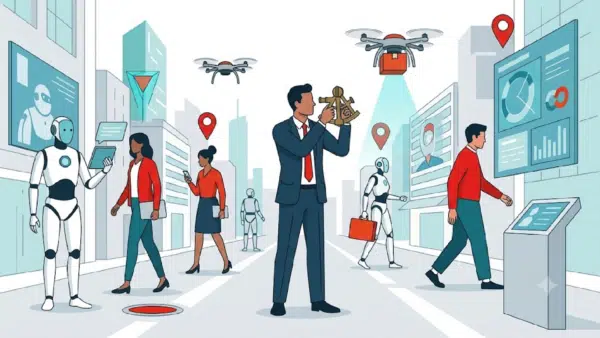
The challenge of a team not initially staffed for AI requires a proactive and strategic approach to workforce development and role redesign. BCG’s research emphasizes that CMOs "must reimagine the job to be done at every layer of the function – insights, strategy, creative, planning, production, activation, or measurement – in the context of what AI makes possible." While many organizations resort to targeted cuts in response to technological shifts, leading CMOs are adopting a more forward-thinking strategy. This involves identifying how AI can augment human capabilities, creating new roles, and upskilling existing employees. The focus shifts from simply replacing tasks to evolving the nature of work itself, ensuring that human talent is strategically aligned with AI-driven efficiencies and insights.
The Imperative of Agentic AI and Human-AI Synergy
The future of marketing lies in a synergistic relationship between humans and AI, often referred to as "agentic AI." An April 2026 McKinsey article highlighted the transformative potential of a hybrid human-AI workforce. This model leverages AI for tasks such as data analysis, content generation, predictive modeling, and campaign optimization, freeing up human marketers to focus on higher-level strategic thinking, creativity, complex problem-solving, and building authentic customer relationships.

The article posits that this hybrid approach can lead to significant improvements in areas such as:
- Enhanced Efficiency: AI can automate repetitive and time-consuming tasks, allowing marketing teams to operate with greater speed and agility. This could include AI-powered content summarization, automated report generation, and intelligent scheduling.
- Deeper Customer Insights: AI’s ability to process vast datasets can uncover nuanced patterns and predict customer behavior with unprecedented accuracy. This enables more personalized and effective marketing campaigns, moving beyond broad segmentation to hyper-individualized outreach.
- Creative Augmentation: While AI can generate content, human creativity remains essential for strategic direction, brand voice, and emotional resonance. AI tools can act as powerful co-creators, providing novel ideas and accelerating the content development process.
- Optimized Campaign Performance: AI algorithms can continuously monitor and adjust campaign parameters in real-time, optimizing ad spend, targeting, and messaging for maximum impact and ROI.
- Strategic Decision Support: AI can provide data-driven recommendations and scenario planning, empowering CMOs and their teams to make more informed strategic decisions.
The transition to this integrated model requires careful planning and execution. It involves not only adopting new technologies but also fostering a culture of collaboration and continuous learning. The success of AI adoption hinges on the ability of marketing organizations to adapt their workflows, redefine roles, and equip their teams with the skills necessary to thrive in an AI-augmented environment.
As nearly all CMOs agree, the current era of marketing is undeniably exciting. AI is fundamentally reshaping how businesses operate, and this transformation, while potentially anxiety-inducing, presents an unparalleled opportunity. The time for CMOs to act is now. Enabling oneself through AI literacy and actively reworking organizational structures are no longer optional but essential steps. The cautionary tale of Charlie’s father, stuck in a rudimentary role while the world advanced, serves as a powerful reminder that embracing and adapting to technological evolution is crucial for continued relevance and success in the dynamic world of marketing.
The implications of this AI-driven transformation extend beyond individual marketing departments. Companies that successfully integrate AI into their marketing strategies are likely to gain a significant competitive advantage, leading to increased market share, enhanced customer loyalty, and ultimately, stronger financial performance. Conversely, organizations that lag in AI adoption risk becoming obsolete, much like businesses that failed to embrace the internet in its early stages. The journey of AI integration is not a singular event but an ongoing process of adaptation and innovation, demanding continuous learning and strategic foresight from marketing leaders.