How AI Video Analysis Dissects Complex Media: Lessons From Markus Eder’s The Ultimate Run


The intersection of artificial intelligence and digital media has long grappled with a fundamental computational challenge: how to efficiently process, analyze, and extract meaning from massive volumes of video data without exhausting processing power or incurring prohibitive latency. This technical hurdle has prompted leading video infrastructure platforms to reevaluate how machine learning models ingest visual media. By utilizing professional-grade extreme sports content—specifically Markus Eder’s renowned viral ski film, The Ultimate Run—engineers are discovering that effective video AI workflows depend heavily on choosing the right granularity of data, moving away from brute-force frame-by-frame analysis toward targeted, context-aware processing.
The Challenge of High-Resolution Video Data Processing
Modern video files represent immense computational weight. A standard one-hour video recorded at 30 frames per second yields approximately 108,000 individual images. Feeding every single frame into a vision-based artificial intelligence model is not only computationally expensive but economically impractical. The vast majority of sequential frames in any given video capture redundant visual states, offering little to no new contextual information that can advance a query’s objective.
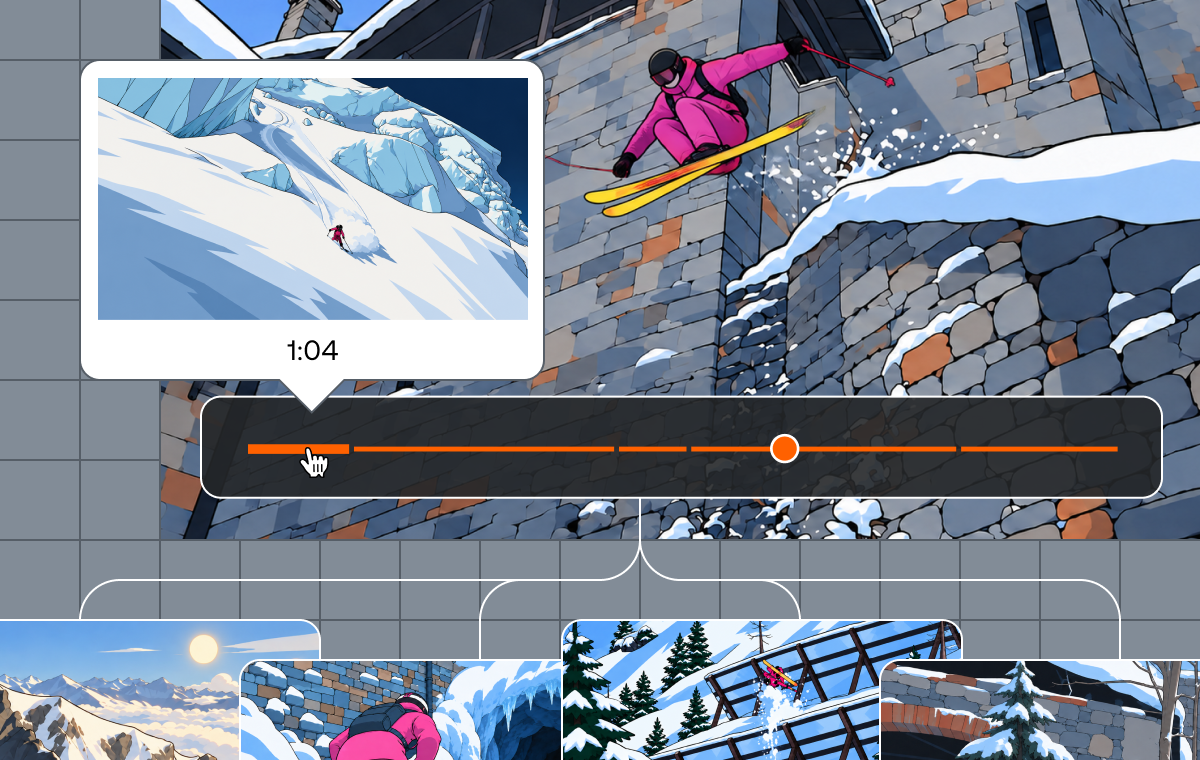
Video infrastructure developers working on systems like Mux Robots have identified this inefficiency as a primary bottleneck in automated media workflows. To optimize performance, modern AI pipelines must determine the minimum volume of visual data required to accurately answer a specific query. By shrinking the scope of analysis before a model evaluates the content, systems can achieve rapid response times while preserving essential context. This methodology relies on breaking down video assets into hierarchical building blocks: individual frames, cuts, shots, scenes, moments, and chapters.
Granular Building Blocks: Frames, Shots, and Scenes
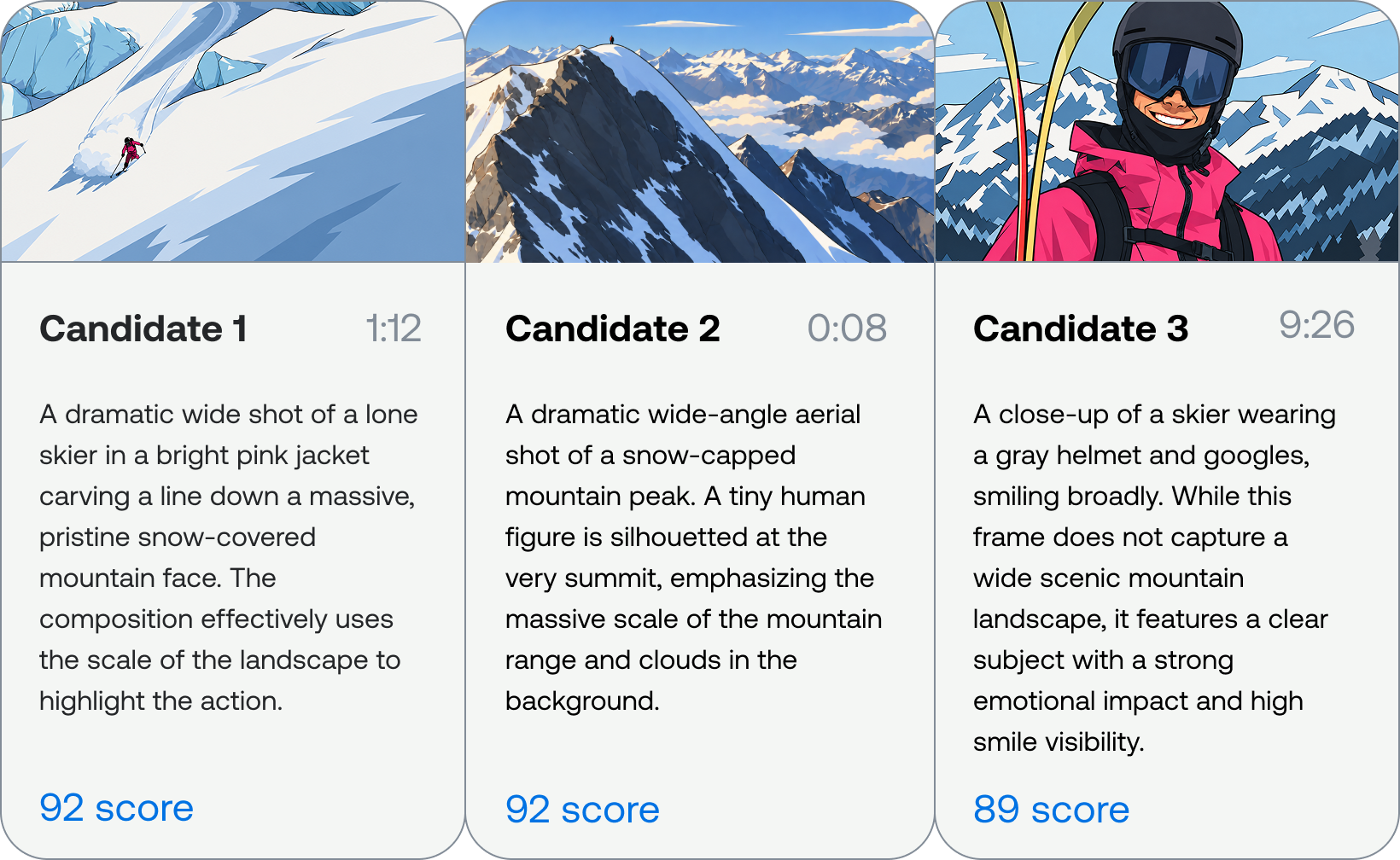
To understand how artificial intelligence interprets complex video, industry analysts examine the distinct utility of each structural tier. When an automated system needs to evaluate a single, isolated instant—such as identifying a specific corporate logo, running a visual moderation check for inappropriate content, or locating the precise apex of a ski jump—a single frame is often sufficient. Tools designed for automated thumbnail generation evaluate candidate frames based on visual composition, facial clarity, and action dynamics, utilizing output steering to tailor selections toward specific target demographics or aesthetic preferences.
However, single frames fail when a query relies on sequence, momentum, or temporal continuity. For instance, a single image can capture a skier mid-rotation, but it cannot confirm whether the landing was successful. To bridge this gap, AI workflows employ shot detection algorithms. A shot represents a continuous take bounded by camera cuts. By comparing consecutive frames through inexpensive visual differential calculations, systems generate an ordered map of visual changes. This shot-aware sampling ensures that fast-paced, high-density content—such as Eder’s rapid traversal through tight urban alleyways and natural ice caves—is captured accurately without requiring the system to inspect every individual frame.
Moving beyond individual shots, complex video analysis requires the identification of scenes. While a shot is defined by a change in camera angle or visual state, a scene groups multiple neighboring shots that share a unified narrative or environmental context. In professional ski films like The Ultimate Run, which feature minimal spoken dialogue, multimodal AI systems must rely heavily on visual changes and ambient audio cues to determine where a sequence—such as a high-alpine powder descent or an underground glacier traversal—begins and concludes. These scene groupings provide applications with a structured, timed map that facilitates advanced browsing, timeline editing, and automated search retrieval.

Distinguishing Moments and Chapters for Viewer Navigation
Beyond low-level technical parsing, video AI workflows must also address user-facing product requirements, which are typically fulfilled through the identification of key moments and chapters. Key moments represent standalone excerpts—such as a complete trick from approach to safe landing—that possess enough contextual integrity to function independently as short-form clips. These moments are generated by synthesizing shot boundaries with transcript analysis and frame sampling, ensuring the output is optimized for human viewers rather than machine ingestion.
Conversely, chapters serve a structural navigation purpose, dividing an extended video into a formal table of contents. While key moments highlight exceptional highlights, chapters ensure that every secondary segment of a media asset is categorized. In the case of The Ultimate Run, the narrative naturally progresses through distinct geographical phases: the high alpine, the glacier and ice tunnel, the cliffs and snow park, the historic castle, and the final valley floor descent. Although automated chapter generation traditionally relies heavily on transcript narration, advanced multimodal systems demonstrate that purely visual transitions can successfully drive chapter creation even in the absence of spoken dialogue.

The Role of Embeddings in Semantic Video Retrieval
As video libraries expand into petabyte scales, content discovery increasingly depends on semantic vector embeddings. When a user searches for an abstract concept—such as locating the specific segment where a skier navigates an interior ice tunnel without knowing its precise timestamp—traditional keyword indexing falls short. Embeddings translate text prompts, still images, and multimodal video chunks into high-dimensional vectors that allow systems to compute semantic similarity.
Despite the power of vector search, the granularity dilemma persists. A search query must determine whether the desired output should be the entire feature-length asset, a specific scene, an individual shot, or a single frame. While a whole-video match may suffice for broad content recommendations, it fails to provide the precision required for direct time-coded navigation. Consequently, modern embedding pipelines must carefully balance breadth of context with micro-level precision to deliver actionable search results.

Industry Implications and Future Workflows
The ongoing refinement of video AI architecture carries significant implications for the broader media and entertainment industries. Automated video intelligence is rapidly evolving from a novelty into an essential operational layer supporting automated content moderation, dynamic ad insertion, trailer assembly, compliance review, and accessibility description generation.
By systematically breaking down complex media assets into their fundamental constituents—treating a ten-minute film simultaneously as thousands of individual frames, dozens of distinct shots, structured scenes, and viewer-facing chapters—developers can design workflows that consume only the precise slice of data required for a given task. As artificial intelligence models continue to advance, the ability to selectively parse video assets will remain a cornerstone of scalable, cost-effective media processing infrastructure.