France Blames Iran for Unprecedented Cyberattacks Targeting European Refrigeration Systems and Supermarket Infrastructure

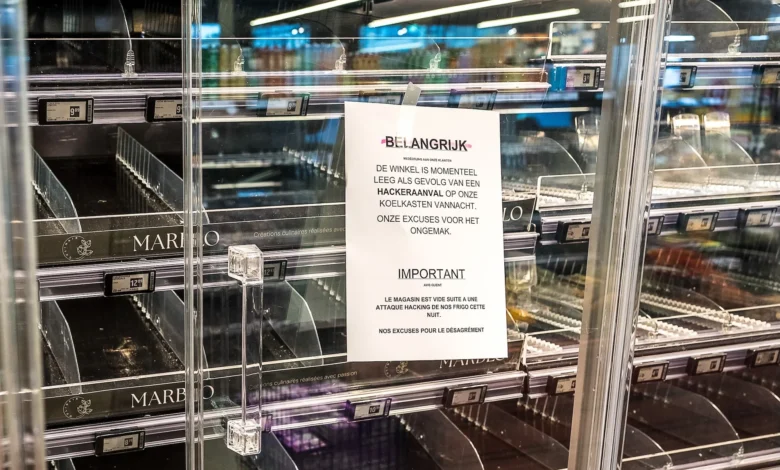
French authorities have formally accused the Iranian government of orchestrating a sweeping, highly destructive campaign of cyberattacks targeting thousands of internet-connected industrial refrigeration and freezer units across France and the broader European continent. The disclosure marks a dramatic escalation in geopolitical tensions involving cyber warfare, shifting the battlefield from traditional corporate and government networks to critical civilian infrastructure, retail supply chains, and vital medical services.
According to statements delivered by high-ranking French officials, the operation was executed by proxies and military factions linked directly to Tehran. The attacks, which unfolded primarily through two coordinated waves in October and November, represent the first time a foreign hostile state has launched a large-scale act of physical sabotage directly on French soil using digital intrusion vectors. As governments across Europe and North America grapple with the rising tide of state-sponsored cyber operations, the weaponization of commercial cold-chain infrastructure has exposed critical vulnerabilities in the modern Internet of Things (IoT).
Anatomy of the Refrigeration Sabotage and Supply Chain Disruption
The cyber campaigns relied on remote exploitation vulnerabilities inherent in web-based controllers—the digital brains that regulate industrial chilling units, grocery store display cases, and large-scale warehouse refrigeration systems. Hackers managed to infiltrate these centralized management interfaces, systematically raising internal temperatures to induce widespread spoilage.
Throughout October and November, major retail supermarkets and commercial food distribution centers across multiple European nations reported the sudden, unexplained failure of their refrigeration arrays. Tons of perishable food inventory were rendered unsalvageable, resulting in millions of euros in commercial losses and heightening anxieties regarding food security.
Beyond retail grocery chains, the cyberattackers targeted vital medical infrastructure. Investigators confirmed that web-based temperature-control units used by the French Blood Establishment (Établissement Français du Sang) were successfully breached. While critical blood banks and plasma storage facilities were targeted, automated fail-safes and rapid intervention by security personnel successfully intercepted the intrusion before internal temperatures could compromise stored blood products. Had those efforts failed, the humanitarian toll of the sabotage could have been catastrophic.
Security researchers investigating the incidents highlighted that many of the targeted web-based controllers—including several legacy models manufactured by Danish industrial giant Danfoss—suffered from known, unpatched vulnerabilities. Alarmingly, some of the compromised hardware no longer received vendor security updates, leaving operators completely exposed to automated scanning and remote exploitation.
Chronology of Escalation: A Timeline of Pro-Iranian Cyber Aggression
The operation against European cold storage is not an isolated incident; rather, it represents the latest escalation in an aggressive pattern of state-sponsored cyber disruptions attributed to Iran and its affiliated proxy networks throughout the year. The timeline of escalating hostilities includes:
- February: Following a joint United States and Israeli military campaign against Iran that resulted in the death of its supreme leader, state-backed and pro-Iranian hacktivist groups vowed asymmetric digital retaliation against Western targets.
- March: US medical device manufacturer Stryker suffered a massive cyber incident in which pro-Iranian hackers wiped thousands of employee devices, causing widespread operational disruption across its corporate and manufacturing networks.
- April: Federal cybersecurity agencies in the United States issued urgent warnings regarding persistent Iranian state-sponsored actors targeting American critical infrastructure, specifically focusing on municipal water and wastewater treatment facilities.
- October through November: A massive, synchronized wave of cyberattacks struck European commercial and institutional refrigeration networks, affecting supermarkets, cold-chain logistics hubs, and medical blood storage units in France and neighboring countries.
- November 9: Investigative reporting by Reuters revealed that French intelligence agencies suspected Iranian state involvement in the refrigerator hacks, prompting an emergency diplomatic and security response in Paris.
- November 10: French Foreign Minister Jean-Noël Barrot formally attributed the attacks to the Islamic Revolutionary Guard Corps (IRGC) during a press briefing in Paris, announcing sweeping retaliatory measures.
Official Responses and Diplomatic Fallout
The response from the French government has been swift, uncompromising, and multifaceted. During a formal statement given to reporters in Paris on Monday, French Foreign Minister Jean-Noël Barrot confirmed the state attribution with unequivocal language.
"I am able to confirm that responsibility for this act lies with the Islamic Revolutionary Guard Corps," Barrot stated, explicitly pointing to Iran’s premier military and intelligence apparatus. "This was an attack of unprecedented scale and aggression; it represents the first large-scale act of sabotage on our national territory and constitutes a major assault on the nation’s interests and the security of the French people."
Emphasizing that the aggression would not be tolerated, Barrot declared that the incident would "not go without consequences." In response to the breach of national sovereignty, the French Ministry for Europe and Foreign Affairs immediately summoned the Iranian ambassador to Paris to issue a formal diplomatic reprimand.
Furthermore, Paris announced its intention to spearhead a coordinated diplomatic effort within the European Union to impose severe European-wide sanctions targeting the specific military units, front companies, and individuals responsible for executing the cyber sabotage. French judicial authorities have also launched a formal criminal investigation, transferring the complex technical evidence into the hands of the national counterterrorism and cybercrime prosecution units.
International Implications and Transatlantic Spillover
The shockwaves from the European refrigeration hacks have extended across the Atlantic, prompting heightened vigilance within the United States military and intelligence communities. Reports indicate that U.S. federal authorities are actively investigating whether similar cyber intrusions targeted military base commissaries and base operational freezers.
Earlier in the year, military personnel and base administrators reported unexplained temperature anomalies and sudden cooling unit failures at various domestic and international installations. While U.S. intelligence officials have privately echoed European suspicions linking these mysterious freezer failures to Iranian cyber operations, the formal U.S. intelligence apparatus has yet to issue a public, codified attribution.
The reluctance of Western intelligence agencies to immediately point fingers typically stems from the complex operational security protocols required to protect sensitive signals intelligence (SIGINT) sources and methods. However, the alignment of methodology between the European supermarket hacks and domestic U.S. infrastructure probes suggests a centralized command structure directing these asymmetric operations.
Fact-Based Analysis: The Strategic Logic of Cold-Chain Sabotage
To understand why a nation-state would target commercial refrigerators and medical freezers, analysts must examine the strategic calculus of modern asymmetric warfare. Traditional cyber warfare has historically focused on espionage, intellectual property theft, or high-profile ransomware extortion campaigns against enterprise IT systems. However, as Western defensive postures around corporate IT networks have matured, hostile actors have shifted their focus toward Operational Technology (OT) and Internet of Things (IoT) ecosystems.
Cold-chain infrastructure represents an asymmetrical soft target for several critical reasons:
- High Interconnectivity: Modern commercial refrigeration fleets rely heavily on cloud-managed dashboards and remote monitoring software to optimize energy consumption and regulatory compliance. This widespread connectivity often creates unsecured digital backdoors.
- Legacy Hardware Vulnerabilities: Industrial control devices often have long operational lifecycles, remaining in service for decades long after the original equipment manufacturers have ceased issuing firmware patches and security updates.
- Societal Disruption: By targeting food distribution networks and medical supply chains, malicious actors can inflict tangible economic damage and psychological distress on civilian populations without crossing the threshold of kinetic military conflict. The destruction of perishable goods directly tests the resilience of urban supply chains and consumer confidence.
The weaponization of civilian infrastructure signals a dangerous evolution in state-sponsored cyber warfare. By intentionally targeting the refrigeration units that keep food fresh and medicines viable, hostile actors have demonstrated a willingness to inflict direct harm on civilian populations in pursuit of geopolitical leverage.
As France pushes for unified European sanctions and prepares to take legal action through its judicial system, the international community faces a difficult challenge. Securing the sprawling, hyper-connected landscape of industrial IoT devices will require unprecedented cooperation between governments, software vendors, and private enterprise operators. Until these systemic vulnerabilities are systematically addressed, critical civilian infrastructure will remain dangerously exposed to the shifting currents of international conflict.