Florence Pugh Addresses the Consequences of Public Advocacy Amidst Global Conflict

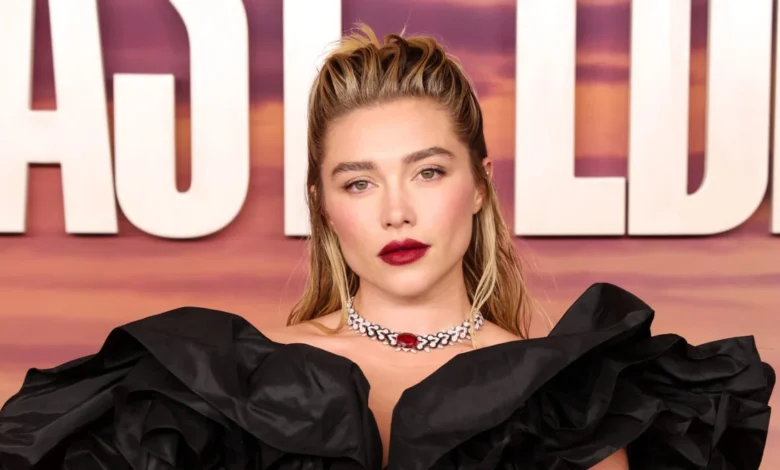
Florence Pugh, the Academy Award-nominated actress currently at the center of high-profile projects ranging from Netflix’s East of Eden to Marvel’s Avengers: Doomsday, has broken her silence regarding the personal and professional toll of her outspoken support for Palestine. In a comprehensive cover story for Vanity Fair, the 28-year-old performer candidly addressed the widespread backlash she faced, including the loss of hundreds of thousands of social media followers, and clarified her motivations for refusing to remain silent on the ongoing humanitarian crisis.
The Catalyst for Advocacy
The discourse surrounding Pugh’s stance stems from her appearance at the "Together for Palestine" event held in London this past September. During the event, which brought together activists, artists, and humanitarian workers, Pugh took the stage to articulate a position that many in the entertainment industry have found polarizing.
"Silence in the face of such suffering is not neutrality, it is complicity," Pugh stated during the event. "Empathy should not be this hard, and it should have never been this hard."
Her comments, which were documented and subsequently shared across social media platforms, served as a lightning rod for criticism. In the months that followed, Pugh observed a significant decline in her digital audience. While celebrity social media metrics are often fluid, the scale of the drop—estimated by the actress to be in the hundreds of thousands—highlights the volatile intersection of celebrity branding and geopolitical activism.
Chronology of Public Statements
The timeline of Pugh’s engagement with the issue reflects a shift in how A-list talent navigates the pressures of global instability. Since the escalation of the conflict in Gaza in October 2023, the entertainment industry has faced intense scrutiny regarding its perceived silence or vocal participation.
- October 2023: Following the initial outbreak of large-scale violence, various industry organizations and talent agencies began drafting internal memos regarding the "proper" way to address the conflict.
- September 2024: Pugh attends the "Together for Palestine" event, marking one of her most direct public interventions.
- Late 2024 to Early 2025: Pugh continues to field questions regarding her advocacy, culminating in her recent Vanity Fair profile, where she clarifies that her team never discouraged her from speaking out.
For many observers, the fact that Pugh’s management team did not intervene is notable. In an industry where "risk mitigation" is often the primary goal of public relations, the lack of a "gag order" suggests a evolving relationship between stars and their representatives regarding social responsibility.
The Burden of Empathy in a Digital Age
During her interview with Vanity Fair, Pugh expressed a sentiment shared by many Gen Z and Millennial creators: the profound cognitive dissonance of living a public, glamorous life while simultaneously being exposed to real-time imagery of human suffering.
"Babies are still dying. Mothers are still in pain," Pugh remarked. "It’s really horrible to be watching such pain when so much of our lives just seem to be moving forward. I think that’s what I’ve found so difficult about social media as well: How can I say I’m having a really good time when literally one scroll up, I’m looking at a baby that’s motherless and fatherless?"
This psychological weight has led to a broader trend of "digital fatigue" among high-profile celebrities. While some choose to opt out of the conversation entirely to preserve their brand equity, Pugh argued that the widespread silence from her peers only served to strengthen her resolve. She noted that the lack of public discourse from others made her feel "even more confused—and kind of probably even more in the right to talk about it."
Professional Implications and Industry Context
Pugh is currently navigating an incredibly busy professional calendar. With the October 1 release of East of Eden and the highly anticipated December 18 premiere of Avengers: Doomsday, she remains one of the most bankable stars in Hollywood. Historically, public political stances have been perceived as "career risks" for actors headlining billion-dollar franchises. However, the data on whether such stances actually impact box office performance remains inconclusive.
Industry analysts suggest that the "cancel culture" phenomenon is often overstated when applied to actors with established fan bases. While a portion of a follower count may fluctuate, the core audience that engages with high-budget films like Dune: Part Three is often motivated by the quality of the project rather than the political alignment of the lead performer.
Nevertheless, the pressure to remain "neutral" is a fixture of the studio system. Pugh’s disclosure that she had to coordinate her attendance at the protest around the demanding production schedule of the next Avengers film underscores the logistical hurdles performers face when trying to balance activism with their contractual obligations.
The Broader Impact on Celebrity Activism
The reaction to Pugh’s comments serves as a case study for the changing expectations of the modern celebrity. Where previous generations of actors were often advised to adopt a "Swiss-style" neutrality, the current generation is increasingly expected—by both their fans and their own moral compasses—to account for the world outside their studio sets.
The humanitarian situation in Gaza has proven to be an inflection point. Organizations like the United Nations and various international relief groups have provided consistent reports on the scale of the crisis, noting that the civilian population in Gaza is facing unprecedented levels of food insecurity and medical infrastructure collapse. By lending her platform to this narrative, Pugh has contributed to the mainstreaming of a topic that some studios might prefer to keep within the realm of news organizations rather than influencer feeds.
Analysis: Neutrality vs. Complicity
The debate sparked by Pugh’s statement—"Silence is not neutrality, it is complicity"—is a philosophical argument that has echoed through historical human rights movements. In the context of the 21st-century internet, this argument posits that algorithms reward engagement and suppress controversial topics, meaning that by not posting, an individual is effectively allowing the dominant narrative to go unchallenged.
However, critics of celebrity activism argue that performers often lack the nuance required for such complex geopolitical issues, and that their influence may simplify or distort the reality of the situation. Despite these critiques, Pugh remains firm in her assessment that the cost of being "scared" is too high.
"I don’t know why it took so long for people to start talking and for people to actually feel sympathy," she told the publication. "But no, I was never scared of it."
Looking Ahead: The Intersection of Art and Conscience
As Pugh prepares for a massive end-of-year run in theaters, the industry will be watching to see if her outspokenness impacts the marketing rollouts of her upcoming projects. Yet, the evidence thus far suggests that her career trajectory remains largely unaffected. This may signal a shift in Hollywood, where audiences are becoming increasingly comfortable with performers who possess strong convictions, regardless of whether those convictions align with the mainstream consensus.
As the situation in the Middle East continues to evolve, the challenge for public figures like Pugh will be to maintain their voice without being reduced to "soundbites" or being consumed by the very digital platforms they seek to use for change. For now, Pugh appears comfortable with the trade-off, prioritizing her moral clarity over the preservation of her follower count—a choice that marks a distinct departure from the traditional celebrity playbook.
Ultimately, the conversation initiated by Pugh highlights the friction between the ephemeral nature of celebrity culture and the enduring, tragic reality of global conflict. Whether this leads to a new standard of accountability in Hollywood or remains a singular act of defiance by an individual star, it has undeniably reshaped the public perception of Florence Pugh, moving her beyond the role of the performer and into the role of the public participant.