Critical WordPress Core Vulnerability wp2shell Enables Pre-Authentication Remote Code Execution on Millions of Websites

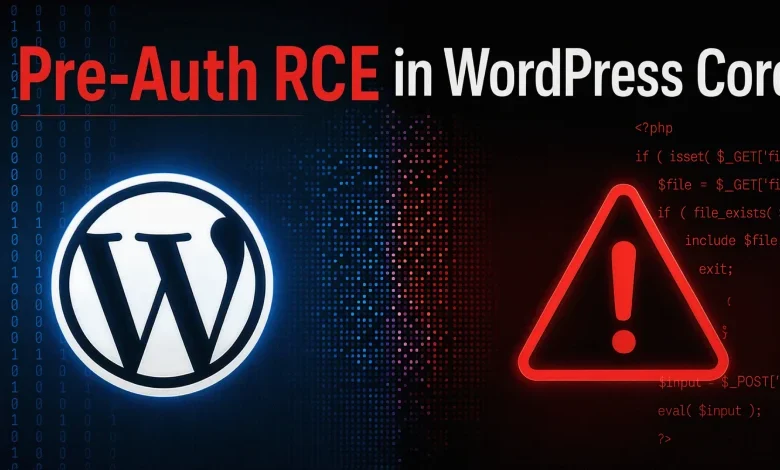
The global cybersecurity landscape faced a significant disruption this week following the discovery of a critical vulnerability in the core files of WordPress, the world’s most popular content management system. Dubbed "wp2shell" by the researchers who identified it, the flaw allows an anonymous attacker to execute arbitrary code on a target server via a single, unauthenticated HTTP request. Because the vulnerability resides within the WordPress core software rather than a third-party plugin or theme, even a default "out-of-the-box" installation with zero additional software is susceptible to exploitation. The vulnerability affects a substantial portion of the modern WordPress ecosystem, specifically targeting versions 6.9 and 7.0.
In a rapid response to the discovery, the WordPress security team released emergency updates on July 17, 2026. Versions 6.9.5 and 7.0.2 were deployed to close the pre-authentication Remote Code Execution (RCE) gap. To ensure the widest possible coverage and minimize the window of opportunity for threat actors, WordPress utilized its centralized auto-update system to push "forced updates" to affected sites. Despite these measures, the incident highlights the ongoing challenges of securing open-source infrastructure that powers nearly half of the internet.
Technical Breakdown of the wp2shell Vulnerability
The wp2shell vulnerability was discovered by Adam Kues, a researcher at Searchlight Cyber’s attack surface management division, Assetnote. The flaw was reported through the official WordPress bug bounty program hosted on HackerOne. According to the technical summary provided by Assetnote, the vulnerability stems from a "REST API batch-route confusion" combined with a "SQL injection issue."
The WordPress REST API, which has been a staple of the platform since version 4.7, introduced a batching framework in version 5.6 (November 2020). This framework allows developers to bundle multiple API requests into a single HTTP call, improving performance for complex applications and "headless" WordPress configurations. However, a logic error in how the core handles these batched requests allowed for a confusion of routes. By crafting a specific sequence of instructions within a batch request, an anonymous user could bypass standard authentication checks and inject malicious SQL queries into the database layer.
The transition from SQL injection to Remote Code Execution is a classic escalation path in web security. By gaining unauthorized access to the database, an attacker can potentially modify administrative settings, create new high-privileged users, or manipulate option tables to execute PHP code on the underlying server. Because the attack requires no valid credentials or specific site configurations, it represents the highest tier of severity in web application security.
Chronology of Discovery and Remediation
The timeline of the wp2shell incident underscores the speed at which modern vulnerability management must operate. While the specific date of Kues’s initial report to HackerOne remains confidential under the program’s terms, the public remediation process began in earnest in mid-July 2026.
On July 17, 2026, the WordPress core team finalized the patches for the two affected branches. The release of WordPress 7.0.2 and 6.9.5 was accompanied by an official announcement that characterized the fix as a critical security update. Simultaneously, the 7.1 beta2 release was updated to include the same protections, ensuring that developers working on the bleeding edge of the platform were not left exposed.

Following the release of the patches, Assetnote published a preliminary write-up. In an effort to protect the ecosystem while providing site owners with tools for verification, the firm launched a dedicated checker at wp2shell.com. This tool allows administrators to test their instances for the vulnerability without revealing the underlying exploit mechanics. As of July 18, 2026, technical details and proof-of-concept (PoC) code have been withheld to allow the auto-update mechanism time to reach the majority of the install base.
Scope of Impact and Affected Versions
The impact of wp2shell is dictated by the specific versions of WordPress core that introduced the flawed logic. While the REST API batching framework has existed for years, the specific "route confusion" bug only manifests in versions released from late 2025 onwards.
The vulnerable range begins with WordPress 6.9, which was originally shipped on December 2, 2025. Consequently, any site running a version between 6.9 and 7.0.1 was at risk until the July 17 patch. Sites still running older legacy branches, such as 6.8, were not affected by this specific RCE, although WordPress did release version 6.8.6 simultaneously to address a separate, high-severity SQL injection bug reported by a different research team.
Estimates from Searchlight Cyber suggest that WordPress powers over 500 million websites globally, representing roughly 43% of all sites on the internet. While only the most recent versions (less than eight months old) are vulnerable to wp2shell, the rapid adoption of new WordPress releases means the affected population likely numbers in the tens of millions. This includes corporate blogs, e-commerce platforms, and government portals that prioritize staying on the latest software branch for performance and feature benefits.
The Absence of CVE Identification
One of the most unusual aspects of the wp2shell disclosure is the lack of a Common Vulnerabilities and Exposures (CVE) identifier in the initial 48 hours following the patch. Typically, critical core vulnerabilities in major software projects are assigned a CVE ID to facilitate tracking across security scanners, firewalls, and enterprise inventory systems.
The absence of a CVE-2026 designation means that many automated vulnerability management tools and "security-as-a-code" pipelines may fail to flag vulnerable WordPress instances. Furthermore, the Cybersecurity and Infrastructure Security Agency (CISA) cannot add the flaw to its "Known Exploited Vulnerabilities" (KEV) catalog without a formal CVE record. This creates a visibility gap for organizations that rely solely on CVE-keyed databases for their risk assessment. Security experts advise administrators to track their security posture by version number (6.9.5/7.0.2) rather than waiting for a CVE to appear in their dashboards.
Official Responses and Industry Reaction
The WordPress core team has been characteristically concise in its public statements. The official release post for version 7.0.2 credited Adam Kues for his contribution but provided minimal details on the exploit vector, a common practice designed to delay the development of functional exploits by malicious actors.
The industry reaction, however, has been one of high alert. Security firms have noted that "mass exploitation" of WordPress has become a streamlined industry. Recent history provides a grim precedent: in June 2026, the "WP-SHELLSTORM" hacking collective was found to have compromised over 17,000 sites using a vulnerability in a popular caching plugin. A core vulnerability like wp2shell, which requires no specific plugin to be present, offers an even larger "force multiplier" for botnet operators and ransomware affiliates.

"The danger of a core RCE cannot be overstated," said one independent security analyst. "When the bug is in the core, the attack surface is the entire WordPress ecosystem. The only thing standing between a site and a total takeover is the speed of the auto-update mechanism."
Mitigation Strategies and Defensive Measures
For administrators who cannot immediately update to 7.0.2 or 6.9.5—or for those who have disabled the WordPress auto-update system—mitigation is a matter of urgent necessity. Assetnote and other security researchers have proposed several stopgap measures intended to "shield" the vulnerable REST API endpoint until a full patch can be applied.
- Restricting REST API Access: The most effective temporary mitigation is to restrict access to the REST API batch endpoint (
/wp-json/batch/v1). This can be achieved through Web Application Firewall (WAF) rules or server-level configurations (such as .htaccess for Apache or Nginx configuration blocks) that block requests to this specific path from untrusted IP addresses. - Disabling Batching via Filters: Developers can use WordPress filters to programmatically disable the batching functionality. While this may break certain administrative features or integrations that rely on the REST API, it effectively closes the door on the wp2shell attack vector.
- Enhanced Monitoring: Security teams are encouraged to monitor server logs for unusual traffic patterns directed at the REST API. Specifically, an influx of complex, multi-part POST requests to the batch endpoint from anonymous sources should be treated as a high-priority security event.
It is important to note that these mitigations are considered temporary. The "forced push" of updates by WordPress is the primary defense, but site owners are urged to verify their version number manually. There remains uncertainty regarding whether the forced update reaches sites that have explicitly opted out of the auto-update system via wp-config.php settings.
Analysis of Implications for Open Source Security
The wp2shell incident brings the "Open Source Security Paradox" into sharp focus. Because WordPress core is open-source, the patches released on July 17 are publicly available for inspection. By comparing the code of version 7.0.1 with 7.0.2, any skilled developer—or attacker—can identify the exact lines of code that were changed. This effectively provides a "map" to the vulnerability.
In previous instances, such as the Drupal core SQL injection of May 2026, researchers were able to produce a working proof-of-concept exploit within 24 hours of the patch being released. This creates a literal race against time. The WordPress security team relies on the fact that their auto-update system can reach millions of sites faster than an attacker can reverse-engineer the patch and weaponize it at scale.
Furthermore, the discovery of a "batch-route confusion" bug suggests that as web applications become more complex—moving toward "API-first" architectures—the logic governing how those APIs interact becomes a critical and often overlooked attack surface. The wp2shell flaw was not a simple coding error but a complex interaction between the REST API’s routing logic and the core database query engine.
Conclusion
As of July 18, 2026, no widespread exploitation of wp2shell has been confirmed in the wild. However, the cybersecurity community remains on high alert. The combination of a pre-authentication RCE, a massive target base, and the lack of traditional CVE tracking makes this one of the most significant web security events of the year.
The event serves as a reminder of the vital role played by bug bounty programs and independent researchers like those at Assetnote. Without a coordinated disclosure process, a flaw of this magnitude could have been weaponized by state-sponsored actors or organized cybercrime groups long before a patch was developed. For now, the focus remains on ensuring that the global fleet of WordPress servers successfully transitions to versions 7.0.2 and 6.9.5, closing the door on one of the most potent core vulnerabilities in the platform’s history.
Related posts: