AWS Weekly Roundup: Local Zone in Athens, Claude Opus 5 on AWS, Lambda durable execution for .NET, and more (July 27, 2026) | Amazon Web Services


The Strategic Shift Toward Edge Computing
The expansion into Athens is not an isolated event but rather a component of a broader, multi-year initiative by AWS to reduce the physical distance between compute resources and the end-user. Modern digital services, particularly those requiring single-digit millisecond latency, have historically faced challenges when relying solely on distant regional data centers. By deploying Local Zones—a type of infrastructure deployment that places compute, storage, database, and other select services closer to large population, industry, and IT centers—AWS is effectively enabling developers to meet stringent performance requirements that were previously difficult to achieve in the region.
The Athens Local Zone is equipped with current-generation hardware, including C7i, M7i, and R7i instances. These instances are powered by custom-designed silicon, specifically Intel Xeon Scalable processors, which are optimized for high-performance computing (HPC), data analytics, and general-purpose business applications. Furthermore, the inclusion of the S3 One Zone-Infrequent Access storage class provides a cost-effective tier for customers who require local data availability without the overhead of maintaining legacy on-premises hardware.
Strengthening Latin American Builder Communities
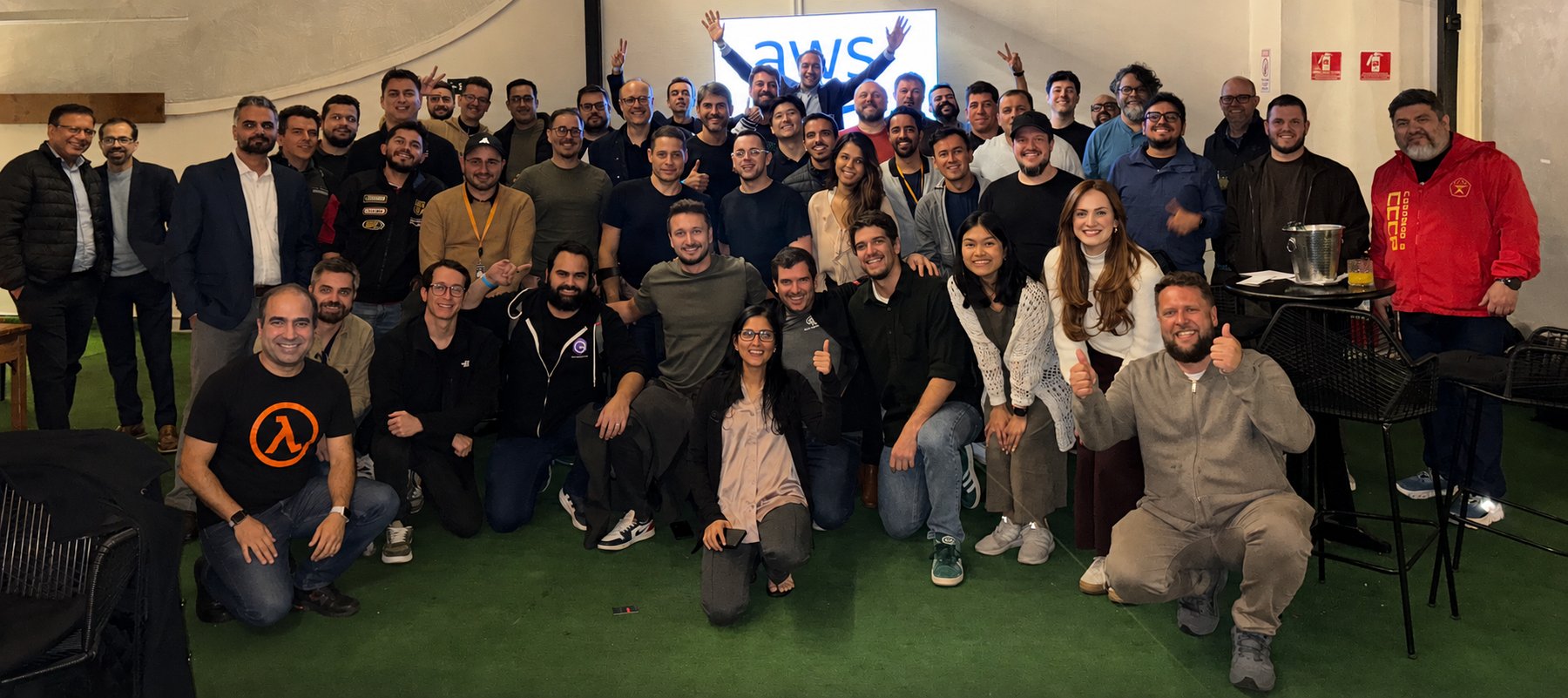
While the Athens announcement dominated the headlines, the broader context of AWS’s strategy is currently being defined by its commitment to regional developer ecosystems. A recent three-day summit in São Paulo, Brazil, served as a focal point for this strategy, gathering thousands of technical builders from across Latin America. The event highlighted a shift in cloud adoption patterns, where peer-to-peer knowledge sharing and collaborative architecture design are becoming as vital to project success as the underlying infrastructure itself.
Industry analysts observe that such regional summits act as a barometer for cloud adoption maturity. In Latin America, the focus has transitioned from simple "lift-and-shift" migrations to complex, cloud-native architectures involving serverless computing, artificial intelligence, and real-time data streaming. The energy observed in São Paulo underscores a growing trend: developers are increasingly prioritizing "stickiness"—the ability of a cloud ecosystem to provide not just the raw tools, but the community support and educational pathways required to maintain complex systems over long periods.

Chronology of AWS Infrastructure Expansion
AWS has maintained a consistent pace of expansion since the inception of the Local Zone program. The strategy has consistently followed a pattern of identifying high-growth urban hubs and systematically deploying infrastructure that bridges the gap between global regions and local end-users.
- Early 2020s: AWS introduces the concept of Local Zones, initially targeting major U.S. metropolitan areas to support the burgeoning demand for real-time media and gaming applications.
- 2023-2024: The program experiences rapid international scaling, with deployments spanning Asia-Pacific, South America, and Europe.
- July 2026: The launch of the Athens, Greece Local Zone is finalized, addressing the specific regulatory and performance needs of the Southeastern European market.
- August 2026: Following the expansion, AWS shifts focus toward integrating these local nodes with global sustainability initiatives, ensuring that local infrastructure meets the same carbon-neutrality goals as their primary global regions.
Technical Implications and Market Impact
The deployment in Greece is particularly significant for sectors governed by strict data residency regulations, such as financial services and public healthcare. By providing the capability to process and store data entirely within national borders, AWS allows organizations in Greece to adopt cloud technologies while remaining compliant with local and European Union-wide data protection mandates.
From a technical perspective, the Athens facility supports a wide array of AWS services beyond compute and storage. Amazon Elastic Container Service (ECS) is fully supported, enabling local companies to orchestrate containerized microservices with minimal network jitter. This is critical for industries like financial trading, where microsecond-level delays can have significant economic consequences, and media production, where high-bandwidth, low-latency rendering is a prerequisite for professional workflows.
Market observers suggest that the move effectively lowers the barrier to entry for Greek startups and SMEs. Previously, these entities might have been forced to invest in costly, dedicated data center infrastructure to maintain acceptable performance levels. With the availability of AWS Local Zones, these organizations can transition to an OpEx (operating expense) model, leveraging the elasticity of the cloud without sacrificing speed.
Addressing the Sustainability Mandate
A core pillar of the current AWS infrastructure strategy is the "Infrastructure Sustainability" requirement. As the company expands into smaller metropolitan zones, the environmental footprint of these deployments is under increasing scrutiny. According to AWS’s recent global infrastructure reports, the Athens expansion adheres to the company’s internal "Climate Pledge," utilizing advanced cooling technologies and power-efficient hardware to ensure that local compute density does not translate to an unsustainable increase in energy consumption.
The shift toward local zones also contributes to overall energy efficiency by reducing the distance data must travel across the public internet. By terminating traffic at the edge, AWS optimizes network routing, which, in turn, reduces the power required for wide-area network (WAN) data transmission.
Future Outlook and Developer Engagement
The ongoing development of the AWS Builder Center represents the final piece of this strategic puzzle. As the physical infrastructure reaches new geographic markets, the company is concurrently scaling its educational and community outreach. The Builder Center provides a centralized repository for documentation, architecture patterns, and collaborative forums, ensuring that a developer in Athens has the same level of support and technical guidance as a developer in a traditional tech hub like Silicon Valley or Seattle.
For the remainder of 2026, industry expectations point toward further announcements concerning "Outposts" and "Local Zones" in emerging markets. The overarching message from AWS leadership is clear: the future of cloud computing is not just centralized in massive, remote regions, but is increasingly distributed, localized, and embedded directly within the communities it serves.
As the technology continues to evolve, the challenge for AWS will be maintaining consistent service parity across an increasingly fragmented infrastructure map. However, with the current trajectory of the Athens deployment and the continued investment in regional summits, the company appears well-positioned to maintain its market dominance by focusing on the intersection of high-performance hardware and the human element of technical innovation. Organizations looking to leverage these new capabilities are encouraged to review the latest documentation on the AWS "What’s New" portal, which remains the primary source for real-time updates regarding service availability and feature enhancements in the newly launched zones.
Related posts: