AWS Announces Enhanced Custom Event Bus for Amazon EventBridge to Revolutionize Scalable Event-Driven Architectures

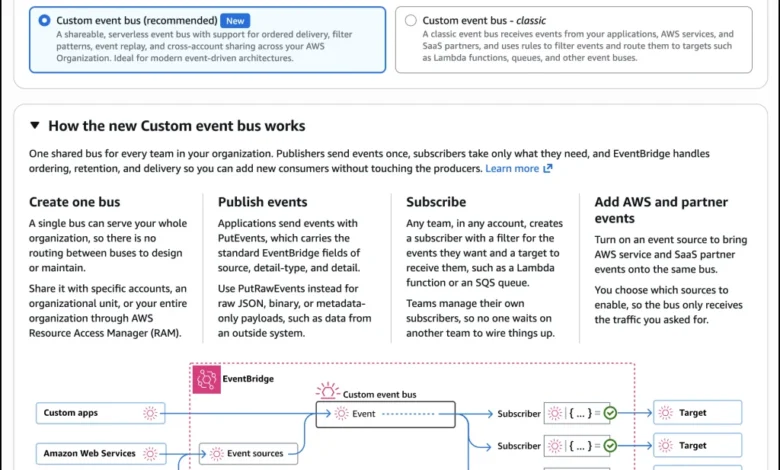
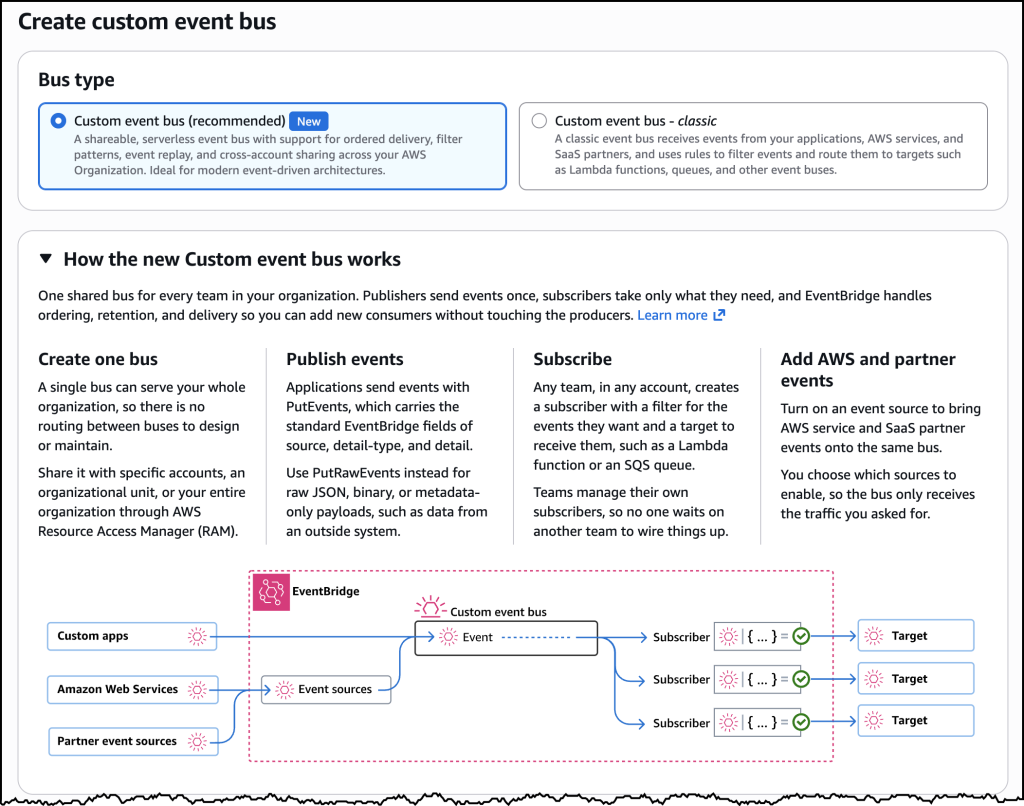
Organizations building event-driven applications on Amazon EventBridge have long grappled with the operational friction inherent in scaling across multi-account environments. Historically, developers began with a single custom event bus within one account, a model that functioned seamlessly for isolated teams. However, as organizations expanded their cloud footprint and adopted best practices—specifically the multi-account structure recommended by the AWS Well-Architected Framework—this simplicity evaporated. Today, Amazon Web Services is addressing these systemic bottlenecks by introducing an enhanced custom event bus for Amazon EventBridge, designed to provide a centralized, high-performance backbone for enterprise-wide event-driven architectures.
The Evolution of Event-Driven Scaling
For years, the standard approach to cross-account communication involved complex webs of event buses connected via cross-account rules or intricate bus-to-bus configurations. This workaround, while functional, introduced significant operational overhead. Platform teams found themselves struggling with limited visibility into event subscriptions, while the compounding costs of multi-bus routing became a financial concern for growing enterprises. Furthermore, the lack of native event ordering on traditional buses forced developers to engineer cumbersome custom solutions or adopt third-party technologies to ensure data integrity in sequence-sensitive applications.
The introduction of the enhanced custom event bus marks a pivotal shift in how AWS handles event distribution. By enabling a single, centralized event bus to be shared across an entire AWS organization, AWS is effectively moving away from the fragmented routing models that have dominated serverless architecture for the better part of a decade.

Key Technical Innovations
The new enhanced custom event bus introduces several critical capabilities aimed at reducing architectural complexity:
- Native Event Ordering: For use cases where sequence is paramount—such as logistics tracking or financial transaction processing—the new bus supports ordered delivery. By utilizing an
EventGroupId, publishers can ensure that events are delivered in the precise order they were generated. This eliminates the need for developers to insert SQS queues as buffers between EventBridge and downstream targets like AWS Lambda. - Unified Subscriber Resource: The new Subscriber resource streamlines configuration by consolidating event filtering, target definitions, retry policies, and dead-letter queue (DLQ) settings into a single, manageable entity. This replaces the legacy method of managing multiple disparate rules and targets.
- Content-Based Deduplication: Addressing the at-least-once delivery challenge, the enhanced bus now offers content-based deduplication. By hashing event payloads, EventBridge can automatically identify and discard duplicate events within a five-minute window, providing exactly-once delivery semantics for sources that lack native idempotency tokens.
- Advanced Payload Transformation: Through native integration with JSONata, subscribers can reshape event data before it reaches the target. This capability reduces the need for intermediary compute layers, as teams can extract, rename, or compute values directly at the bus level. Furthermore, the bus now supports deserialization of Apache Avro and Protocol Buffers, allowing for efficient filtering on binary-formatted events.
Streamlined Governance via AWS RAM
The integration with AWS Resource Access Manager (AWS RAM) is perhaps the most significant change for platform administrators. Instead of manually managing complex IAM policies and cross-account permissions, administrators can now share a single bus across an entire organization, organizational unit (OU), or specific IAM roles. This centralized governance model ensures that platform teams maintain visibility into event flows while empowering individual development teams to consume only the data they require. With a default quota of 10,000 subscribers per bus, the new model effectively removes the artificial constraints that previously necessitated the creation of multiple, fragmented buses.
Economic Implications and Cost Structure
The financial model surrounding Amazon EventBridge has been overhauled to better align with enterprise-scale usage. Under the legacy model, costs could escalate rapidly due to the accumulation of routing charges in multi-bus architectures. The new pricing structure shifts to an ingress and egress throughput model. Publishers are charged based on the volume of events ingested, and subscribers pay for the volume of events delivered. This shift provides a more predictable and transparent cost-allocation mechanism, allowing organizations to map infrastructure spend directly to the specific teams producing and consuming events.
Industry Context and Strategic Shift
The release of the enhanced custom event bus is a direct response to the maturing needs of enterprise cloud users. As companies move from "cloud-first" to "cloud-native" operations, the demand for high-throughput, low-latency event backbones has surged. Industry analysts have noted that the "event-driven" paradigm is currently the most requested architectural pattern for serverless applications. However, the "Day 2" operations—monitoring, scaling, and maintaining those architectures—have remained a primary pain point.

By providing a native, scalable alternative to the "bus-per-team" architecture, AWS is effectively commoditizing the infrastructure layer, allowing developers to focus on business logic rather than plumbing. The decision to keep "Custom event bus – classic" available ensures that existing workloads remain stable, while providing a clear path for organizations to migrate to the enhanced architecture at their own pace.
Implementation and Regional Availability
The enhanced custom event bus is available immediately in multiple AWS regions, including US East (N. Virginia, Ohio), US West (Oregon), Europe (Ireland, Frankfurt, Stockholm, Spain), and several Asia Pacific hubs. Deployment can be managed via the AWS Management Console, the AWS Command Line Interface (CLI), or through the EventBridge API.
For organizations currently managing dozens of cross-account buses, the transition to the enhanced model will likely require a strategic review of existing event flows. The capability to replay events and the introduction of variable start times for subscribers provide a robust framework for testing and migration, reducing the risk of downtime during the transition phase.
Broader Impact on Serverless Development
The architectural implications of this update are profound. By moving towards a centralized, ordered, and deduplicated event backbone, AWS is effectively raising the bar for what constitutes a "well-architected" serverless application. Organizations that adopt this enhanced model will likely see a reduction in the total number of managed resources, a decrease in the complexity of their IAM permission sets, and an improvement in the reliability of their asynchronous workflows.
As the industry continues to move toward event-driven microservices, the ability to maintain a single source of truth for events—without the overhead of custom routing logic—will be a significant competitive advantage. For platform engineers, this announcement is a welcome acknowledgment that as event-driven systems grow in complexity, the underlying infrastructure must evolve to provide simplicity, observability, and cost-efficiency as foundational, rather than optional, features.
This update effectively bridges the gap between the rapid prototyping phase of serverless development and the rigorous requirements of enterprise-scale production environments, signaling a new chapter for the Amazon EventBridge service and the broader serverless ecosystem.
Related posts: