The High Cost of AI Ambition: Why Natural Gas Power Plant Construction is Facing a Financial and Logistical Crisis

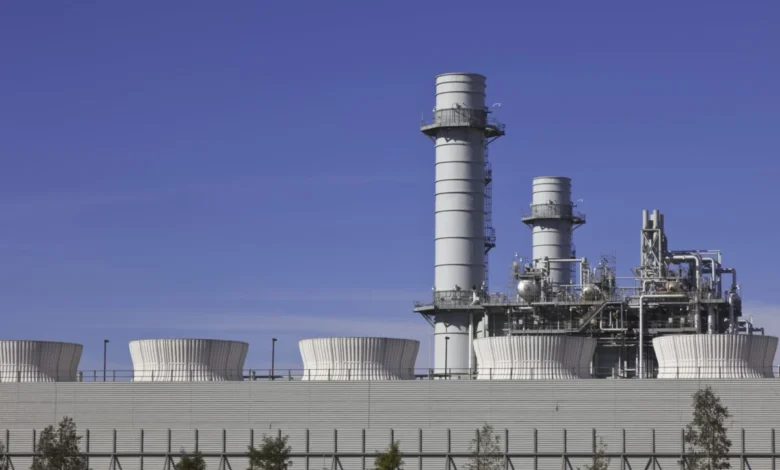
The race to dominate the artificial intelligence landscape has triggered an unprecedented surge in electricity demand, compelling tech giants like Microsoft and Meta to pivot toward fossil fuels to power their massive data centers. While these companies previously relied on wind and solar power purchase agreements to offset their carbon footprints, the relentless power requirements of modern AI have forced a shift toward firm, dispatchable energy. However, this aggressive expansion into natural gas is encountering a significant obstacle: the cost of building new combined cycle gas turbine (CCGT) power plants has skyrocketed, rising by 66% over the last two years.
According to a recent report by BloombergNEF, the capital expenditure required to construct these facilities has climbed from less than $1,500 per kilowatt of generating capacity in 2023 to $2,157 per kilowatt by the end of last year. Beyond the financial burden, the industry is grappling with severe project delays, with construction timelines stretching by 23%. This convergence of rising costs and logistical bottlenecks is beginning to reshape the strategic calculations of tech conglomerates and utility providers alike.
The Anatomy of an Energy Crisis
The rapid escalation in construction costs is primarily driven by a global supply-demand imbalance for critical infrastructure components. Natural gas turbines, which serve as the heart of these power plants, have become the most sought-after hardware in the energy sector. As tech companies compete with traditional utilities to secure power for their facilities, the price of these turbines has surged to nearly 195% above their 2019 levels.
This scarcity is exacerbated by the highly specialized nature of gas turbine manufacturing. The complex metallurgical and engineering requirements necessary to produce high-efficiency turbines prevent rapid scaling of production. Manufacturers are currently operating at near-full capacity, with order backlogs extending into the early 2030s. Consequently, even for companies with the deep pockets of a Big Tech firm, the ability to flip a switch and power a new AI cluster is no longer a matter of capital alone—it is a matter of queue positioning and long-term industrial supply chain stability.
Data Center Scaling: A Macro-Level Challenge
To understand the scale of the current crisis, one must look at the projected trajectory of data center growth. Current demand for electricity from data centers sits at approximately 40 gigawatts. However, industry forecasts indicate that this figure is set to balloon to 106 gigawatts by 2035—a nearly 300% increase.
The physical footprint of these facilities is also expanding. Historically, the industry was characterized by smaller, distributed data centers, with only about 10% of facilities exceeding 50 megawatts. The current trend, however, favors "hyperscale" operations. Within the next decade, the average data center is expected to exceed 100 megawatts, with many projects planning for hundreds of megawatts to sustain massive model training environments. This shift from small-scale efficiency to massive, power-hungry nodes has placed an unsustainable burden on existing regional power grids.

The Political and Public Friction Point
The tension between technological progress and energy security has spilled over into the public sphere. In the United States, the Trump administration has been vocal in encouraging data center operators to "bring their own power," effectively asking corporations to bear the burden of their own energy generation rather than relying on municipal grids.
However, the reality of utility regulation is complex. Even when tech companies attempt to build private power plants, utilities often socialize the costs of the necessary grid upgrades and transmission infrastructure by passing them on to residential and commercial customers. This dynamic has sparked a growing backlash among local communities. Residents in regions slated for large-scale data center development have increasingly protested, citing concerns over rising electricity rates and the environmental impact of local fossil fuel combustion. In several high-growth regions, municipal councils are now scrutinizing land-use permits more rigorously, slowing down projects that were once considered "shovel-ready."
Chronology of the Shift
- 2020–2022: Tech companies focus heavily on ESG goals, prioritizing renewable energy credits and power purchase agreements (PPAs) for solar and wind, maintaining a largely neutral stance on grid-side fossil fuel generation.
- 2023: The rapid deployment of Large Language Models (LLMs) triggers a massive, unforeseen surge in compute demand. Utility companies begin reporting record-breaking connection requests.
- 2024: Prices for natural gas infrastructure begin to climb as supply chains for turbines fail to keep pace with the sudden demand from the data center sector.
- 2025: BloombergNEF reports a 66% spike in CCGT construction costs. Public opposition intensifies in data center hubs, leading to regulatory bottlenecks.
- 2026 (Present): Companies like Google begin publicly pivoting toward alternative energy storage solutions, signaling a potential cooling of the "natural gas at any cost" strategy.
Diverging Strategies: The Google Approach
While Microsoft and Meta continue to navigate the volatile market for gas turbines, other industry leaders are exploring alternative pathways. Google, for instance, has begun implementing a strategy that pairs renewable energy with long-duration energy storage. By investing in technologies like iron-air batteries—such as those pioneered by Form Energy—the company aims to release stored electricity over periods as long as 100 hours.
This approach offers a hedge against the price volatility of gas turbines. Unlike fossil fuel infrastructure, where costs are currently climbing due to supply constraints, the cost of solar photovoltaic systems and advanced battery storage continues to trend downward, following the established learning curves of mature technologies. For firms concerned about long-term operational expenditure, this represents a shift from "fuel-dependent" infrastructure to "capital-intensive" infrastructure, which may prove more stable in a decade characterized by energy uncertainty.
Broader Economic Implications
The implications of this energy crunch extend far beyond the tech sector. If data center operators continue to aggressively bid up the price of natural gas turbines, other industries—including manufacturing and chemicals—may face rising energy costs as their own infrastructure needs become secondary to the AI boom.
Furthermore, the reliance on natural gas as a "bridge fuel" for AI introduces a paradox. Tech companies claim that their investments in new gas plants are necessary to support the transition to a digital, AI-driven future, yet the carbon intensity of these plants may undermine their own internal net-zero commitments. As the environmental cost of AI becomes clearer, the industry will likely face pressure to prove that its energy choices are not only economically viable but also consistent with global climate objectives.
Ultimately, the "love affair" between Big Tech and natural gas is being tested by the laws of supply and demand. As construction costs continue to rise and public scrutiny intensifies, the industry is entering a new phase of maturity. The winners of the next decade will likely be those who can successfully decouple their growth from the volatile and increasingly expensive market for fossil fuel power, potentially forcing a faster transition to next-generation energy storage and grid management technologies than previously anticipated.