The landscape of Business-to-Business (B2B) software marketing is undergoing a seismic shift, driven entirely by the rapid maturation and deployment of enterprise artificial intelligence. For decades, software evaluation followed a predictable, albeit opaque, playbook. Vendors relied on static analyst quadrants, meticulously curated feature checklists, third-party software review grids, and self-serving marketing collateral boasting exaggerated performance metrics. These traditional evaluation tools typically derived from vendor-supplied surveys, carefully choreographed product demonstrations, and qualitative customer interviews. Consequently, they were updated only once or twice a year, leaving buyers navigating a fast-moving technological ecosystem with outdated information.
Today, however, the proliferation of generative AI and autonomous software agents has rendered traditional marketing metrics largely obsolete. Unlike traditional software, where clicking a specific button in a Customer Relationship Management (CRM) platform yields identical deterministic results every time, AI agents are dynamic, probabilistic systems. An AI agent might deliver an exceptional, highly accurate response to a customer query on a Monday, yet hallucinate or fail completely on a Thursday following a quiet underlying model update by the vendor. This inherent volatility means that legacy feature checklists are completely incapable of capturing real-world performance, reliability, and accuracy.
Recognizing this critical market gap, industry leaders are beginning to champion a radical new standard of transparency: public, rigorous, and reproducible competitive evaluations. A prominent catalyst for this movement is Gorgias, a $100 million Annual Recurring Revenue (ARR) leader in ecommerce customer experience (CX) automation. Backed by the SaaStrFund during its seed round, Gorgias recently took the unprecedented step of open-sourcing its entire evaluation harness and publishing a comprehensive, live benchmark comparing its proprietary AI support agent against 18 competing vendors across thousands of real-world interactions. This bold move is setting a new precedent for how software providers must prove their value to increasingly skeptical enterprise buyers.
The Anatomy of a Modern AI Evaluation: Beyond Traditional Benchmarking
To understand the significance of public AI evaluations, or "evals," one must first distinguish them from conventional benchmarking. While traditional benchmarks measure theoretical capabilities in controlled, synthetic lab environments, an operational eval tests what a software product actually achieves in production environments.
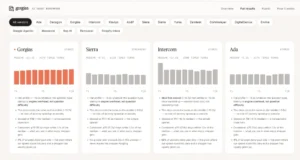
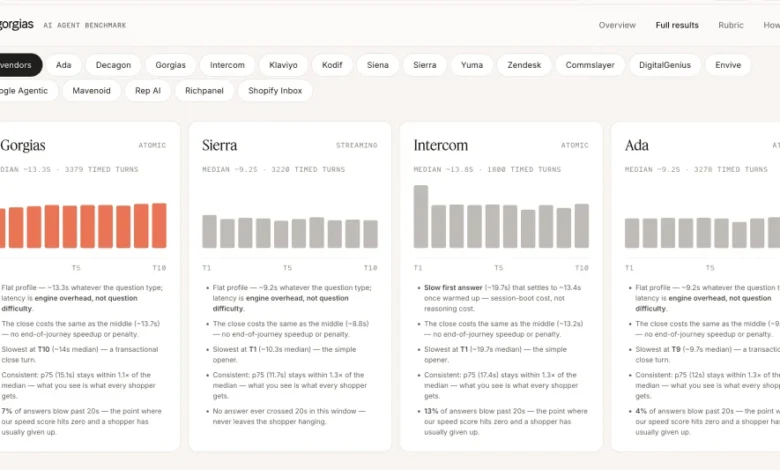
Gorgias’s recent benchmark report provides a masterclass in this methodology. Rather than relying on theoretical claims or gated PDFs, the company subjected its AI agent—along with offerings from 18 other market competitors—to a rigorous trial involving 8,356 live, historical customer support conversations. Each response generated by the competing agents was captured, documented, and systematically graded against a strictly defined, transparent written rubric.
Crucially, the evaluation did not paint a picture of unblemished dominance for the host company. While Gorgias secured the top overall position in general customer support capability, the published data transparently highlighted specific categories where competing solutions—such as rival agent Yuma and performance contender Envive—outperformed Gorgias in metrics like raw response latency and specific resolution rates. By publishing these competitive losses alongside their victories, Gorgias dismantled the illusion of perfection that typically plagues vendor-supplied marketing materials.
The Strategic Imperative of Transparency in B2B SaaS
The decision to publish exhaustive, unfiltered competitive evals is not merely an altruistic exercise in open-source collaboration; it is a calculated and highly effective strategic maneuver designed to align with modern buyer behavior. Industry analysts and venture capitalists point to several fundamental shifts in enterprise purchasing habits that make public evals an operational necessity for software vendors aiming to scale past $100 million in ARR.
First and foremost, contemporary B2B buyers have grown inherently cynical toward traditional marketing claims. Procurement officers and support leaders have been inundated with countless vendor comparison charts in which the publishing vendor invariably claims the top spot. When a software provider breaks this mold by voluntarily publishing data that acknowledges competitor strengths, it fundamentally alters market psychology. Buyers become significantly more inclined to trust the vendor’s claims in categories where they do lead, precisely because the company displayed the candor to publish categories where they fell short.
Secondly, public evaluations perform the heavy lifting of enterprise due diligence on behalf of the customer. No mid-market or enterprise brand possesses the internal engineering bandwidth to independently execute 8,356 test conversations across nearly two dozen competing vendors. Most buyers are forced to rely on three truncated product demonstrations and a superficial pilot program. When a vendor shoulders the burden of running a comprehensive, transparent competitive comparison and publishes the methodology, codebase, and raw data, that report naturally becomes the definitive reference document that enterprise buying committees rely upon to build their shortlists.
The Rise of AI-Driven Procurement and Agentic Shortlisting
Perhaps the most forward-looking implication of public AI evaluations is the changing nature of software discovery itself. Increasingly, enterprise software evaluations do not begin with a human browsing a software directory or attending a trade show; instead, they begin with a prompt directed to advanced language models and research agents like ChatGPT or Claude.
Autonomous research agents possess the analytical capability to read, parse, verify, and cite versioned rubrics, public scoring weights, and open-source testing code repositories. However, these automated research agents remain fundamentally obstructed by traditional, gated PDF whitepapers or marketing landing pages that block automated web scrapers. Vendors that format their competitive evaluations as structured, checkable data repositories hosted on platforms like GitHub ensure that their products can be accurately discovered, evaluated, and cited by the very AI agents that modern buyers deploy to construct their initial software shortlists.
Furthermore, maintaining a public, live evaluation framework creates profound internal accountability for product and engineering teams. When competitive metrics—such as a rival’s sub-eight-second response time or a competitor’s superior resolution percentage—are published publicly alongside internal figures and updated on a recurring schedule, competitive intelligence ceases to be an abstract slide deck buried within an internal executive folder. It becomes an active, transparent benchmark that drives continuous product iteration and prevents engineering teams from quietly altering evaluation rubrics to mask performance gaps.
Best Practices for Implementing Open Evals
For B2B software companies seeking to replicate this level of transparency, industry thought leaders suggest adhering to a strict framework to ensure credibility and maintain buyer trust:
- Open-Source the Evaluation Harness: Vendors must publish the underlying code, testing framework, and evaluation prompts publicly so that third parties, competitors, and prospective buyers can inspect the mechanics of the test.
- Acknowledge Methodology Bias Upfront: Absolute objectivity in software testing is practically unattainable. The publishing vendor invariably writes the evaluation rubric, selects the performance weights, and decides which parameters to measure. Acknowledging these inherent biases on the introductory page of the report establishes immediate credibility.
- Include Named Competitors and Unfavorable Metrics: A benchmark loses all persuasive power if it features anonymous competitors or only showcases victories. Vendors must name their primary market rivals and prominently display categories where competitors excel.
- Version Control the Rubric: To prevent accusations of moving the goalposts, all scoring rubrics and test datasets should be version-controlled in public repositories, ensuring historical accountability and verifiable progress over time.
Broader Industry Implications and the Road Ahead
The public release of comprehensive AI agent evaluations marks a turning point in enterprise software marketing and procurement. As artificial intelligence transitions from a novelty feature into the core execution engine of business software, the tolerance for vague marketing claims and delayed analyst reports will continue to evaporate.
By demonstrating that radical transparency can coexist with market leadership, companies like Gorgias are establishing a new benchmark for corporate accountability. In an era where AI agents increasingly assist in—or entirely automate—software procurement decisions, the vendors that thrive will not be those with the loudest marketing departments, but those with the most verifiable, battle-tested, and transparent data. As this practice standardizes across the broader technology sector, the days of the unchecked feature checklist appear to be definitively numbered.