U.S. Army Soldier Sentenced to Prison for Massive Telecommunications Extortion and Data Theft Scheme

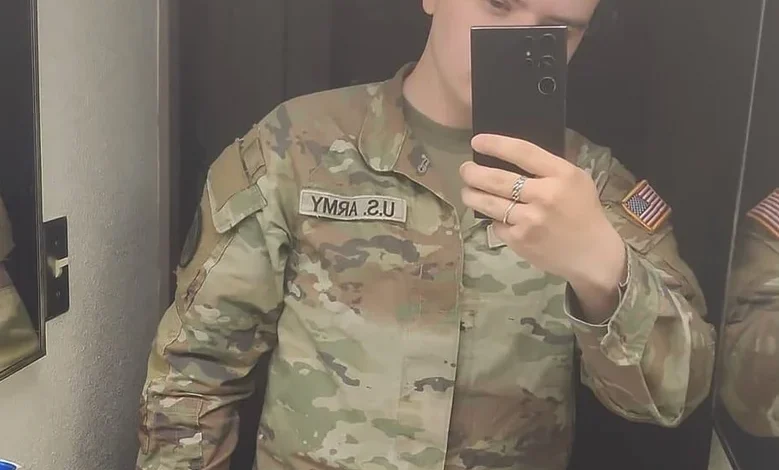
Cameron John Wagenius, a 22-year-old U.S. Army soldier, was sentenced to 70 months in federal prison today, marking the conclusion of a high-stakes investigation into a prolific cybercriminal operation that compromised the sensitive metadata of over 100 million AT&T customers. Beyond the prison term, Wagenius—who operated under the alias “Kiberphant0m”—has been ordered to pay $294,978 in restitution for his role in a series of extortion campaigns that targeted telecommunications giants and private cloud storage providers across the globe.
The sentencing, handed down in a Seattle federal court, serves as a capstone to a sprawling investigation involving the Defense Criminal Investigative Service (DCIS), the FBI, the U.S. Secret Service, and the Army Criminal Investigative Division (CID). While Wagenius’s technical activities caused widespread alarm, the investigation revealed a stark contrast between the massive scale of the data he accessed and the relatively meager financial gains he ultimately realized.
A Chronology of the Kiberphant0m Operation
The illicit activities of the group began to crystallize in 2024, when Wagenius, then stationed at a U.S. Army base in South Korea, began leveraging exposed credentials from users of the cloud data storage service Snowflake. The breach was largely facilitated by the failure of these organizations to implement multi-factor authentication (MFA), a security oversight that has since become a focal point for enterprise cybersecurity reforms.
By October 2024, the scope of the threat became clear. Kiberphant0m emerged on various dark-web forums, boasting about the possession of call and text metadata for tens of millions of AT&T customers. This data included critical identifiers such as source and destination phone numbers, timestamps, and the duration of communications—information that, while not containing the content of the calls, is highly prized for intelligence gathering and social engineering.
The escalation was rapid. Following the initial AT&T breach, Kiberphant0m claimed responsibility for infiltrating more than a dozen other telecommunications firms worldwide, including the Push-to-Talk business unit of Verizon. He utilized this stolen information to attempt to extort the victimized companies, threatening to leak the private logs unless specific, large-scale ransom payments were met.
In November 2025, security researchers at KrebsOnSecurity identified a probable link between the Kiberphant0m persona and a U.S. service member stationed in South Korea. Following this report, law enforcement moved quickly, culminating in the arrest of Wagenius in December 2025. He was charged under two separate federal indictments and eventually entered a plea of guilty to all counts.
The Network of Co-conspirators
Wagenius did not act in isolation. Federal prosecutors identified a web of collaborators, most notably Kenneth Schuchman, a 28-year-old resident of Vancouver, Washington. Schuchman’s involvement brought a history of professional-grade cybercrime to the operation; he had previously pleaded guilty in 2019 to his role in operating the Satori botnet, a massive infrastructure of compromised Internet-of-Things (IoT) devices used to launch distributed denial-of-service (DDoS) attacks.
The investigation into the broader Snowflake data theft ring also implicated two other individuals: Conor Riley Moucka, known by the alias “Judische,” who was arrested in Canada and entered a guilty plea in August 2026; and John Erin Binns, a U.S. citizen currently residing in Turkey. Binns remains a significant figure in the cybersecurity landscape, as he is also linked to a massive 2021 T-Mobile data breach that exposed the personal information of approximately 76 million customers.
Escalation and National Security Implications
The gravity of the case increased significantly when the extortionists attempted to re-extort their victims. Following the arrest of his associate, Moucka, and after AT&T had already paid a $370,000 Bitcoin ransom to the group, Kiberphant0m retaliated by leaking what he purported to be the call logs of high-profile political figures, including President-elect Donald Trump and Vice President Kamala Harris.
Furthermore, the threat actor claimed to have obtained sensitive schematics belonging to the U.S. National Security Agency (NSA). Paul Russell, a resident agent in charge at the DCIS, described the moment the investigation shifted from a standard criminal case to a national security priority. “We don’t often get leads where there’s an active duty soldier with a secret clearance who’s creating hacking tools and trafficking in data,” Russell remarked. “That doesn’t happen every day. It was very serious from jump street, just because it was unique, it was an insider threat, and we weren’t sure what we were dealing with.”
Incarceration and Continued Risk
Despite his post-arrest cooperation, prosecutors noted with alarm that Wagenius continued to attempt to exploit security vulnerabilities while incarcerated. A sentencing memorandum filed in September 2026 revealed that Wagenius had bypassed Bureau of Prisons (BOP) protocols by using other inmates’ email accounts to query commercial AI tools.
The queries were sophisticated, utilizing “prompt injection” techniques to circumvent safety filters. Wagenius reportedly sought information on Windows 10 privilege escalation, specific CVEs (Common Vulnerabilities and Exposures) for D-Link networking hardware, and even instructions on constructing radio antennas within a prison environment. Although the government found no evidence that he successfully deployed these exploits, the behavior underscored the persistent nature of his technical interests.
Broader Cybersecurity Implications
The case of Cameron Wagenius highlights several systemic vulnerabilities that continue to plague global telecommunications and enterprise cloud environments.
- The MFA Gap: The initial entry point for the Snowflake breach was the absence of mandatory multi-factor authentication. This has forced a reckoning across the industry, with many service providers now treating MFA not as an option, but as a mandatory security baseline.
- Insider Threats: The involvement of a soldier with secret clearance serving in a sensitive overseas post demonstrates the difficulty of mitigating the "insider threat." Military and government agencies are now forced to re-evaluate how they monitor the digital activities of personnel who have both security clearances and technical expertise.
- The Role of AI in Cybercrime: The BOP records provide a rare, documented case of an incarcerated individual using AI to conduct reconnaissance on vulnerabilities. This represents a new frontier for prison security, where traditional "contraband" is increasingly digital, and the threat is not physical proximity but information access.
- The Efficacy of Extortion: While the case involved millions of records, the financial return for the attackers was surprisingly low—approximately $1,500 in total profit from data sales, excluding the ransom paid by AT&T. This discrepancy suggests that while data theft is a high-impact crime, the "black market" for such metadata may be less lucrative than the scale of the theft would suggest.
Conclusion
The sentencing of Cameron Wagenius brings a formal end to the “Kiberphant0m” operation, but the legal proceedings against his associates continue. The case stands as a landmark example of the intersection between military service, criminal hacking, and the vulnerabilities of the modern digital infrastructure. As the Department of Defense and federal agencies continue to refine their approach to monitoring insider threats, the incident serves as a stark reminder that even the most secure organizations remain susceptible to the combination of credential negligence and the determined efforts of a motivated actor. For the victims—the 100 million AT&T customers—the event serves as a warning about the longevity of metadata and the risks inherent in the digital age.
Related posts: