AI-Driven Viral Structural Mapping Initiative Launches to Bolster Global Pandemic Preparedness

When the COVID-19 pandemic paralyzed the global economy in 2020, the scientific community relied heavily on decades of foundational research regarding the structure of coronaviruses. This deep reservoir of knowledge allowed for the rapid design of mRNA vaccines and therapeutic interventions. However, the international scientific community has long feared that the next global health crisis might involve a pathogen for which no such structural roadmap exists. To mitigate this systemic risk, a coalition of leading research institutions and technology firms—spearheaded by NVIDIA and Google DeepMind—has released a comprehensive, open-access database of 3D protein structures for over 2,800 viruses, marking a pivotal shift in how the world prepares for future biological threats.
The Technological Leap: From Years to Minutes
The traditional methods of structural biology, such as X-ray crystallography and cryo-electron microscopy, are notoriously slow and capital-intensive. Historically, determining the precise 3D architecture of a single protein complex could take years of laboratory work and tens of thousands of dollars in specialized equipment and reagents. The newly released dataset, integrated into the AlphaFold Database, circumvents these bottlenecks by leveraging artificial intelligence.
By utilizing AlphaFold2, Google DeepMind’s groundbreaking protein-folding model, the team produced these predictions at an unprecedented scale. The process was further accelerated and optimized using the NVIDIA BioNeMo Inference Runtime. This computational framework allowed researchers to scale the inference process across thousands of viral proteomes, effectively creating a "digital library" of viral components. Where traditional methods required months of physical experimentation, this AI-driven approach generates reliable structural predictions in mere minutes.
A Chronology of the Initiative
The genesis of this project lies in the urgent need to address the "unknowns" of emerging infectious diseases. The timeline of this collaboration reflects a concentrated effort to synthesize decades of biological data into a usable format:
- Pre-2020: The foundational development of protein-folding AI and the accumulation of genetic sequences in global repositories like the Protein Data Bank (PDB).
- 2020-2021: The urgent, decentralized effort to solve the SARS-CoV-2 spike protein structure, highlighting the disparity between known and unknown viral mechanisms.
- 2022-2023: The formation of a multi-institutional coalition, including the European Molecular Biology Laboratory’s European Bioinformatics Institute (EMBL-EBI), the University of Glasgow, and others, to apply AI at scale to the global virome.
- 2024: The systematic processing of thousands of viral families—ranging from seasonal respiratory viruses to high-consequence pathogens like Mpox—using GPU-accelerated pipelines.
- September 2024: The public unveiling of the dataset during the United Nations General Assembly in New York, timed to coincide with high-level discussions on global pandemic preparedness and response.
Quantifying the Biological Impact
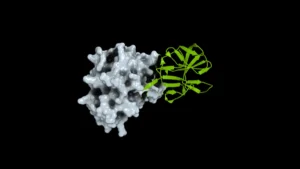
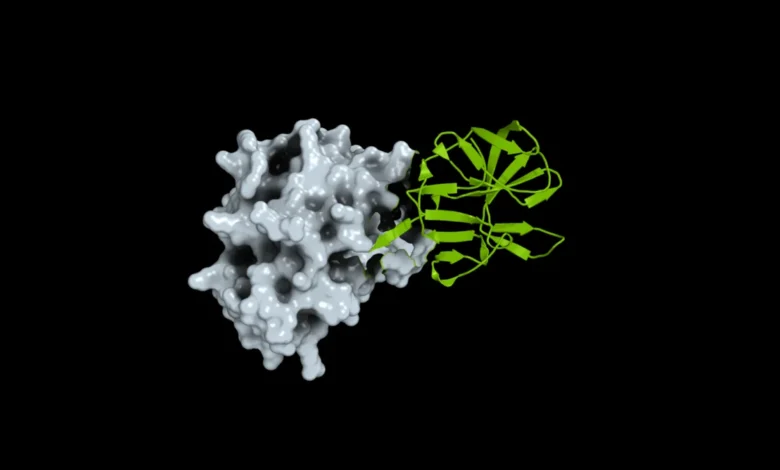
The significance of this release is not merely in the volume of data, but in its composition. Approximately 30% of the protein interactions mapped in this project were previously unknown to science. These structures, which show how individual proteins dock and interact to form functional complexes, have never been documented in the PDB.
For virologists, these interactions are the "lock and key" mechanisms that govern how a virus enters a host cell, replicates, and evades the immune system. By identifying these structures in advance, researchers can theoretically begin the design of small-molecule inhibitors or monoclonal antibodies before an outbreak even reaches a significant scale. According to analysts at the Center for Global Development, the world faces a roughly 50% probability of encountering a pandemic as severe as COVID-19 by the year 2050. Given these odds, the ability to "stockpile knowledge" acts as a form of insurance against the next biological "black swan" event.
Perspectives from the Scientific Frontline
The reaction from the research community has been one of cautious optimism, tempered by the reality of the challenges ahead. Joe Grove, a professor of molecular virology at the Medical Research Council-University of Glasgow Centre for Virus Research, emphasizes the transformative nature of this data for early-career scientists. "When I did my Ph.D., there were no structures for any of the proteins we were investigating. It was like working in the dark," Grove noted. By providing high-quality structural data, the database acts as a foundational tool that effectively telescopes the timeline of future research.
From a technological standpoint, the contribution from NVIDIA is significant not just for the data, but for the open-sourcing of the BioNeMo Structure Prediction Pipeline. By releasing the GPU-accelerated workflow, the coalition is empowering local labs in low-resource settings to conduct their own structural predictions. This democratization of access is a core tenet of the project’s mission, as noted by Risha Patel of Google DeepMind, who stated that the goal is to equip scientists globally with the insights required to act when the next outbreak emerges from the shadows.
Implications for Digital Biology
The integration of AI into structural biology represents a fundamental change in the methodology of the life sciences. Chris Dallago, lead for the applied research science team in digital biology at NVIDIA, described the database as an "engine for hypothesis generation." By shifting the focus from single molecules to protein complexes, the field is moving toward a more holistic understanding of biological systems.
This shift has profound implications for pharmaceutical development. Most drug discovery processes focus on inhibiting specific viral functions by targeting these protein complexes. Having a pre-existing 3D blueprint allows developers to utilize computer-aided drug design (CADD) far earlier in the development lifecycle. While these AI-predicted structures require experimental verification—a process known as "wet-lab validation"—the high-confidence scores provided by the AlphaFold database allow scientists to prioritize the most promising targets, thereby reducing wasted effort and financial expenditure.
Challenges and Future Directions
Despite the promise of this initiative, the scientific community acknowledges that data is not a panacea. A digital model, no matter how accurate, cannot replace the nuanced understanding of viral evolution, transmission dynamics, and host-pathogen interactions. Furthermore, the reliance on AI models brings up questions regarding bias in training data; if the database is skewed toward well-studied human pathogens, it may provide less utility for entirely novel, zoonotic viruses.
To address these concerns, the EMBL-EBI and its partners are committed to continuous updates and improvements to the AlphaFold Database. The current iteration, which now houses more than 260 million protein and protein complex predictions, is viewed as a living repository. The focus moving forward will be on integrating temporal data—modeling how these structures change as viruses mutate—and expanding the catalog to include non-human pathogens that pose a high risk of cross-species transmission.
Conclusion
The release of the viral protein complex dataset represents a historic alignment of high-performance computing and life sciences. By turning the "unknowns" of viral structure into accessible digital assets, the project provides a critical head start for the next generation of researchers. As global leaders debate the logistics of future pandemic prevention, this digital infrastructure stands as a testament to the power of international, multi-sector collaboration. While no tool can guarantee immunity against the next pandemic, the ability to understand the architecture of the enemy before it strikes is perhaps the most significant defensive advantage the modern world has yet developed. Researchers and interested parties can explore these findings via the AlphaFold Database Pandemic Preparedness Portal, which remains open to the global community, ensuring that the knowledge gained today will serve as a shield for tomorrow.