Why the Gymnastics Plank is Surpassing Traditional Core Exercises for Functional Longevity and Full-Body Stability


In the ever-evolving landscape of physical fitness and functional training, fitness professionals continue to reevaluate standard calisthenics to maximize muscular engagement and longevity. Among the staple movements undergoing a modern reassessment is the humble plank. While traditional forearm and high planks have long dominated core routines, a specific variation borrowed from the discipline of gymnastics is rapidly gaining traction among trainers, physical therapists, and aging populations alike: the gymnastics plank.
Championed by elite trainers and conditioning specialists, this advanced variation moves beyond simple core stabilization to demand a total-body isometric contraction. Unlike conventional planks that often concentrate fatigue in the lower back or glutes if form falters, the gymnastics plank emphasizes upper-body dominance, intense wrist and forearm conditioning, and precise biomechanical alignment. As fitness experts increasingly prioritize functional strength—the ability to perform everyday activities safely and efficiently—movements that build relative strength and muscular endurance without external loads are becoming the gold standard of preventative health.
Mechanics and Execution: How to Perform a Gymnastics Plank
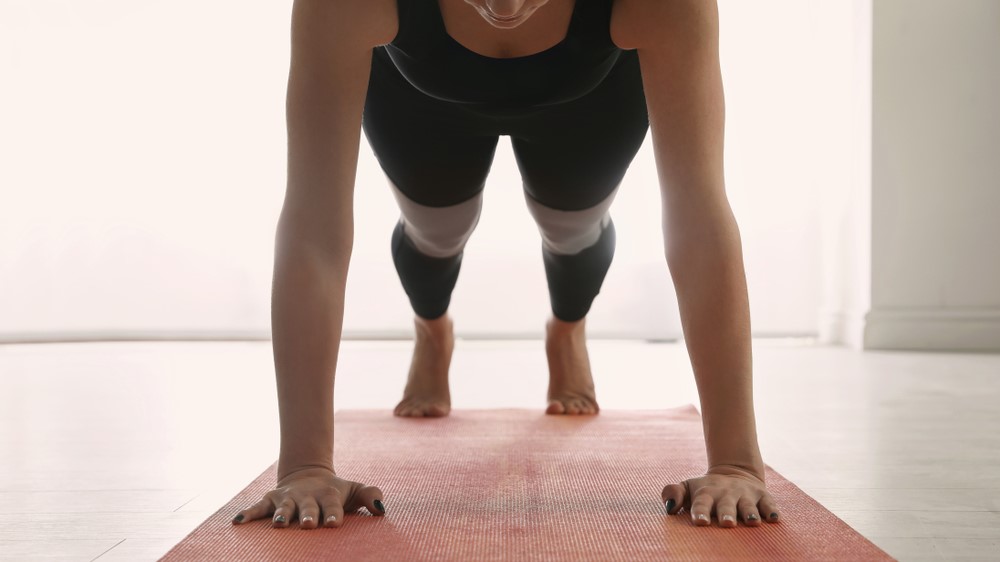
Executing a gymnastics plank requires meticulous attention to posture and muscular tension. While the movement can be performed on a standard yoga mat for wrist and elbow comfort, no specialized equipment is strictly required.

To initiate the movement, begin in a high plank position with the hands planted firmly beneath the shoulders, fingers spread wide to distribute body weight evenly. The fundamental differentiator in the gymnastics version occurs through structural shifting: instead of remaining passively stacked over the wrists, the practitioner must actively push the floor away, rounding the upper back slightly to achieve a hollow-body shape.
Next, the hips must undergo a posterior pelvic tilt—a slight tuck—which engages the deep abdominal wall and prevents the lower back from hyperextending. Crucially, the practitioner must shift their body weight forward on the balls of the feet until the shoulders move well past the line of the wrists. This forward translation alters the biomechanics of the hold, shifting the primary load bearing from the posterior chain (glutes and hamstrings) to the anterior chain (quadriceps, hip flexors, and deep core muscles) while heavily challenging the shoulder complex.
Fitness professionals typically advise beginners to target a modest 20-second hold, prioritizing absolute tension over duration. As neuromuscular adaptations occur, practitioners can incrementally build endurance. Because the wrists and forearms bear an amplified load in this forward-leaning posture, individuals experiencing joint discomfort are advised to modify the movement or regress to a standard forearm plank to prevent strain.
The Science of Isometric Contraction and Functional Strength
The physiological benefits of the gymnastics plank are rooted in the mechanics of isometric exercise—a form of strength training where joint angle and muscle length do not noticeably change during contraction. Unlike dynamic movements such as squats or push-ups, which rely on isotonic contractions (shortening and lengthening of muscle fibers under load), isometric holds require continuous muscular recruitment to resist external forces, predominantly gravity.

Gymnastics as a discipline relies heavily on relative strength—the ratio of maximum strength to body mass—and isometric endurance. Moves such as the iron cross, static hangs, handstands, and hollow-body holds demand immense stability. When applied to the gymnastics plank, this philosophy translates to a comprehensive full-body engagement often summarized by conditioning specialists as the "three Bs": belly, butt, and back.
When executed with proper form, the gymnastics plank recruits a vast array of muscle groups simultaneously. The superficial musculature, including the rectus abdominis (the superficial abdominal wall), works alongside deeper stabilizers such as the transverse abdominis, which acts as a natural lifting belt to protect the lumbar spine. Simultaneously, the obliques guard against rotational forces, while the upper-back musculature—including the serratus anterior—engages to maintain the characteristic hollow-body protraction. In the lower body, the quadriceps and hip flexors fire to lock the legs in extension, creating an unbroken kinetic chain from the ankles to the cervical spine.
Addressing Age-Related Muscle Decline and Joint Longevity
The rising popularity of the gymnastics plank among older demographics, particularly adults over the age of 50, is not accidental. As individuals age, they face progressive physiological challenges, most notably sarcopenia—the natural, progressive loss of skeletal muscle mass and strength that typically accelerates after the fifth decade of life. Concurrently, bone mineral density decreases, and grip strength diminishes.
Medical and fitness research increasingly identifies grip and forearm strength as a critical biomarker for overall health span and longevity. Weakness in the hands and wrists correlates strongly with functional decline, frailty, and increased all-cause mortality risk in older adults. By forcing the wrists, forearms, and hands to support a significant portion of the body’s shifted weight, the gymnastics plank serves as an effective, low-impact tool for preserving upper-extremity integrity.
Furthermore, spine health remains a paramount concern for aging populations. Back pain is frequently attributed to weak core stabilizers that fail to adequately support the vertebrae during daily axial loading. By conditioning both the superficial and deep layers of the core, the gymnastics plank enhances intra-abdominal pressure and spinal alignment, reducing the incidence of lumbar strain. Because the exercise is performed statically without spinal flexion or extension under load, it offers a safer alternative to traditional crunches or sit-ups for individuals managing mild degenerative disc issues or generalized lower-back stiffness.
Broader Implications for Modern Fitness Programming
The integration of gymnastics-inspired calisthenics into mainstream wellness routines reflects a broader cultural shift away from isolated machine-based training and toward compound, bodyweight-centric movements. In contemporary fitness programming, the emphasis has shifted from aesthetic metrics—such as targeting the superficial abdominal muscles for a visible "six-pack"—to performance metrics that enhance physical autonomy.
Injuries often occur when a joint lacks stability or when adjacent musculature is imbalanced. Traditional planks, while beneficial, can sometimes encourage a resting posture where practitioners sag into their lower backs or lock their shoulder joints, effectively bypassing optimal muscular recruitment. The strict positional demands of the gymnastics plank eliminate these inefficiencies, forcing an honest assessment of core and shoulder stability.
As personal trainers and physical therapists continue to design injury-prevention protocols for clients ranging from elite athletes to active seniors, fundamental bodyweight movements are undergoing a renaissance. The gymnastics plank exemplifies this evolution, demonstrating that advanced physical conditioning does not always require heavy iron or complex machinery. By leveraging body weight, gravity, and precise biomechanical tension, practitioners can build a resilient, powerful, and injury-resistant physique capable of meeting the physical demands of daily life well into later years.