Radaris domain seizure signals new era of accountability for consumer data brokers under Daniel’s Law


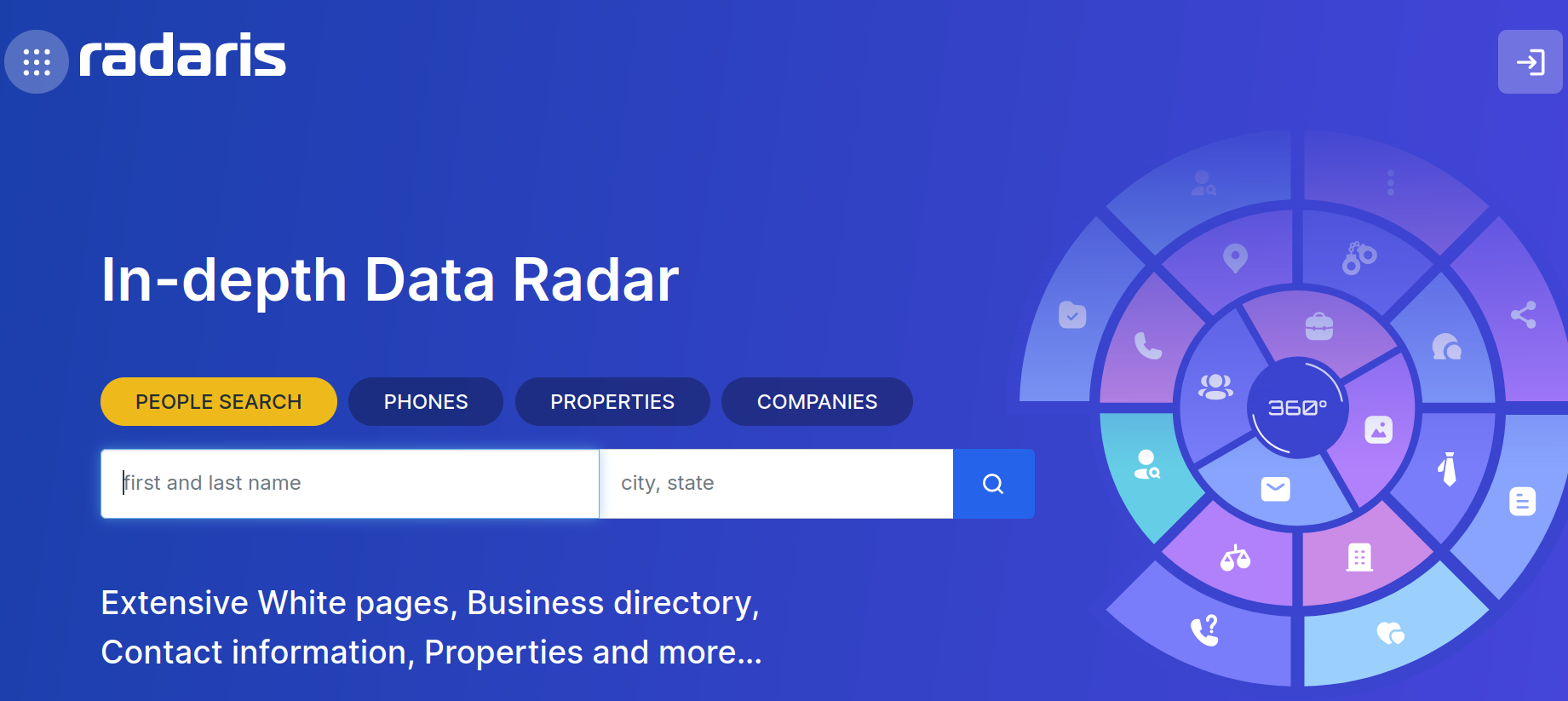
The digital landscape for consumer data brokerage shifted dramatically this month as a New Jersey court finalized the transfer of Radaris.com and over a dozen associated domains to Atlas Data Privacy Corp. This landmark action stems from a persistent refusal by Radaris—a massive, opaque people-search operation—to comply with state-mandated privacy protections designed to shield law enforcement, judges, and government personnel. The court’s decision marks a rare, decisive victory in the ongoing battle against data brokers who have long utilized complex corporate shells and jurisdictional “island-hopping” to evade legal responsibility.
The Anatomy of an Enforcement Action
The legal proceedings were initiated in February 2024 by Atlas Data Privacy Corp, an organization specifically tasked with enforcing the provisions of New Jersey’s Daniel’s Law. Named in memory of Daniel Anderl, the son of a federal judge killed in 2020 by an individual who had tracked the family’s home address online, the statute is among the most stringent in the United States. It mandates the total removal of sensitive personal information belonging to public officials and their families from commercial databases, imposing fines of $1,000 per violation for every instance of non-compliance.
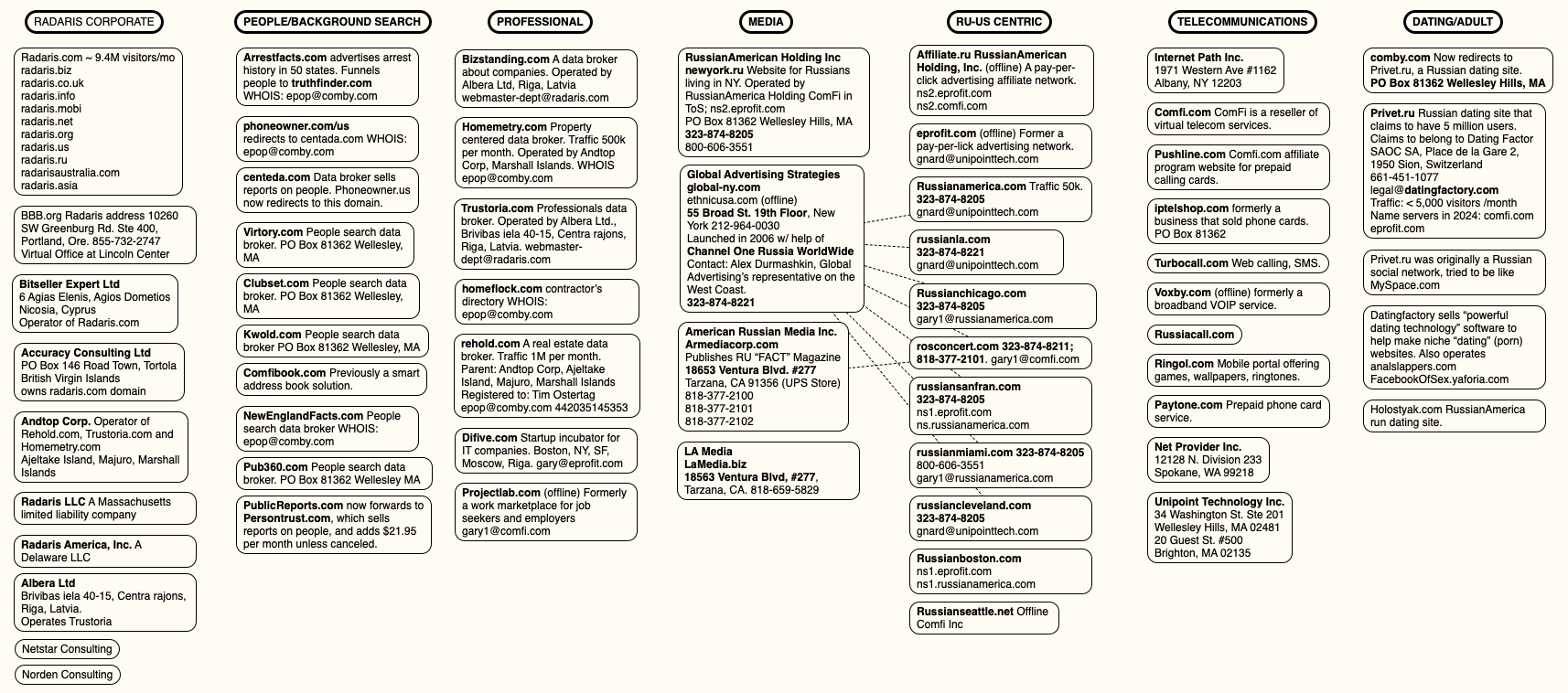
For years, Radaris operated with a degree of impunity, ignoring removal requests while simultaneously shielding its ownership structure. The company, which aggregates vast troves of personal data—from court records to property filings—relied on a strategy of administrative attrition. By failing to appear in court, providing misleading ownership information, or hiding behind a revolving door of entities registered in the Marshall Islands, the British Virgin Islands, and the Seychelles, Radaris managed to bypass accountability mechanisms that would have shuttered less sophisticated operations.
A Chronology of Evasion and Litigation
The path to the current domain seizure is marked by a series of legal confrontations and investigative revelations. The history of Radaris’s operations reveals a pattern of behavior intended to obfuscate the individuals pulling the strings:
- 2017: Radaris faced a class-action lawsuit where it was hit with a $7.5 million default judgment. The company avoided the consequences by failing to contest the claims, only to later appeal on the grounds that the plaintiffs had sued the wrong legal entity, Bitseller Expert Limited.
- 2020: Following the 2017 case, operations were shifted to Andtop Company, an entity formed in the Marshall Islands, effectively resetting the legal board.
- February 2024: Atlas Data Privacy Corp filed its initial complaint in New Jersey, citing violations of Daniel’s Law.
- March 2024: Investigative reporting shed light on the co-founders, Igor and Dmitry Lubarsky, Massachusetts-based brothers. The company responded with threats of defamation lawsuits, a tactic frequently used to silence scrutiny.
- June 2025: Atlas re-filed its lawsuit, significantly broadening the scope of its allegations to include a vast network of interconnected data broker domains, finally piercing the veil of the “shell game” the Lubarskys had maintained for over a decade.
- August 2026: A New Jersey judge, citing a pattern of stonewalling and failure to mount a credible defense, ordered the transfer of 14 domains to Atlas.
The Illusion of Corporate Independence
Internal documents obtained through discovery have dismantled the claim that Radaris and its sister sites operated independently. Emails and financial records reveal that entities such as Veripages, Virtura, and Nuform Solutions share a unified administrative, financial, and technical infrastructure. The evidence suggests that these sites are managed from a single virtual office by a small team, utilizing shared payment processors and hosting services.
The economic engine driving these sites is substantial. Estimates derived from internal communications suggest that Radaris alone generates approximately $42,000 in monthly revenue, with sister sites like Veripages contributing similar amounts. These figures are bolstered by partnerships with advertising firms and even companies that claim to offer "privacy protection" services, creating a perverse ecosystem where data brokers profit from both the exposure and the subsequent "removal" of private information.
Legal Defense and Constitutional Challenges
Legal counsel for the Radaris family, including attorneys Val Gurvits and Victor Worms, have maintained that the court’s actions are procedurally flawed. Mr. Worms, in particular, has argued that the transfer of Radaris.com is a violation of constitutional principles, asserting that because "Radaris.com" is a domain name and not a formal legal entity, it lacks the capacity to be sued. They have moved to vacate the default judgment, promising to pursue an appeal.

This defense highlights the core tension in modern data privacy litigation: the disparity between physical corporate existence and digital footprint. By constantly shifting the ownership of domains between offshore shells, these companies argue that they are unreachable by domestic courts. However, the New Jersey court’s decision suggests a growing judicial intolerance for this strategy, signaling that ownership obfuscation will no longer be an absolute shield against enforcement.
The Broader Implications for U.S. Privacy Law
The Radaris case is a bellwether for the future of data privacy in the United States. While 14 states have now adopted legislation similar to Daniel’s Law, the industry has pushed back with significant force. Data brokers have successfully moved dozens of these cases into federal court, challenging the constitutionality of such laws under the First Amendment.
Privacy experts like Justin Sherman, author of The Middlemen, argue that these legal skirmishes are symptomatic of a deeper failure in American legislative policy. "The lack of a comprehensive federal privacy law is not for a lack of knowledge," Sherman notes. "We have seen thousands of data breaches and constant misuse of public records. The current system relies on a patchwork of state laws that are constantly being challenged by tech lobbies and data aggregators who claim that restricting their business model is an existential threat to the digital economy."
The fundamental issue remains the definition of "public" data. Current laws often exempt records that are considered public, such as voter registries, marriage certificates, and court filings. Data brokers exploit these exemptions to build comprehensive profiles on individuals, often aggregating enough disparate data points to render even "private" citizens vulnerable to identity theft and harassment.
A Murky Road Ahead
The transfer of the Radaris domains to Atlas marks the end of a specific chapter of evasion, but it is unlikely to mark the end of the conflict. The ongoing constitutional challenges in federal court will likely necessitate a Supreme Court ruling to determine if the states have the authority to regulate data brokerage to this degree.
Furthermore, the recent breach of IDScan.net, which exposed the driver’s license information of over 153 million Americans, serves as a stark reminder of the risks inherent in the current status quo. As long as there is no federal mandate to limit how personal data is stored, shared, and sold by private firms, the "Radaris model"—where companies prioritize growth over security and utilize legal maneuverings to avoid the consequences of their data practices—will continue to exist.
For now, the Radaris.com landing page serves as a notice of the transfer, a symbolic victory for those who have spent years fighting for a right to digital safety. Yet, the broader industry continues to operate, shielded by the lack of a cohesive national framework. The case underscores that while individual lawsuits can disrupt specific actors, the structural issues of the data-brokering economy require a systemic legislative solution that balances the flow of information with the fundamental right to individual privacy.