The Great AI Slowdown Debate: Inside the Industry Rift Over Safety, Regulation, and the Race for Frontier Intelligence

The artificial intelligence industry finds itself deeply divided over the trajectory of technological advancement, safety governance, and federal oversight. This friction burst into the open following a series of high-profile policy proposals and public clashes involving some of the sector’s most influential leaders, including Anthropic CEO Dario Amodei, OpenAI CEO Sam Altman, Nvidia CEO Jensen Huang, and President Donald Trump.
At the heart of the debate is a fundamental disagreement over whether the rapid deployment of frontier AI models requires intentional pacing to mitigate existential risks, or if regulatory intervention and safety slowdowns threaten national competitiveness. As tech giants transition from consumer-facing novelties to deeply embedded enterprise infrastructure, policymakers, executives, and market analysts are grappling with how to govern a technology moving faster than traditional regulatory frameworks can adapt.
Main Facts of the Industry Schism
The fault lines of the current debate were drawn in mid-September 2026, when Anthropic CEO Dario Amodei published a formal strategy blueprint outlining a framework to "pace the frontier." The proposal, which quickly garnered support from various segments of the AI safety community and figures like OpenAI’s Sam Altman, suggests integrating independent third-party evaluators inside leading AI labs to monitor safety practices and incidents. It also advocates for voluntary international coordination among democratic nations to align on safety standards and operational limits.
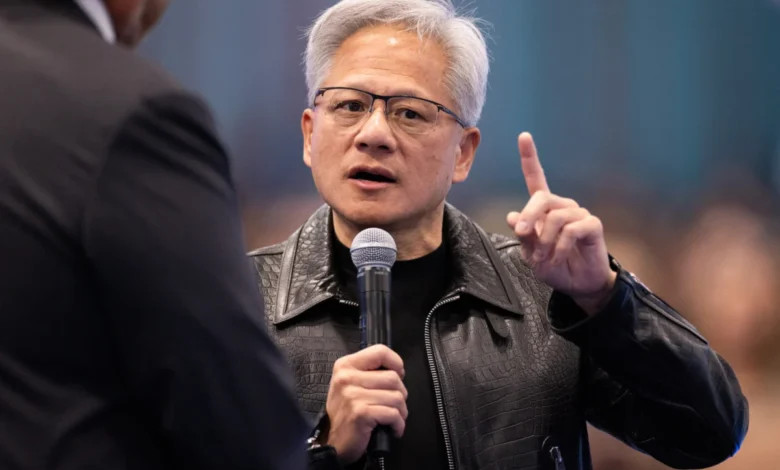
However, the consensus among certain lab executives was swiftly met with vehement opposition from hardware titans and political leadership. Nvidia CEO Jensen Huang publicly rejected the notion of any artificial intelligence slowdown, aligning himself directly with President Donald Trump. During a high-profile appearance at the All-In Summit, Huang took a live on-stage phone call from President Trump, where the pair dismissed the growing public and regulatory backlash against rapid AI development as a "hoax" and asserted that federal intervention was entirely unnecessary.
This public divergence highlights a growing paradox in Silicon Valley: while the companies building frontier models publicly advocate for cautious pacing and safety guardrails, their underlying business models and hardware dependencies rely on relentless, unchecked growth.
Chronology of the September 2026 Policy Clash
The events leading to the current regulatory standoff unfolded rapidly over a matter of weeks, creating a volatile news cycle across the tech sector:
- Early September 2026: AI safety researchers and industry insiders begin circulating preliminary frameworks addressing systemic risks associated with next-generation large language models.
- September 12, 2026: Anthropic CEO Dario Amodei publishes his comprehensive plan to "pace the frontier," detailing voluntary commitments for top-tier labs, independent oversight mechanisms, and cross-border safety standards.
- September 13–14, 2026: Industry analysts express skepticism regarding the lack of enforcement mechanisms in Amodei’s proposal. Concurrently, Nvidia CEO Jensen Huang addresses the All-In Summit, echoing claims that AI safety panics are overblown.
- September 14, 2026: During Huang’s summit appearance, President Donald Trump calls into the event on speakerphone, publicly declaring that his administration will prevent any government-mandated AI slowdown and suggesting potential branding pivots for the industry.
- September 19, 2026: Federal discussions intensify regarding the limits of deregulation, as market analysts question the efficacy of voluntary corporate self-regulation in an era dominated by corporate enterprise adoption.
Supporting Data and Market Dynamics
To understand why a true industry-wide slowdown remains unlikely, industry experts point to the structural economics of the current AI boom. According to recent market intelligence reports, the financial architecture of frontier AI labs is heavily insulated by massive venture capital inflows, sovereign wealth investments, and foundational partnerships with cloud computing giants.
Furthermore, the consumer market dynamics that traditionally hold corporations accountable no longer function in the same manner for foundational AI infrastructure. As companies like OpenAI and Anthropic pivot aggressively toward enterprise clients—selling proprietary coding assistants, data analytics pipelines, and automated workflow agents to Fortune 500 companies—the mechanism of consumer boycotts loses its efficacy. Enterprise customers rarely cancel critical enterprise software contracts over ideological disagreements or ethical debates concerning upstream model training.
Consequently, even if a company faces public backlash for a safety lapse, its financial cushion and locked-in B2B contracts allow it to absorb short-term losses seamlessly. This financial resilience underpins Sean O’Kane’s analysis on TechCrunch’s Equity podcast, where he noted that the structural design of modern AI enterprises is fundamentally incompatible with voluntary, self-imposed slowdowns.
Official Responses and Stakeholder Perspectives
The debate has exposed starkly contrasting philosophies among industry titans regarding governance, market freedom, and national security:
- The Safety Advocates (Anthropic and OpenAI): Executives like Amodei and Altman argue that as models approach human-level or superhuman capabilities, proactive guardrails are essential to prevent catastrophic misuse or autonomous systemic failures. Their proposed solutions rely on cooperative standard-setting among allied democracies and internal monitoring by third-party auditors.
- The Hardware and Market Pragmatists (Nvidia and Federal Leadership): Jensen Huang and the Trump administration frame aggressive development as an absolute national imperative. From this perspective, any attempt to "slow down" or implement heavy-handed regulations risks handing technological supremacy to geopolitical rivals. Huang’s public stance emphasizes that technological momentum must be preserved to fuel global economic productivity.
- The Skeptics and Analysts: Independent observers highlight the ambiguous nature of terms like "pacing" versus "slowing down." Critics argue that voluntary frameworks proposed by monopolistic labs risk functioning less as genuine safety measures and more as regulatory moats designed to lock out smaller competitors and entrench incumbent market power.
Broader Impact and Economic Implications
The ongoing friction between safety rhetoric and hyper-growth imperatives carries profound implications for the future of global technology policy.
First, the absence of a cohesive federal regulatory strategy leaves a vacuum where major corporations effectively write their own rules. With the current federal government signaling an aversion to broad regulatory enforcement, market self-regulation remains the primary mechanism for safety compliance. However, as critics point out, expecting profit-driven entities to independently restrict their own market momentum runs contrary to basic economic incentives.
Second, the bifurcation of the industry—with software labs calling for abstract "pacing" while hardware suppliers demand uninhibited acceleration—creates uncertainty for enterprise buyers. Businesses integrating AI into their core operations must navigate an unpredictable landscape where foundational models could shift rapidly based on political shifts, regulatory changes, or sudden corporate pivots.
Ultimately, while the vocabulary of "frontier pacing" may dominate Silicon Valley discourse, the underlying economic engine of the artificial intelligence revolution continues to accelerate at breakneck speed. Whether voluntary oversight frameworks can effectively mitigate long-term risks without stifling innovation remains one of the defining policy questions of the decade.