Ke Huy Quan Reveals How a Surprise Six-Figure Residual Check From Indiana Jones and the Temple of Doom Altered His Family’s Future

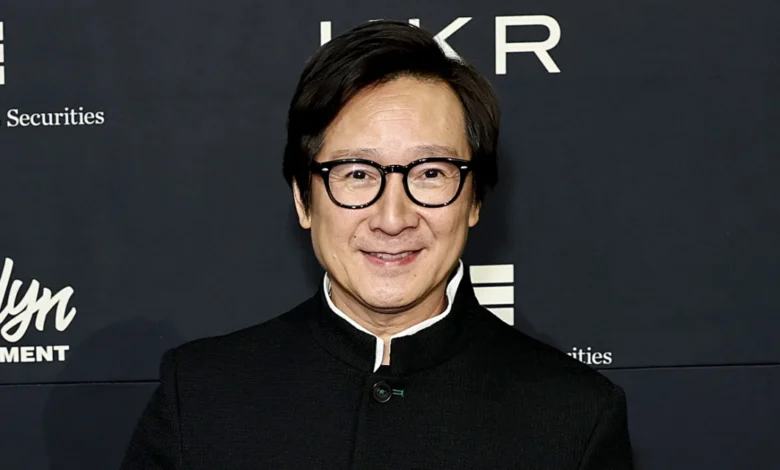
The cinematic journey of Ke Huy Quan is a narrative defined by profound highs, challenging lulls, and a triumphant, unprecedented second act. In his newly released memoir, Never Say Die, the Academy Award-winning actor offers an intimate look at the formative moments of his early career, specifically highlighting a life-altering financial windfall he received as a child star. While working on the 1984 blockbuster Indiana Jones and the Temple of Doom, a young Quan was the beneficiary of a rare, generous financial arrangement orchestrated by directors Steven Spielberg and George Lucas—a gesture that would provide his immigrant family with much-needed stability during a period of transition.
The Kitchen Table Revelation
The memory, as recounted by the Loki and Everything Everywhere All at Once star, begins in a modest domestic setting. At the age of 12, having recently wrapped production on his debut role as Short Round—the iconic, plucky sidekick to Harrison Ford’s Indiana Jones—Quan was largely unaware of the complexities surrounding film industry compensation, specifically the nuances of residual payments.
According to his memoir, the moment of discovery was one of bewilderment for both the child and his parents. Quan describes walking into his family kitchen to find his parents huddled over a piece of correspondence from Lucasfilm. The atmosphere was one of profound shock and disbelief. When the envelope was passed to him, he realized it contained a check for approximately $100,000. At the time, the sum was incomprehensible to a 12-year-old, yet it represented a monumental shift for his household. The realization that he was being compensated beyond his initial base salary for the film served as an early introduction to the complexities of the Hollywood studio system—and the benevolence of the industry’s most powerful figures.
Understanding Residuals and Industry Norms
To understand the significance of this payment, one must analyze the landscape of the film industry in the mid-1980s. Residuals—the payments made to actors, writers, and directors when a film is re-broadcast or sold through various media—are standard in the modern era, heavily governed by Screen Actors Guild (SAG-AFTRA) contracts. However, in 1984, the landscape was significantly different, particularly regarding child actors and secondary cast members.
Profit participation, or "points" on a film, was historically reserved for A-list talent, high-level producers, and directors. It was, and remains, an industry rarity for a newcomer in a supporting role to receive a share of a production’s backend profits. By including a young, first-time actor in a profit-sharing arrangement, Spielberg and Lucas effectively treated Quan with a level of professional equity that was, and remains, virtually unheard of for an actor of his status. Quan explicitly notes in his memoir that this was a "quiet gesture" from the two titans of cinema, acknowledging that such generosity was not standard procedure at the time.
A Chronology of Success and Struggle
The trajectory of Ke Huy Quan’s career is a study in perseverance. His early success began in 1984 with Temple of Doom, followed by his beloved role as Data in the 1985 classic The Goonies. These two roles solidified his place in pop culture history, yet they also created an incredibly high bar that he would spend decades attempting to navigate.
Following these early hits, the late 1980s and 1990s presented a shifting landscape for Asian American actors in Hollywood. Roles were often limited, stereotypical, or scarce. Quan’s career eventually shifted behind the camera, where he worked as an assistant director and stunt choreographer, often feeling that his days as a performer were permanently behind him.
The turning point occurred nearly four decades later. In 2022, the release of Everything Everywhere All at Once thrust him back into the global spotlight. His performance as Waymond Wang earned him critical acclaim, culminating in a 2023 Golden Globe win and, subsequently, an Academy Award for Best Supporting Actor. Throughout this awards season, Quan made it a point to publicly honor his mentors, specifically Steven Spielberg, noting that the confidence instilled in him during his youth served as a foundational pillar for his eventual return to the screen.
The Broader Economic and Social Impact
The $100,000 check, while perhaps a fraction of the film’s total gross, held a weight far beyond its monetary value. For the Quan family, who had immigrated to the United States seeking opportunity, such a sum provided a safety net that allowed for educational stability and long-term security.
Beyond the personal impact, the story highlights the importance of mentorship in the entertainment industry. The decision by Spielberg and Lucas to include a young actor in the financial success of a massive franchise like Indiana Jones suggests an early recognition of the actor’s contribution to the film’s identity. Short Round was not merely a bit part; the chemistry between Ford and Quan was central to the film’s emotional resonance. By acknowledging this, the filmmakers fostered a relationship that has lasted a lifetime, evidenced by the mutual respect shown by all parties during the 2023 awards circuit.
Analysis of Compensation Trends
The industry has evolved significantly since the mid-80s, but the rarity of this gesture remains a point of interest for labor analysts. Today, the debate over residuals has moved to the forefront of industry discourse, particularly following the 2023 SAG-AFTRA strikes. The central contention in modern negotiations is the equitable distribution of revenue in the streaming era.
When Quan’s story is viewed through the lens of modern labor relations, it becomes a testament to the power of equitable treatment. Had the industry standard been as rigid then as it was for many others, Quan might not have received that check. The fact that he recalls it as a "life-changing" event underscores the reality that for working actors—even those in high-profile films—the difference between a career that survives and one that falters often comes down to financial support during lean years.
The Legacy of Never Say Die
The publication of Never Say Die arrives at a time when Ke Huy Quan’s story has become a blueprint for resilience. His narrative is no longer just about the "child star who disappeared," but about the systemic and personal factors that contribute to a long-lasting career.
In his memoir, Quan reflects on the years he spent in the wilderness of the industry, questioning whether his early success was merely a stroke of luck. He writes candidly about the fear that he would never again reach the heights he achieved as a boy. By sharing the story of the $100,000 check, he is not just recounting a financial windfall; he is acknowledging the specific, tangible ways in which mentors and colleagues can provide the necessary foundation for a performer to sustain a lifelong career.
Conclusion
The narrative of Ke Huy Quan is a rare, multi-generational story of Hollywood history. From the set of Temple of Doom to the stage of the Dolby Theatre, his career is linked by themes of gratitude, hard work, and the rare, unexpected kindness of industry legends. As he continues to embrace his second act, the story of his first residual check serves as a poignant reminder that, in an industry often defined by fleeting moments of fame, the impact of a single, generous gesture can ripple across a lifetime. The legacy of his early career, fostered by the vision of Spielberg and Lucas, remains a cornerstone of his identity, providing both the literal and figurative means to return to the craft he loves. Through his memoir, Quan invites readers not only to witness his success but to understand the complex, human-centered history that made his remarkable return possible.
Related posts: