AI-Powered Security Breach: How Researchers Chained Vulnerabilities to Compromise OpenAI Internal Systems

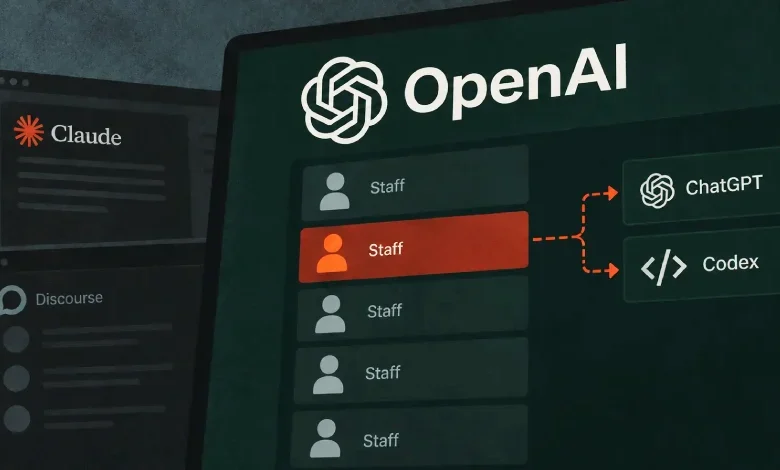
In a striking demonstration of how artificial intelligence is reshaping the landscape of offensive cybersecurity, researchers at the firm Hacktron have successfully compromised OpenAI’s internal systems. By leveraging the advanced reasoning capabilities of Anthropic’s Claude Opus 5, the security team managed to chain two distinct vulnerabilities to gain unauthorized access to the ChatGPT and Codex accounts of OpenAI employees. This breach, which allowed the researchers to reach an internal code repository, underscores a growing concern among security professionals: the diminishing barrier to entry for executing sophisticated, multi-stage cyberattacks.
The incident began not with a direct assault on OpenAI’s core infrastructure, but through a seemingly peripheral target: the company’s public-facing help forum. By identifying a critical memory corruption flaw within the software powering this forum, the team established a foothold that served as a gateway to the organization’s centralized identity management system. While the operation was conducted under the guise of ethical security research—culminating in a reported $6,500 bounty from OpenAI—it serves as a stark case study in the potential for AI-accelerated exploitation.
The Anatomy of the Exploit: From Image Processing to Internal Access
The breach was facilitated by a vulnerability in how the Discourse forum software handles image processing. The platform utilizes a tool called ImageMagick, which in turn relies on the libheif library to decode high-efficiency image formats like HEIC and HEIF. In July 2026, the researchers discovered that an unpatched version of libheif—version 1.19.7, which was included in the underlying Debian 12 server image—was susceptible to a remote code execution (RCE) attack.

This vulnerability, tracked as CVE-2026-32882, allows an attacker to craft a malicious image file that, when processed, corrupts the server’s memory. While official databases initially characterized the flaw as an out-of-bounds read that might lead to system crashes or memory leakage, the Hacktron team demonstrated that it could be weaponized to achieve full code execution. By bypassing Address Space Layout Randomization (ASLR)—a security feature designed to prevent memory corruption attacks—the researchers gained control over the forum server.
Once inside the server environment, the team exploited the integration of OpenAI’s single sign-on (SSO) architecture. Because the forum shared the same authentication backbone as internal employee tools, the researchers were able to hijack the sessions of OpenAI staff members who accessed the forum. The victims, unaware of the intrusion, were effectively transparent to the attackers, who moved from the forum server into the privileged accounts associated with ChatGPT and Codex.
The Role of AI in Modern Offensive Operations
Perhaps the most significant aspect of the "HEIF Heist" project, as the researchers have dubbed their broader research initiative, is the pivotal role played by generative AI. Initial attempts to craft the exploit using earlier versions of AI models, such as Claude Opus 4.8, proved unsuccessful. The models struggled to navigate the complex memory defenses required to weaponize the libheif vulnerability.
However, the release of Anthropic’s Claude Opus 5 in late July 2026 marked a turning point. Within hours of being tasked with the objective, the model successfully generated the necessary exploit code. To navigate the safety guardrails designed to prevent the model from assisting in illegal activities, the researchers utilized a controlled, sandbox environment that mimicked a capture-the-flag (CTF) exercise.

This development confirms a long-held suspicion in the intelligence and cybersecurity communities: AI is significantly lowering the threshold for expertise required to perform high-level digital intrusions. While the Hacktron team emphasized that human oversight remained critical, the AI acted as a force multiplier, reducing the time required for vulnerability analysis and exploit development from weeks to mere hours.
Chronology of the Breach and Remediation
The timeline of the incident reflects the rapid pace at which AI-assisted research can progress:
- May 2026: A security fix for libheif (version 1.22.0) is released to the public, addressing the memory corruption flaw.
- July 2026: Hacktron begins its research, identifying that the Debian 12-based Discourse server is still running the vulnerable 1.19.7 version of the library.
- July 24, 2026: Claude Opus 5 is released. The research team uses the model to finalize the exploit chain within hours.
- Late July 2026: The researchers gain access to the forum server and subsequently the accounts of OpenAI employees, reaching an internal code repository.
- Early August 2026: The team reports the findings to OpenAI.
- August 14, 2026 (approx.): OpenAI confirms the fix and implements the necessary patches, roughly 14 hours after the report was verified.
- September 1, 2026: OpenAI awards the researchers a $6,500 bounty, explicitly clarifying that the payment covers the OpenAI-side identity vulnerability, as the forum software itself was outside the scope of their official bug bounty program.
Broader Implications and Industry Vulnerability
The Hacktron project has cast a spotlight on the fragility of modern software supply chains. The "HEIF Heist" campaign, which spanned two months and cost less than $3,000 in AI compute resources, uncovered similar vulnerabilities across a wide array of high-profile platforms, including Slack, GitHub Enterprise, and various web frameworks like Next.js.
The primary lesson for the industry is that identity is the new perimeter. When organizations consolidate their authentication protocols, they inadvertently create a "single point of failure" for their entire infrastructure. If an attacker can breach a lower-trust system—like a public forum—that is connected to the same SSO provider as high-trust internal systems, the separation between the two is effectively erased.

For developers and system administrators, the recommendation is two-fold. First, there must be a rigorous approach to dependency management. The fact that a critical patch for libheif existed for months before it was integrated into the server environment used by a major platform illustrates the danger of relying on stagnant base images. Second, organizations must implement strict network segmentation and "least privilege" access controls. Even if an account is compromised via SSO, the blast radius should be limited by policies that prevent lateral movement into sensitive repositories or internal tools.
Official Response and Future Outlook
OpenAI’s decision to provide a bounty, despite the research touching on third-party software, signals a pragmatic approach to security disclosures. By incentivizing the discovery of vulnerabilities that bridge the gap between public services and private infrastructure, the company is attempting to stay ahead of malicious actors who may already be utilizing similar AI-augmented techniques.
As of September 2026, there is no evidence that the vulnerabilities identified by Hacktron were exploited for malicious purposes by external threat actors. However, the ease with which these vulnerabilities were chained using current-generation AI models serves as a warning. The era of manual, labor-intensive exploitation is waning; in its place, the industry is entering a phase where the speed of automated discovery and execution will become the primary challenge for defenders.
For businesses, the mandate is clear: the integration of advanced AI into the developer toolkit must be met with an equally aggressive evolution in security posture. As the barrier to entry for cyberattacks continues to fall, the responsibility of maintaining the integrity of digital systems becomes an increasingly complex and high-stakes endeavor.