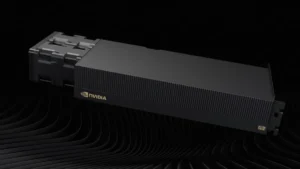
Tiny Dutch startup enlists Samsung as backer as it seeks to dethrone Nvidia AI GPU — but Euclyd won’t get its…

The Strategic Funding Landscape
The funding round was co-led by a consortium including Somerset Capital Partners, the Scaleup Europe Fund, and Innovation Industries, with significant participation from the South Korean electronics powerhouse, Samsung. This capital injection is intended to accelerate Euclyd’s research and development timeline, specifically targeting the creation of proprietary chip architecture that integrates processing and memory layers in a novel configuration.
For Samsung, this investment is more than a financial play; it represents a tactical alignment with the next generation of AI infrastructure. As the world’s leading manufacturer of high-bandwidth memory (HBM), Samsung is uniquely positioned to assist Euclyd in navigating the complex engineering requirements of advanced silicon production. The collaboration aims to leverage Samsung’s extensive supply chain expertise and deep-rooted manufacturing capabilities to bring Euclyd’s vision from the laboratory to the data center floor.
A Two-Pronged Business Model
Euclyd’s Chief Executive, Bernardo Kastrup, has outlined a dual-track strategy to penetrate a market currently dominated by Nvidia’s H100 and Blackwell architectures. The first pillar of the business involves the development and sale of high-performance rack systems tailored for enterprises that require secure, on-site AI inference capabilities. By offering a "plug-and-play" solution, Euclyd hopes to attract corporations that are wary of the data privacy risks associated with cloud-based AI processing.
The second pillar focuses on intellectual property (IP) licensing. By providing its proprietary chip designs to other manufacturers, Euclyd aims to become a foundational player in the AI ecosystem, much like ARM has done for the mobile computing sector. This licensing model could allow Euclyd to scale more rapidly than a traditional hardware vendor, as it would enable other firms to integrate Euclyd’s architecture into their own custom silicon, potentially bypassing the current bottleneck in chip supply.
The Architecture of Change
The fundamental challenge Euclyd faces is the dominance of Nvidia’s CUDA-accelerated GPU ecosystem. Nvidia’s rise to a multi-trillion-dollar valuation was built on the back of decades of software optimization that turned gaming-focused graphics cards into the workhorses of the AI revolution. Euclyd is attempting a different approach: building a chip from the ground up specifically for AI inference rather than repurposing existing hardware.
Current chip architectures often struggle with the "memory wall," where the processor performs calculations faster than the memory can supply data. By integrating memory and processing layers in a more unified stack, Euclyd aims to improve efficiency and reduce the latency that plagues modern AI models. However, the company has cautioned that its commercial hardware will not reach the market until 2028, a long lead time in an industry that moves at a breakneck pace.
Chronology of the AI Hardware Shift
The emergence of Euclyd is part of a broader, multi-year trend of vertical integration within the technology sector. The following timeline outlines the major shifts in the AI chip market:
- 2016: Google introduces the Tensor Processing Unit (TPU), the first major move by a hyperscaler to build custom silicon for machine learning.
- 2020-2022: The surge in generative AI drives unprecedented demand for Nvidia’s A100 and H100 GPUs, leading to significant supply shortages.
- 2024: Euclyd is founded in the Netherlands, seeking to address architectural inefficiencies in existing AI hardware.
- August 2026: OpenAI announces "Jalapeño," its first in-house AI chip, signaling that even the primary consumers of Nvidia chips are looking to move toward custom, proprietary solutions.
- September 2026: Euclyd closes its €200 million Series A round, signaling institutional confidence in the startup’s architectural approach.
- 2028: Projected date for Euclyd’s first commercial hardware shipments.
- 2030: Target date for Euclyd to reach thousands of enterprise customers.
Industry Reactions and Market Analysis
Market analysts view the influx of capital into Euclyd as a hedge against the growing concentration of power in the AI supply chain. With companies like Google, Amazon Web Services, and Meta all aggressively pursuing their own silicon initiatives, the "Nvidia-or-nothing" era appears to be waning.
"The fundamental problem is not just compute power; it is the inefficiency of the current stack," notes a lead analyst at a global technology consultancy. "By backing companies like Euclyd, Samsung is not necessarily trying to kill Nvidia, but rather to ensure that the future of AI infrastructure is not exclusively tied to a single software-hardware lock-in. It is about creating a modular, competitive ecosystem."
However, the path to market is fraught with execution risks. The semiconductor industry is notoriously capital-intensive and subject to strict yield requirements. A startup with no proven product at scale faces a "valley of death" between the research phase and mass production. For Euclyd to succeed, it must not only match the raw performance of established players but also provide a software stack that is intuitive enough for developers to switch away from the entrenched Nvidia environment.
The Broader Impact on National Competitiveness
The investment also reflects a growing geopolitical focus on semiconductor sovereignty. The Netherlands, home to ASML—the world’s most critical chip lithography machine manufacturer—is increasingly seen as a hub for critical AI infrastructure. By nurturing a home-grown chip designer, European investors are signaling a desire to reduce reliance on East Asian and American semiconductor production.
Bernardo Kastrup has been vocal about the societal stakes of this endeavor. "AI is becoming a foundation of economic growth, scientific discovery and national competitiveness," he stated during the funding announcement. "But its potential will remain constrained unless we fundamentally change the infrastructure beneath it."
Conclusion and Future Outlook
As the world enters the second half of the decade, the narrative of the AI industry is shifting from the promise of software capabilities to the hard reality of hardware limitations. The race to build the most efficient, secure, and cost-effective chip is now the primary theater of competition for the global technology sector.
Euclyd’s entry into the market is a high-stakes gamble. While the $231 million in funding provides a runway, the company faces a formidable task: proving that its novel architecture can outperform the iterative, refined designs of incumbents who have spent billions of dollars on R&D. Whether Euclyd becomes a disruptor or a footnote in the history of the AI hardware boom will likely be determined by its ability to execute its 2028 delivery goal while simultaneously fostering a developer ecosystem that can thrive outside of the Nvidia umbrella. For now, the investment stands as a testament to the belief that the current AI architecture is only the beginning of a much longer, more complex technological evolution.
Related posts: