Nvidia CEO Jensen Huang Surprises All-In Summit Audience by Putting President Donald Trump on Speakerphone

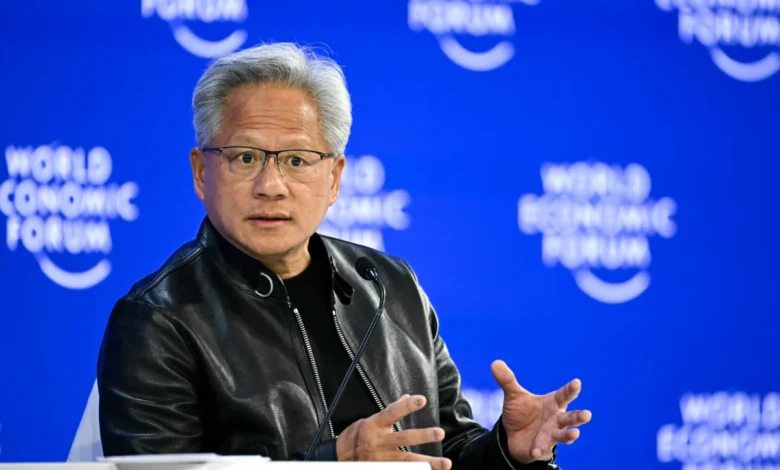
In an unprecedented moment that instantly sent shockwaves through corporate public relations departments nationwide, Nvidia Chief Executive Officer Jensen Huang found himself fielding a live phone call from President Donald Trump while on stage at the prominent All-In Summit. Rather than taking the call privately or attempting to discreetly decline it, Huang casually broadcast the conversation to the packed auditorium, providing conference attendees and podcast listeners with an unfiltered window into the intersection of high-stakes artificial intelligence policy and the highest levels of federal government.
The unexpected call occurred midway through a wide-ranging panel discussion hosted by the venture capitalists known colloquially as the "besties"—tech investors Chamath Palihapitiya, Jason Calacanis, and White House advisers David Friedberg and David Sacks. The episode underscored the growing alignment between Silicon Valley’s leading hardware manufacturer and the Trump administration’s aggressive stance on maintaining American technological dominance in the global artificial intelligence landscape.
A High-Stakes Interruption on Live Stage
The surreal sequence of events began when Huang’s mobile phone started ringing during the live-streamed panel. Recognizing the identity of the caller, the Nvidia chief executive opted to take the communication in real time.
“I’m on stage with the besties,” Huang informed President Trump, gesturing toward the podcast hosts seated around him.
In a move that likely caused acute anxiety for corporate handlers and communications specialists, Huang attempted to project the call to the audience. Grappling briefly with the logistics of audio amplification, Huang asked stagehands for an extra microphone so the room could hear the commander-in-chief.
Observing the technical hurdle from the other end of the line, President Trump quipped, “The great thing about life is Jensen can develop the most complex computer chip in the world… but he can’t figure out how to put you on speaker.”
The lighthearted exchange quickly pivoted to substantive policy debates surrounding the future trajectory of artificial intelligence development, infrastructure expansion, and international geopolitical competition.
The AI Pacing Debate: Safety Versus Acceleration
Prior to the presidential interruption, Huang and the All-In panel had been dissecting recent remarks made by Anthropic CEO Dario Amodei. In a high-profile essay titled "We Must Pace the Frontier," Amodei argued for a deliberate deceleration in the rate at which artificial intelligence capabilities are advanced, citing existential risks and safety concerns.
This cautious approach has found surprising allies across the tech industry. SpaceX and xAI CEO Elon Musk, alongside OpenAI CEO Sam Altman, have publicly voiced agreement with the need for measured pacing and rigorous safety protocols. However, Jensen Huang has consistently diverged from this consensus, advocating for rapid iteration, continuous deployment, and unfettered technological scaling.
President Trump weighed in directly on the debate when briefed by Huang over the speakerphone. Aligning himself firmly with Huang’s accelerationist viewpoint, the president dismissed calls for self-imposed regulatory slowdowns.
“They’re just playing right in the hands of a lot of people that don’t want to see it happen,” Trump stated over the phone. “That could be political people. It could also be China. And we’re not going to let that happen. It’s a hoax.”
To which Huang responded, “You’re right. We’re not going to let that happen, sir,” drawing widespread applause from the audience in attendance.
Trump further reinforced his support for Nvidia’s operational model and the broader semiconductor ecosystem, emphasizing that federal policy would actively back domestic infrastructure expansion. “We have to be a little bit careful… We have to do things and we have to do them prudently, but that doesn’t mean we’re going to stop an industry,” Trump said. “So I’m with you all the way. I didn’t even know how you felt about it. I just hoped you felt the same way as me. We’re going to lead.”
The Grassroots Backlash Against Data Center Expansion
While the Trump administration and industry leaders like Y Combinator CEO Garry Tan have characterized resistance to artificial intelligence infrastructure as an international campaign designed to hobble American growth, the reality on the ground reflects deeper, localized public friction.
The rapid proliferation of generative artificial intelligence models has triggered an unprecedented construction boom of massive data centers. These facilities require staggering amounts of electrical power and water resources to cool high-performance chips, such as Nvidia’s flagship H100 and Blackwell architectures.
Proponents of rapid AI scaling argue that any delay in building out this critical infrastructure cedes technological superiority to strategic competitors, most notably China. Conversely, communities slated to host these massive facilities have pushed back vigorously.
Recent data from Gallup paints a clear picture of public apprehension. According to the polling firm, approximately 70% of Americans oppose the construction of large-scale data centers within their local areas. When surveyed about the primary drivers of their opposition, more than 50% of respondents pointed directly to the strain these facilities place on local environmental resources, including municipal water supplies and electrical grids. Additionally, roughly 20% expressed acute concerns regarding rising local cost-of-living expenses, potential strain on public utility rates, and a general degradation of their local quality of life.
Municipalities across the United States—ranging from Loudoun County, Virginia, to newly enacted regulatory frameworks in Massachusetts—have begun introducing stricter clean power mandates and zoning restrictions to curb the unchecked expansion of energy-intensive computing hubs.
Broader Economic and Geopolitical Implications
The public interaction between Jensen Huang and President Trump highlights a pivotal moment for the global technology sector. As artificial intelligence transitions from a speculative research frontier into foundational global infrastructure, the relationship between private enterprise and state power has grown increasingly symbiotic.
For Nvidia, maintaining an uninterrupted supply of power, manufacturing capacity, and regulatory backing is essential. The company sits at the epicenter of the AI boom, supplying the specialized hardware required by hyperscalers, sovereign states, and enterprise clients alike. Any disruption to data center construction—whether driven by local environmental pushback or federal regulatory caution—poses a direct challenge to the company’s sustained growth trajectory.
Conversely, the Trump administration views domestic semiconductor manufacturing and artificial intelligence dominance as matters of national security. By framing resistance to data center construction as a geopolitical threat, the administration signals that federal policy will likely override local zoning hurdles and environmental objections to ensure that American firms maintain their competitive edge over foreign rivals.
As the debate between safety-conscious researchers and accelerationist executives intensifies, the public phone call at the All-In Summit serves as a stark reminder of the forces at play. In the eyes of the current administration and key Silicon Valley leaders, the race for artificial intelligence supremacy leaves little room for hesitation, ensuring that infrastructure development will remain a central battleground in technology policy for years to come.