Best Buy Launches Black Friday in July Sale Featuring Massive Discounts on Amazon Alexa Hardware and Smart Home Devices


The traditional retail calendar has undergone a significant transformation in recent years, driven largely by the gravitational pull of Amazon’s Prime Day. Historically, July served as the cornerstone for summer savings, anchored by Amazon’s massive mid-year event. However, with Amazon shifting its 2024 Prime Day schedule to June, a vacuum was created in the July promotional cycle. Recognizing this opportunity to capture consumer attention and clear seasonal inventory, Best Buy has initiated its annual Black Friday in July event. This sale notably features a wide array of Amazon-branded hardware, with entry-level pricing starting as low as $19.99, signaling an aggressive push by the electronics giant to dominate the mid-summer shopping landscape.
The current sale encompasses a broad spectrum of the Alexa ecosystem, including the ubiquitous Fire TV Sticks, Ring and Blink security systems, and the Echo line of smart speakers. For consumers who missed the June Prime Day window, Best Buy’s move provides a secondary opportunity to secure high-demand technology at prices typically reserved for the end-of-year holiday season. The strategy reflects a broader trend among "big-box" retailers to synchronize their promotional efforts with, or in direct response to, Amazon’s market-moving decisions.
The Evolution of the Summer Sales Cycle
The concept of "Black Friday in July" is not entirely new, but its importance has escalated as digital commerce continues to reshape consumer expectations. For decades, the period between Memorial Day and Labor Day was considered a relatively quiet time for electronics retailers, focused primarily on "Back to School" supplies. That changed in 2015 when Amazon launched the first Prime Day to celebrate its 20th anniversary. The event was so successful that it effectively created a new "fourth quarter" in the middle of the year.
In 2024, the timeline saw a notable shift. By moving Prime Day to June, Amazon forced competitors to decide whether to follow suit or maintain the July tradition. Best Buy opted for the latter, positioning its Black Friday in July event as a destination for those who either missed the Amazon window or prefer the brick-and-mortar support and membership perks offered by the Minnesota-based retailer. This chronological shift highlights the fluidity of modern retail, where promotional windows are no longer dictated by holidays alone, but by competitive maneuvers among the industry’s largest players.
Deep Dive into Amazon Hardware Discounts
The centerpiece of the Best Buy sale is the significant price reduction on Amazon’s proprietary hardware. These devices serve as the gateway to the Amazon ecosystem, and their discounted availability at a rival retailer underscores the complex relationship between Amazon as a manufacturer and Best Buy as a distribution partner.
Fire TV Streaming Solutions
Streaming devices remain among the most popular items during these sales. The Fire TV Stick 4K and 4K Max have seen substantial markdowns. These devices are critical for consumers looking to upgrade older "smart" TVs that may have sluggish interfaces or lack the latest streaming applications. The 4K Max, in particular, offers support for Wi-Fi 6E and features a more powerful processor, making it a high-value target for tech enthusiasts. By pricing the entry-level Fire TV Stick Lite near the $20 mark, Best Buy is targeting the impulse-buy segment of the market.
Echo and Alexa Integration
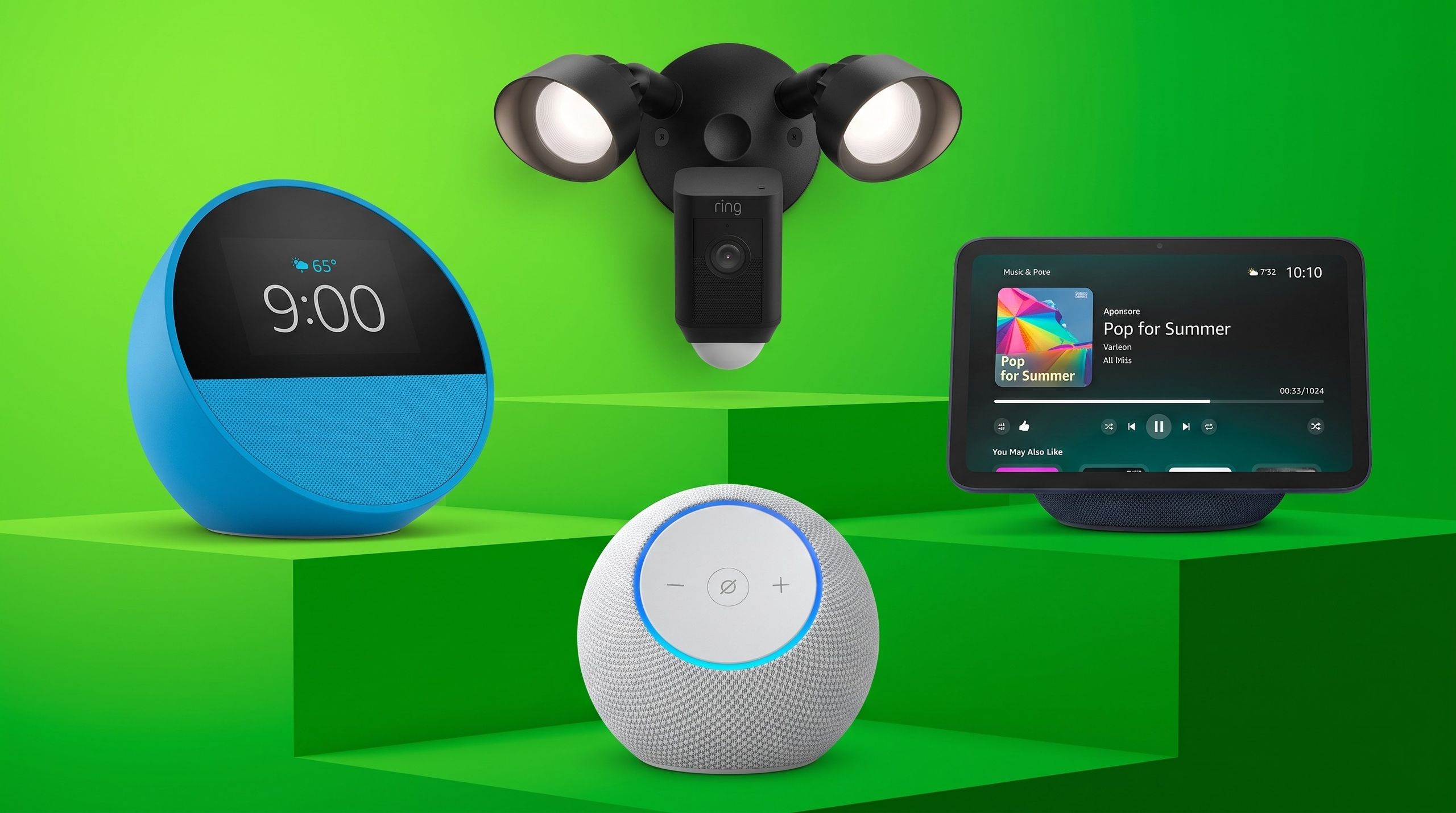
The Echo line, ranging from the compact Echo Pop to the screen-equipped Echo Show 8 and 10, forms the backbone of the modern smart home. Best Buy’s discounts on these items come at a time when Amazon is reportedly looking to monetize Alexa further through potential subscription tiers. For now, the hardware remains a loss-leader or low-margin entry point designed to lock users into the Alexa environment. The sale includes the Echo Dot (5th Gen), which remains a benchmark for affordable smart audio, featuring improved sound quality and integrated temperature sensors.
Home Security: Ring and Blink
Home security has become a primary driver of smart home adoption. The Best Buy sale features bundles for both Ring and Blink systems. While both are owned by Amazon, they cater to different market segments. Blink is positioned as the budget-friendly, battery-efficient option, while Ring offers a more robust ecosystem of professional monitoring and integrated lighting. The discounts on the Ring Video Doorbell and the Blink Outdoor 4 cameras are particularly aggressive, often bundled with Echo Show devices to provide a complete "see who is at the door" solution out of the box.
Comparative Analysis of Retail Strategies
The decision by Best Buy to lead with Amazon products is a tactical masterstroke in the "co-opetition" era of retail. While Best Buy competes with Amazon for general consumer electronics sales, it also benefits from being a premier showcase for Amazon’s physical goods.
Data from retail analysts suggests that consumers are increasingly looking for "omnichannel" flexibility—the ability to research online but pick up in-store. Best Buy’s "Store Pickup" feature gives it a distinct advantage over Amazon’s shipping-only model, especially for consumers who want their devices immediately to set up over a weekend. Furthermore, the "My Best Buy Plus" and "My Best Buy Total" membership programs offer an additional layer of value, such as extended return windows and accidental damage protection, which can often outweigh the initial savings offered by Prime-exclusive deals.
In contrast, Walmart has countered with its "Walmart+ Week," and Target has utilized its "Target Circle Week" to keep pace. However, Best Buy remains the primary destination for dedicated tech shoppers, and by leveraging the "Black Friday" branding in July, it taps into the psychological urgency associated with the November shopping rush.
Market Implications and Consumer Sentiment
The broader implication of these recurring "mega-sales" is a permanent shift in how products are priced. Manufacturers and retailers are moving toward a high-low pricing strategy, where the "Manufacturer’s Suggested Retail Price" (MSRP) serves more as a placeholder than a standard transaction price. Smart consumers have learned to wait for these specific windows—June, July, and November—to make significant electronics purchases.
From an economic perspective, these sales are vital for maintaining consumer spending momentum in the face of inflationary pressures. By offering essential tech—like home security and communication devices—at deep discounts, retailers can maintain high volume even if margins are compressed. For Amazon, having its hardware featured prominently at Best Buy ensures that its ecosystem continues to grow, even if the sale doesn’t happen on its own platform. Every Echo sold is another node in the Alexa network, and every Fire TV is another portal for Prime Video and ad revenue.
The Role of Artificial Intelligence and Future Hardware
As we look toward the latter half of 2024, the hardware on sale now represents the current pinnacle of the "pre-generative AI" era of smart assistants. Industry insiders expect Amazon to announce a significant overhaul of Alexa, integrating Large Language Models (LLMs) to make the assistant more conversational and capable.
The current inventory clearance at Best Buy may be a precursor to this transition. By moving existing stock of Echo and Fire TV devices now, retailers make room for the next generation of AI-native hardware expected to debut in the autumn. For the average consumer, however, the current generation of hardware remains more than capable of handling standard smart home tasks, making these $19 to $50 price points an attractive entry point before the next technological leap.
Conclusion and Outlook
Best Buy’s Black Friday in July sale is more than just a collection of discounts; it is a strategic response to a shifting retail landscape. By filling the gap left by Amazon’s rescheduled Prime Day, Best Buy has reasserted its position as a critical player in the consumer electronics market. The inclusion of heavy-hitting Amazon hardware ensures that the sale has the "anchor" products necessary to drive traffic, both digital and physical.
As the sale nears its conclusion, the focus will shift toward the "Back to School" season and the eventual build-up to the actual Black Friday in November. For now, the message to consumers is clear: the summer is no longer a time of retail hibernation. It is a season of high-stakes competition where the winner is often the consumer who knows exactly when—and where—to click "buy." With Amazon devices starting at $19, the barrier to entry for a fully connected smart home has never been lower, provided shoppers act before the "July" window closes and prices return to their mid-summer norms.
Related posts: