Spain Triumphs Over Argentina to Claim 2026 FIFA World Cup Title in Dramatic Extra Time Victory at MetLife Stadium

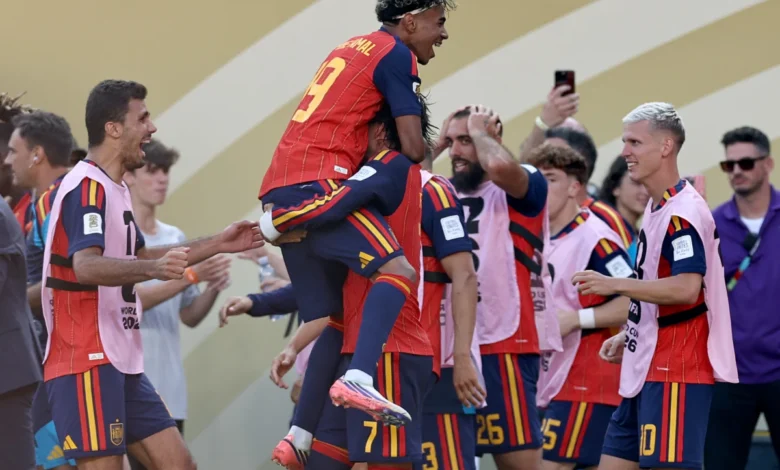
In a historic display of tactical discipline and physical endurance, Spain secured their second FIFA World Cup title on Sunday, defeating defending champions Argentina 1-0 in a grueling final at MetLife Stadium. The match, which remained scoreless through ninety minutes of regulation, was decided in the second half of extra time when Ferran Torres found the back of the net, sparking jubilant celebrations among the Spanish contingent in East Rutherford, New Jersey. The victory marks a significant milestone for Spanish football, returning "La Roja" to the pinnacle of the sport sixteen years after their maiden triumph in South Africa.
The 2026 final served as the culmination of the largest World Cup in history, featuring 48 teams and hosted across three nations: the United States, Mexico, and Canada. Despite the expanded format and the logistical challenges of a continental tournament, the final returned to a classic confrontation between European precision and South American flair. For Argentina, the loss marked a poignant moment in sporting history, as it likely signaled the final World Cup appearance for Lionel Messi, who set a new record by becoming the first player to start in three separate World Cup finals (2014, 2022, and 2026).
The Decisive Moment: Ferran Torres Secures the Crown
The match began with a cautious tempo, as both managers, Spain’s Luis de la Fuente and Argentina’s Lionel Scaloni, prioritized defensive stability. Spain utilized their trademark possession-based style, seeking to tire the Argentine midfield, while Argentina looked to exploit the pace of their wingers on the counter-attack. For the majority of regulation time, clear-cut chances were scarce. Argentina’s goalkeeper, Emiliano Martínez, was called into action twice in the first half to deny long-range efforts from Pedri and Gavi, while Spain’s Unai Simón produced a world-class save in the 78th minute to keep out a curling strike from Lionel Messi.
As the game moved into extra time, the physical toll of the tournament became evident. Players on both sides struggled with fatigue under the humid New Jersey summer sky. However, the deadlock was finally broken in the 112th minute. Following a swift sequence of passes through the center of the pitch, Dani Olmo delivered a precision through-ball that split the Argentine defense. Ferran Torres, timing his run to perfection, stayed composed under pressure and slotted the ball into the bottom left corner, past an outstretched Martínez.
The final eight minutes of extra time saw Argentina throw every available player forward, including veteran defender Nicolás Otamendi as a makeshift striker. Despite a series of desperate crosses into the Spanish penalty area, the defensive pairing of Aymeric Laporte and Robin Le Normand remained resolute. When the final whistle blew, the Spanish bench emptied onto the pitch to celebrate a victory that re-establishes Spain as the dominant force in international football.
Historical Context and Spain’s Path to Glory
Spain’s victory in 2026 mirrors their 2010 success in more ways than just the final scoreline. In 2010, Spain also won the final 1-0 in extra time, with Andrés Iniesta scoring the winning goal against the Netherlands. That victory ushered in an era of unprecedented dominance for Spanish football, including two European Championships. Analysts suggest that the 2026 squad, characterized by a blend of experienced veterans and a new "golden generation" of youth talent, could be poised for a similar run of success.
The road to the final for Spain was far from easy. After navigating a difficult group stage, they faced a resurgent Brazil in the quarter-finals and a disciplined French side in the semi-finals. Throughout the tournament, Spain’s ability to maintain a high percentage of ball possession—averaging 64% across seven matches—proved to be their greatest asset. Their defensive record was equally impressive, conceding only three goals throughout the entire competition.
Lionel Messi’s Record-Breaking Appearance
While the night belonged to Spain, much of the global media attention focused on Lionel Messi. At 39 years old, Messi’s participation in the 2026 World Cup was a subject of intense speculation leading up to the tournament. By starting the final, he surpassed the records of legends such as Pelé and Diego Maradona, becoming the only male player to start in three World Cup finals.
Messi’s influence on the pitch remained evident throughout the tournament, as he led Argentina with five goals and four assists in the lead-up to the final. However, the Spanish defense, led by the tactical positioning of holding midfielder Rodri, managed to neutralize Messi’s impact for much of the Sunday final. Following the match, Messi was seen congratulating his former Barcelona teammates in the Spanish camp, a gesture that many observers interpreted as a passing of the torch to the next generation of global stars.
The North American Hosting Experience
The 2026 FIFA World Cup was a landmark event for North American sports infrastructure. This was the first time the tournament was co-hosted by three nations, with matches spread across 16 host cities. The United States hosted the lion’s share of the knockout stage matches, including the final at MetLife Stadium. For the duration of the tournament, the venue was officially referred to as "New York New Jersey Stadium" to comply with FIFA’s strict regulations regarding commercial stadium naming rights.
MetLife Stadium, usually home to the NFL’s New York Giants and New York Jets, underwent significant modifications to accommodate a natural grass pitch and meet FIFA’s international standards. With a capacity exceeding 82,000 for the final, the atmosphere was described by FIFA President Gianni Infantino as "electric," highlighting the growing appetite for football in the United States.
The United States Men’s National Team (USMNT) enjoyed a respectable run in the tournament, buoyed by home-field advantage. The team successfully navigated the group stage, sparking a surge of national interest. However, their journey ended in the Round of 16 with a 4-1 defeat to Belgium. Despite the exit, US soccer officials pointed to the record-breaking television ratings and merchandise sales as evidence that the 2026 World Cup has permanently altered the sporting landscape in North America.
Media and Economic Impact
The final was broadcast globally, with Fox holding the English-language rights in the United States and Telemundo providing Spanish-language coverage. Early data suggests that the match may have set new viewership records for a soccer broadcast in the U.S. market, benefiting from a prime-time slot on the East Coast. The commercial success of the tournament was bolstered by an expanded roster of sponsors and the increased number of matches, which provided more opportunities for advertising and fan engagement.
Economically, the host cities reported a significant influx of tourism revenue. In the New York-New Jersey metropolitan area alone, hotel occupancy rates reached 98% in the week leading up to the final. The economic ripple effects were also felt in Mexico and Canada, as fans traveled across borders to follow their respective teams, showcasing the viability of the multi-host model for future mega-events.
Looking Toward the Future: The 2030 Centenary World Cup
As the celebrations in Madrid begin, the focus of the international football community shifts toward the 2030 World Cup. FIFA has already announced an even more ambitious hosting plan for the tournament’s centennial edition. The 2030 World Cup will be primarily hosted by Morocco, Portugal, and Spain, marking the first time the tournament will be held across two continents (Africa and Europe).
In a unique tribute to the tournament’s history, the opening three matches of the 2030 edition will take place in South America—specifically in Uruguay, Argentina, and Paraguay. This arrangement honors the 100th anniversary of the first World Cup, which was held in Uruguay in 1930. Consequently, the 2030 tournament will technically span three continents and six countries, a feat that will present unprecedented logistical challenges but also promises a truly global celebration of the sport.
For Spain, being a primary host for the 2030 tournament provides an opportunity to defend their title on home soil. The Spanish Football Federation (RFEF) has already begun preliminary discussions regarding stadium renovations and infrastructure improvements to ensure that the 2030 event surpasses the success of 2026.
Tactical Analysis and Expert Reactions
Football analysts have praised Luis de la Fuente’s tactical flexibility during the 2026 campaign. Unlike the rigid "tiki-taka" style of the past, the current Spanish side demonstrated a willingness to play more vertically when necessary, utilizing the speed of wingers like Nico Williams and the clinical finishing of Ferran Torres.
"Spain played a perfect game of attrition," noted former international manager Vicente del Bosque in a post-match interview. "They respected Argentina’s threat on the counter but never wavered from their philosophy of controlling the rhythm. Ferran Torres’ goal was a result of that persistence."
On the Argentine side, the reaction was one of somber pride. Manager Lionel Scaloni emphasized the effort of his players, stating, "To reach back-to-back finals is an incredible achievement. We were one play away from taking it to penalties, but football is decided by small margins. We congratulate Spain on a fair victory."
The 2026 FIFA World Cup will be remembered not only for Spain’s clinical performance in the final but also for its role in expanding the reach of the sport in North America. As the flags are lowered in East Rutherford, the legacy of this tournament remains a testament to the enduring global appeal of the "beautiful game."
Related posts: