Tech Industry Dynamics Shift as Massive Artificial Intelligence Capital Meets the Human Centric Rise of Together Tech

The global technology landscape is currently witnessing a stark divergence in both capital allocation and product philosophy, as record-breaking investments in artificial intelligence (AI) collide with a burgeoning movement toward "together tech" and human-centric experiences. While industry giants like Alphabet continue to secure unprecedented funding—highlighted by a staggering $85 billion raise for its AI business—a counter-current of founders is pivoting toward startups that prioritize in-person social interaction and tangible, DIY hardware. This shift suggests that while the "AI fundraising machine" shows no signs of slowing, a significant portion of the entrepreneurial ecosystem is beginning to focus on the "human premium," catering to a public increasingly weary of digital isolation and automated interfaces.
The AI Capital Juggernaut: Alphabet and Anthropic
The scale of investment in the artificial intelligence sector has reached levels previously reserved for national infrastructure projects or sovereign wealth funds. Alphabet’s recent $85 billion capital injection for its AI-focused divisions marks a historic milestone in the tech industry, signaling a "winner-takes-all" approach to the development of Large Language Models (LLMs) and specialized AI hardware. This capital is largely earmarked for the massive compute requirements necessary to train next-generation models and the build-out of global data centers.
Simultaneously, the competitive landscape is being reshaped by the moves of smaller but highly influential players. Anthropic, the AI safety and research company founded by former OpenAI executives, has reportedly filed for a confidential initial public offering (IPO). This move is significant for several reasons. First, it represents a test of the public market’s appetite for high-burn AI companies that have yet to achieve profitability but possess immense strategic value. Second, it occurs against a backdrop of complex corporate relationships, where companies like Amazon and Google have already funneled billions into Anthropic to secure cloud computing partnerships.
The financial data suggests a tightening of the AI market. While the total dollar amount invested is rising, the number of companies receiving that capital is narrowing. The "Big Tech" players—Alphabet, Microsoft, and Meta—are essentially creating a closed loop where their massive revenues are reinvested into AI infrastructure, which in turn powers the services that generate more revenue. For independent startups, the Anthropic IPO filing serves as a beacon, potentially opening a path for other high-valuation AI firms to seek liquidity and public validation.
The Rise of Together Tech: Brynn Putnam’s Board
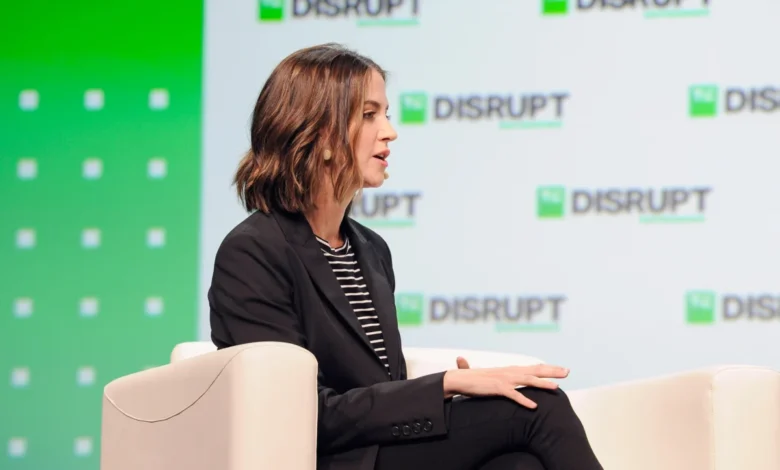
In direct opposition to the screen-mediated world of AI, a new category dubbed "together tech" is gaining traction among venture capitalists and consumers alike. Leading this charge is Brynn Putnam, the founder of Mirror, the high-tech fitness company acquired by Lululemon for $500 million in 2020. Putnam’s new venture, Board, recently secured $20 million in funding to build a startup focused on bringing people together through in-person games and physical social experiences.
Board represents a growing realization that the post-pandemic world is facing a "loneliness epidemic," a term coined by the U.S. Surgeon General to describe the health risks associated with social isolation. Putnam’s pivot from digital fitness to physical social gaming highlights a strategic bet on the value of shared physical space. Unlike the digital-first social networks of the last decade, together tech startups are designing products that facilitate eye contact, physical touch, and real-time collaboration.
The $20 million raise for Board, while modest compared to Alphabet’s billions, is significant within the context of early-stage consumer startups. It indicates that investors are looking for "counter-cyclical" opportunities—businesses that thrive when users feel overwhelmed by the ubiquity of AI and digital screens. Board has already reported thousands of units sold, suggesting a latent demand for structured social interaction that does not require an internet connection or a mobile app to function.
The Cyberdeck Movement: DIY Hardware and the Philosophy of Touching Grass
While professional founders like Putnam are raising venture capital, a grassroots movement is gaining viral momentum on platforms like TikTok and Reddit: the Cyberdeck. Cyberdecks are whimsical, custom-built, DIY computers that often utilize retro-futuristic aesthetics, mechanical keyboards, and small, specialized displays. Often housed in rugged Pelican cases or 3D-printed shells, these devices are a rejection of the sleek, locked-down ecosystems of modern laptops and smartphones.
The viral nature of the Cyberdeck trend is rooted in a desire for "technological agency." Creators often build these machines to perform specific tasks—writing, coding, or radio monitoring—without the distractions of the modern web. More importantly, the Cyberdeck community frequently emphasizes the concept of "touching grass"—a slang term for going outside and reconnecting with the physical world. By building hardware that is portable, durable, and intentionally limited, these creators are advocating for a more intentional relationship with technology.
This movement aligns with a broader trend of "whimsical computing," where the goal is not maximum efficiency or speed, but rather the joy of creation and the tactile satisfaction of physical switches and buttons. In an era where AI can generate infinite digital content, the value of a physical, hand-built object has increased. This DIY ethos is increasingly influencing mainstream product design, as consumers look for devices that feel more "human" and less like generic portals to a cloud-based AI.
Privacy and the AI-Free Search Movement
The pushback against AI is not limited to social games and DIY hardware; it is also manifesting in the way people navigate the internet. DuckDuckGo, the privacy-focused search engine, has recently made its "AI-free" search options easier to access. This move comes as major search engines, including Google and Bing, have integrated AI-generated overviews into their primary results—a change that has met with mixed reviews from users who find the AI summaries unreliable or intrusive.
DuckDuckGo’s traffic has seen a notable boom as it leans into its role as the "no-AI" alternative. For many users, the primary goal of a search engine is to find authentic human-written content, rather than a synthesized summary of existing data. By providing a clean, traditional search experience, DuckDuckGo is positioning itself as the gatekeeper of the "authentic web."
This trend highlights a growing segment of the market that views AI not as a tool for convenience, but as a layer of "slop" that obscures high-quality information. The "AI-free browser crowd" is a demographic that values transparency and data privacy, and their growth suggests that there is a significant market for services that promise to keep AI at arm’s length.
Market Analysis: Is the Capital Flowing Back to the Big Players?
A critical question facing the tech industry is whether the current investment landscape is truly diverse or if all roads eventually lead back to Big Tech. While startups like Board and movements like the Cyberdeck community offer an alternative vision of the future, the financial reality is complex.
Most AI startups rely on the cloud infrastructure provided by Alphabet, Microsoft, and Amazon. Therefore, even when a company like Anthropic raises money or goes public, a substantial portion of those funds is immediately redirected back to the Big Tech companies in the form of cloud computing fees. This "circular economy" of AI funding ensures that the largest players maintain their dominance regardless of which specific AI startup succeeds.
However, the "together tech" and "AI-free" movements operate outside of this loop. By focusing on physical products, in-person experiences, and decentralized hardware, these companies are attempting to build a parallel ecosystem that is not dependent on the massive compute power of the tech giants. The success of these ventures will depend on whether they can achieve scale without succumbing to the same platform pressures that have centralized the digital world over the last twenty years.
Broader Implications and Future Outlook
The current tension in the tech industry reflects a fundamental debate about the future of the human experience. On one side is the vision of an AI-augmented reality, where Alphabet’s $85 billion investment leads to a world of seamless automation, personalized digital assistants, and hyper-efficient information processing. On the other side is a movement toward "together tech," where the goal is to use technology as a bridge to the physical world rather than a replacement for it.
As the "Equity" podcast team (Kirsten Korosec, Anthony Ha, and Sean O’Kane) noted in their recent analysis, the industry is at a crossroads. The confidential IPO filing by Anthropic and the record-breaking raises by Google signal that the AI revolution is still in its early, capital-intensive phase. Yet, the viral success of Cyberdecks and the funding for Board suggest that a "humanity-first" backlash is already underway.
In the coming years, we can expect to see a more defined "Human Premium" in the marketplace. Products and services that can guarantee human interaction, human-created content, and physical presence may become luxury goods in an increasingly automated world. While the billions of dollars flowing into AI will undoubtedly change the way we work and process data, the success of "together tech" suggests that the most valuable commodity in the future may be the one thing AI cannot replicate: genuine human connection.