Shoe Station Group reverses store rebannering strategy as fiscal performance dips and customer feedback highlights operational challenges

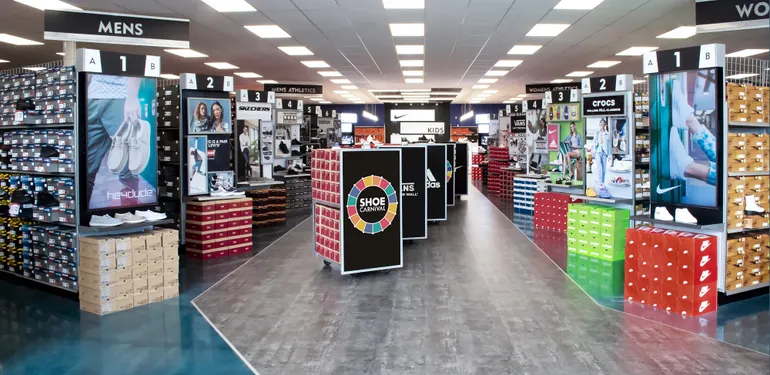
The retail landscape is characterized by constant adaptation, yet few companies have undergone as rapid a succession of strategic pivots as the footwear retailer formerly known as Shoe Carnival Inc. Following a series of turbulent financial quarters and a major leadership transition, the company—now officially rebranded as Shoe Station Inc.—has announced a significant reversal of its recent store-rebannering initiative. This strategic course correction aims to realign the company’s physical footprint with the specific demographic and operational strengths of its legacy brands, Shoe Carnival and Rogan’s.
A Chronology of Strategic Shifts
The company’s recent history is marked by an aggressive effort to consolidate its retail identity. In June 2024, the corporation moved to change its name from Shoe Carnival Inc. to Shoe Station Inc., signaling a long-term commitment to the Shoe Station banner. By the fall of 2024, the retailer began the process of "rebannering" its existing fleet, systematically converting legacy Shoe Carnival locations into the Shoe Station brand. At the height of this initiative, projections suggested that Shoe Station stores would account for 80% of the company’s total retail footprint by March 2027.
The transition, however, faced immediate headwinds. In February 2025, Mark Worden, the president, chief executive officer, and board member who spearheaded the shift, abruptly exited the company. Cliff Sifford, vice chairman of the board, stepped into the roles of interim president and CEO. Under Sifford’s leadership, the strategy began to waver. By May 2025, the company officially backtracked on its singular banner strategy, acknowledging that there was, in fact, renewed merit in operating the namesake Shoe Carnival and Shoe Station brands as independent, distinct entities within its portfolio.
The operational reality caught up to the firm by the release of its Q2 2026 earnings. The financial results painted a challenging picture: net sales had plummeted 6.5% at the remaining Shoe Carnival locations and 8.4% at the converted Shoe Station stores. Furthermore, net income saw a sharp decline, dropping to $6.3 million from $19.2 million in the prior-year period. Faced with these numbers, management announced in September that it would halt any further rebannering for the remainder of the fiscal year.
The Return to Legacy Banners
During a recent call with analysts, interim CEO Cliff Sifford confirmed the next phase of the company’s evolution: a comprehensive return to original branding for the majority of the 131 stores that had undergone the transition.
"We plan to return rebannered stores to their original banner, where the demographics and co-tenancy align with that banner," Sifford stated. The move is not across-the-board, but rather a surgical recalibration based on local market needs. Of the 131 stores in question, 27 are located in sites previously branded as Rogan’s. These locations will revert to the Rogan’s name, honoring the legacy of a brand that remains a cornerstone for the blue-collar demographic.
The remaining 104 stores are currently under evaluation, with the company estimating that at least 75% will return to the Shoe Carnival moniker. The physical execution of this change is scheduled for the first quarter of fiscal 2027.
Operational Mismatches and Customer Feedback
The decision to revert is rooted in a fundamental disconnect between the "Shoe Station" store format and the expectations of the core customer base. Sifford noted that the company had mistakenly attempted to force a premium-positioned brand into a mid-market environment.
"Shoe Station is the better-branded shoe and accessory business, while Shoe Carnival is a moderate-priced footwear store for the entire family," Sifford explained. "We cannot continue to operate Shoe Station stores in Shoe Carnival-type centers or with Shoe Carnival product assortments."
Customer feedback served as a critical catalyst for this reversal. The Shoe Station store format utilizes a straight-line shelving layout, a design choice that was intended to provide a cleaner aesthetic. However, consumers reported that this configuration was difficult to navigate. The straight-line aisles obstructed sightlines, preventing shoppers from viewing the depth of the inventory or easily locating specific products.
In response, the company is committing to an expensive operational overhaul. It will spend approximately $4 million to restore the angled aisle layout—a design hallmark of the traditional Shoe Carnival experience—in 74 of its rebannered stores. This renovation project is expected to be completed within the fourth quarter of the current fiscal year.
Financial Implications and Market Outlook
The costs associated with reverting these stores will be reflected in the fiscal 2027 budget, but the company’s immediate financial outlook remains under pressure. The retailer recently adjusted its fiscal 2026 guidance downward to account for the ongoing volatility.
For the fourth quarter, comparable store sales are projected to remain flat or grow by no more than 2%. For the full 2026 fiscal year, the company expects net sales to fall between $1.087 billion and $1.092 billion, representing a year-over-year decline of 3.8% to 4.3% compared to fiscal 2025.
Strategic Implications for Retail Analysts
The pivot highlights a recurring lesson in retail strategy: the difficulty of re-branding established physical spaces without alienating the existing customer base. By attempting to unify its fleet under a single banner, the company inadvertently disrupted the shopping experience for its core, price-sensitive demographic, who relied on the familiarity and accessibility of the Shoe Carnival layout.
Industry experts observe that the company’s current approach—a return to "localized" assortments and branding—is a recognition that one size rarely fits all in the footwear sector. The decision to keep Shoe Station for higher-income, suburban markets while maintaining Shoe Carnival in broader, family-oriented centers suggests a return to a more disciplined, data-driven real estate strategy.
As the company moves into 2027, the focus will shift from rapid expansion and rebranding to operational stabilization. The success of this turnaround will depend on the retailer’s ability to restore consumer trust and recover the sales volume lost during the period of organizational flux. The $4 million investment in restoring store layouts is, in effect, an admission that for the company’s specific customer base, functional ease of shopping is a more powerful driver of conversion than a refreshed corporate identity.
Ultimately, the firm’s trajectory serves as a case study in the perils of over-extending a brand strategy. By acknowledging its mistakes and opting to reverse course, the leadership team at Shoe Station Inc. is betting that returning to the familiar will provide the necessary foundation for future growth, albeit in a more segmented and cautious manner than previously envisioned.